
Field Guide / Lures & Baits
The lures, flies, live baits, and rigs freshwater anglers use most. Search by name or fish, or filter by type, target, and skill level.
What works on a given day depends on the water, the weather, and the fish, so treat these as starting points. Rules on live bait, treble hooks, lead tackle, and barbed hooks differ by state and water body. Check your state's current fishing regulations before you go.
31 lures and baits
 Hard Baits
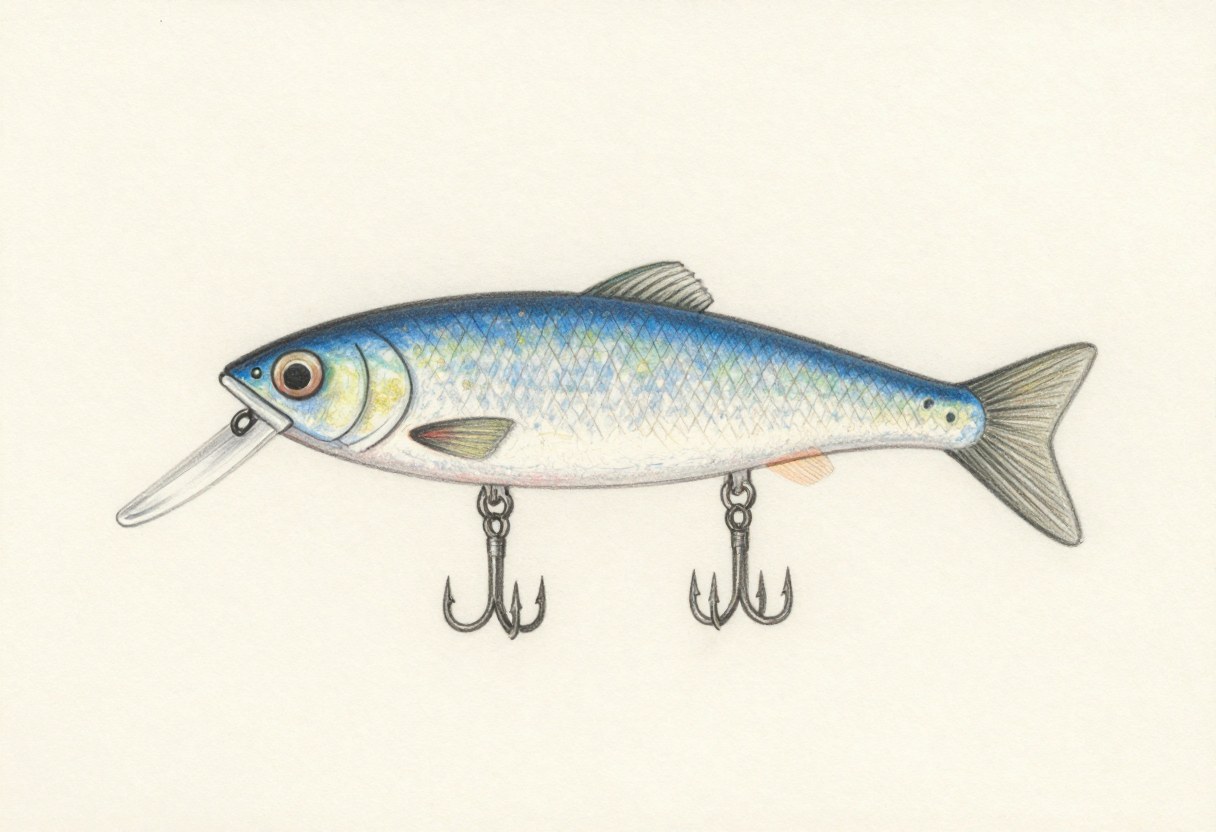
A short-lipped, fat-bodied plug that dives a few feet and bounces off cover. It is one of the simplest ways to cover water and trigger bass in spring and fall.
Depth: About 1 to 6 feet, depending on the lip and the line
 Hard Baits
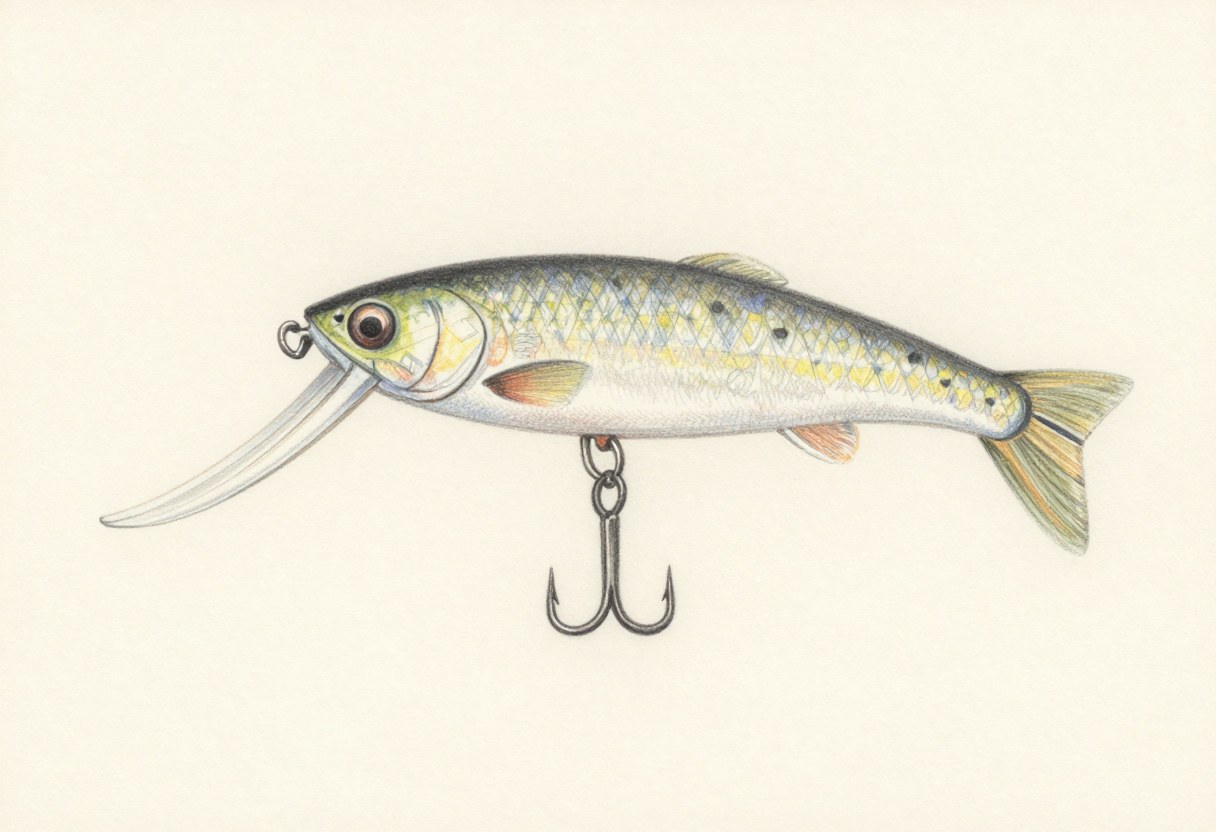
A crankbait with a long lip that pulls it down 10 feet or more, used to reach fish on deep points, ledges, and humps.
Depth: About 8 to 20 feet or more, depending on the lip, line, and cast
 Hard Baits
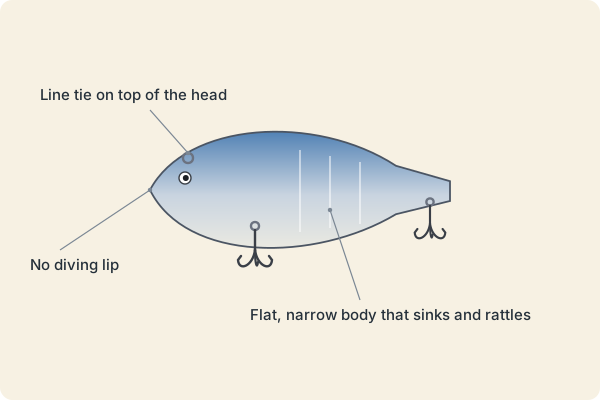
A flat-sided, rattling plug with no lip that sinks and can be fished at almost any depth. It covers a lot of water fast.
Depth: Anywhere from 1 to 15 feet, by counting it down
 Hard Baits
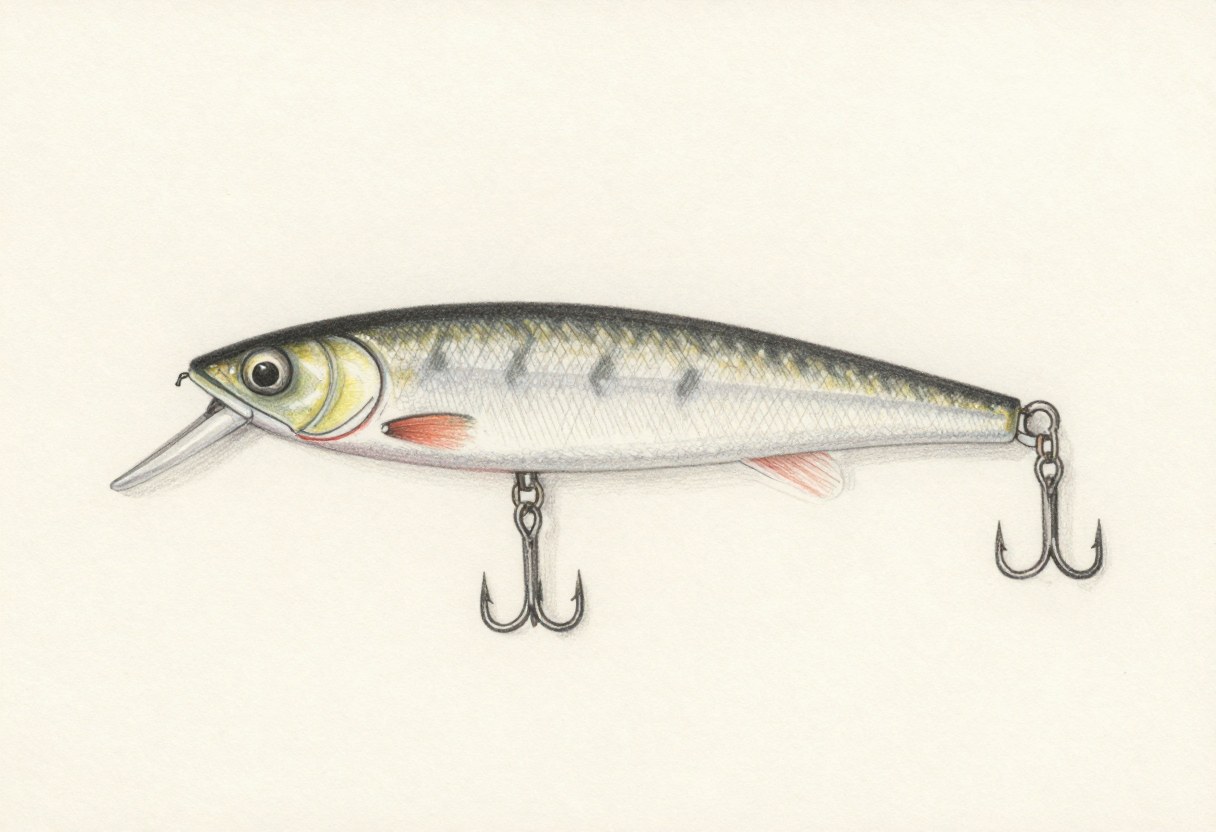
A slim, minnow-shaped plug fished with sharp twitches and long pauses, best in clear, cool water.
Depth: About 2 to 10 feet, depending on the lip
 Hard Baits
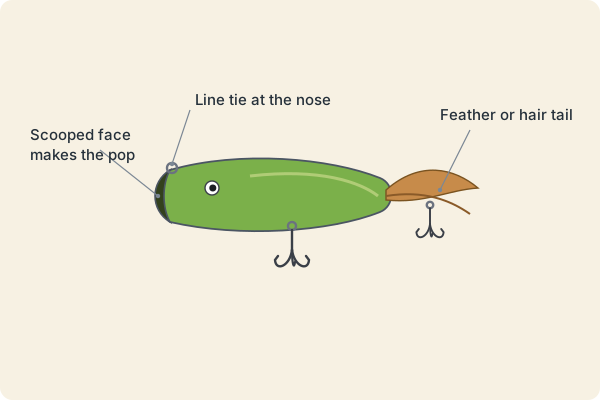
A small topwater plug with a scooped face that makes a splash and a pop when twitched. It brings explosive strikes at dawn and dusk.
Depth: Surface
 Hard Baits
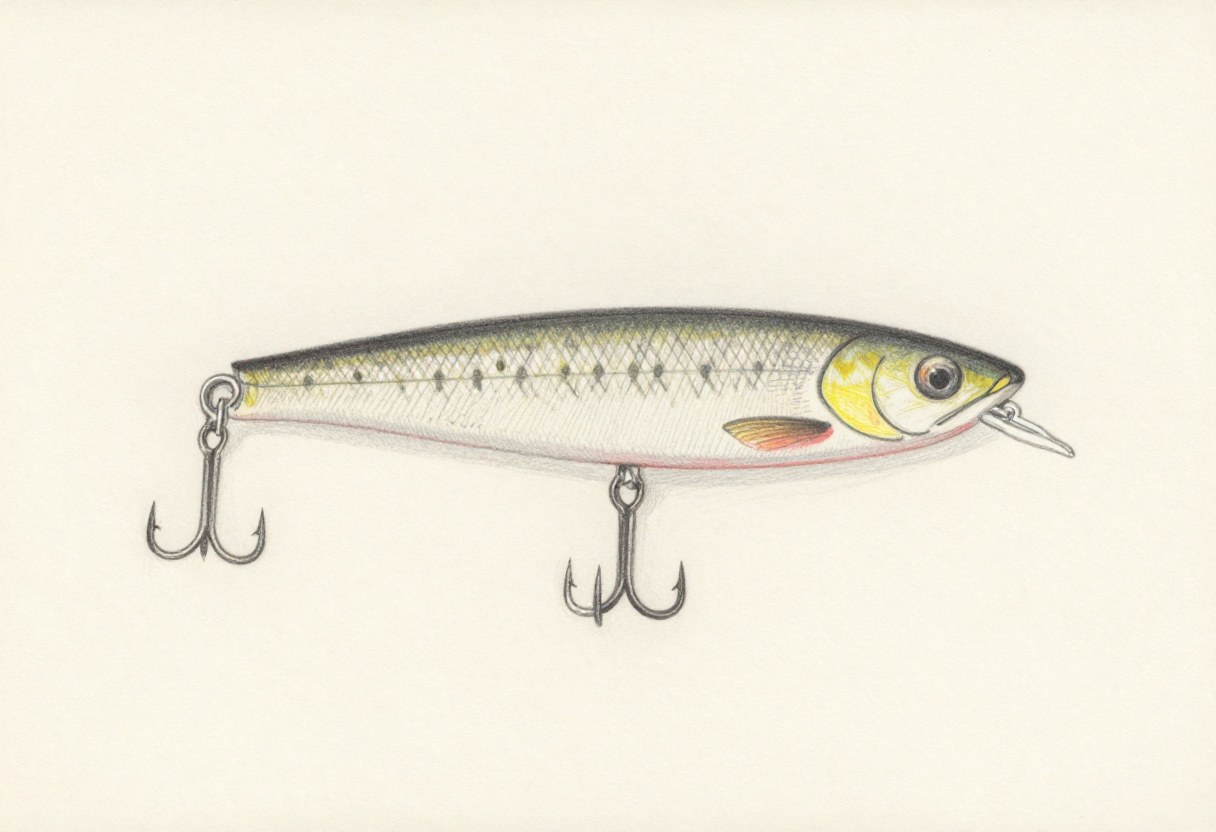
A long, lipless topwater plug that zigzags across the surface when twitched with a slack line, a classic for calm, low-light water.
Depth: Surface
 Soft Plastics
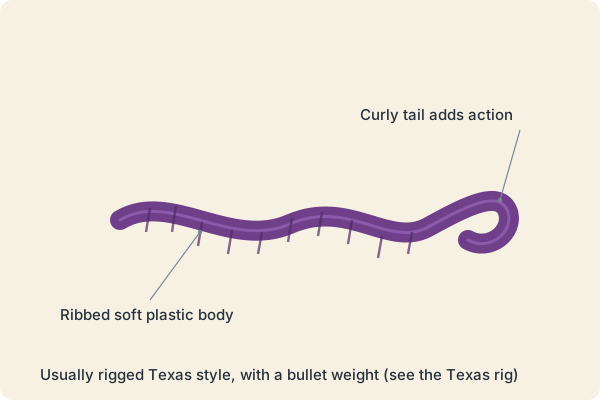
The classic soft bait for bass. Rigged Texas-style, it slides through weeds and wood, and it catches fish all year.
Depth: Bottom, from shallow to deep
 Soft Plastics
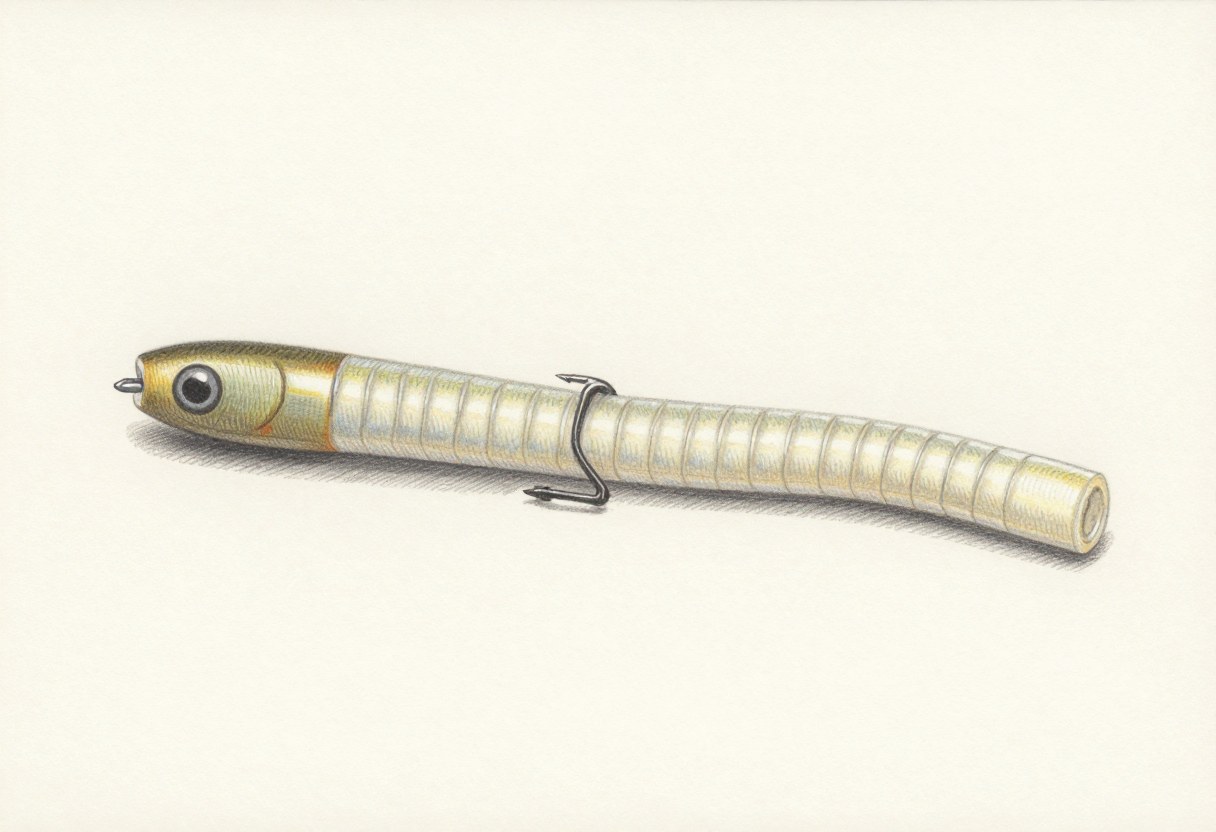
A thick, straight soft plastic with no tail, rigged with a hook through the middle and left to fall slowly with a shimmy.
Depth: Shallow to mid-depth, falling slowly
 Soft Plastics
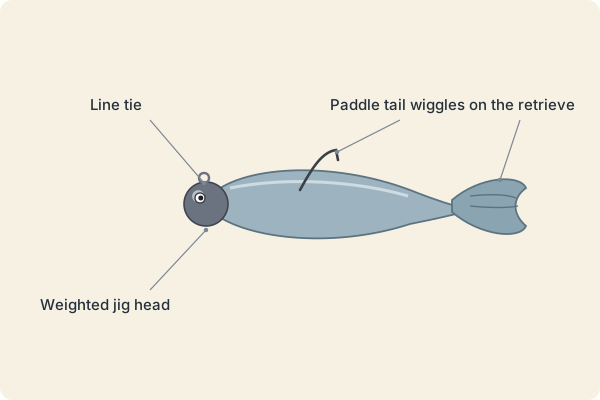
A soft plastic baitfish with a paddle tail that wiggles when reeled, usually on a weighted jig head. It is simple and catches many species.
Depth: Any depth, set by the weight of the jig head
 Soft Plastics
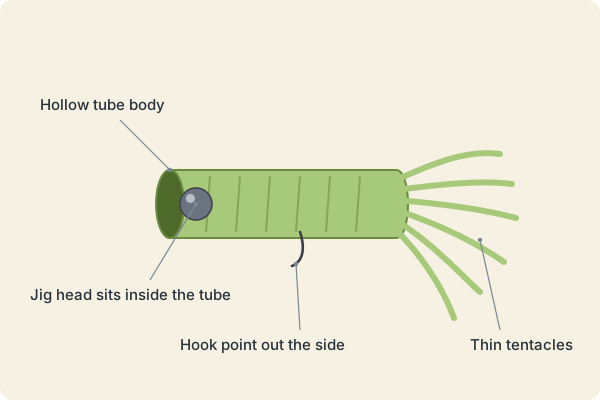
A hollow, skirted soft plastic with a jig head inside, used to imitate crawfish or baitfish, especially along rocky bottoms.
Depth: Bottom, shallow to deep
 Soft Plastics
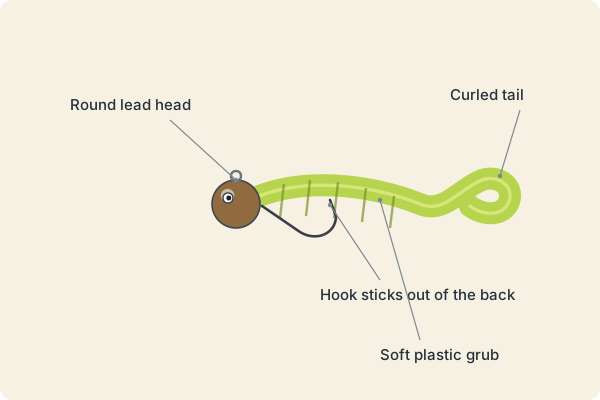
A soft plastic grub with a curled tail on a round lead head. It is a favorite for crappie, bluegill, and walleye, and simple to fish.
Depth: Shallow to mid-depth, set by the weight of the head
 Spinners & Spoons
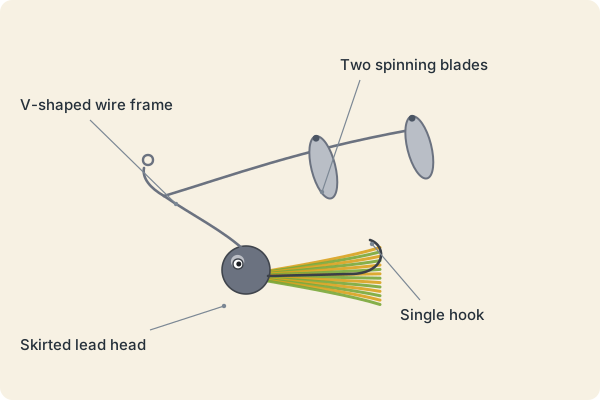
A wire-framed lure with a skirted jig head and one or two spinning blades. It is one of the best choices for stained water and shoreline cover.
Depth: About 1 to 10 feet, depending on weight and retrieve
 Spinners & Spoons
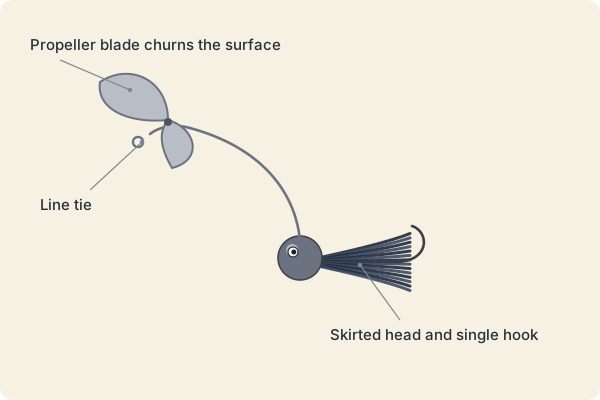
A wire lure with a propeller-like blade that churns across the surface, best at dusk and in cloudy or murky water.
Depth: Surface
 Spinners & Spoons
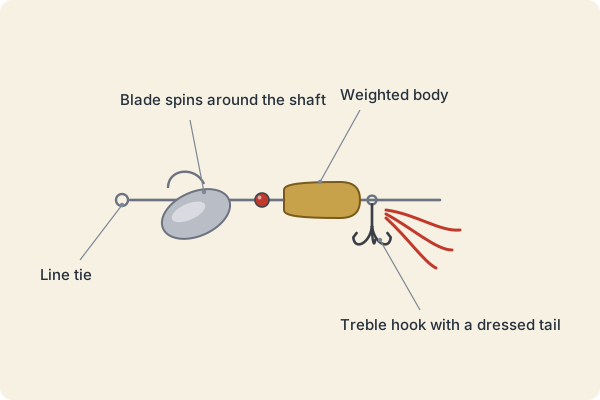
A small lure with a blade that spins around a straight wire shaft. It is a classic for trout streams and a good all-round starter lure.
Depth: About 1 to 10 feet, depending on weight and retrieve
 Spinners & Spoons
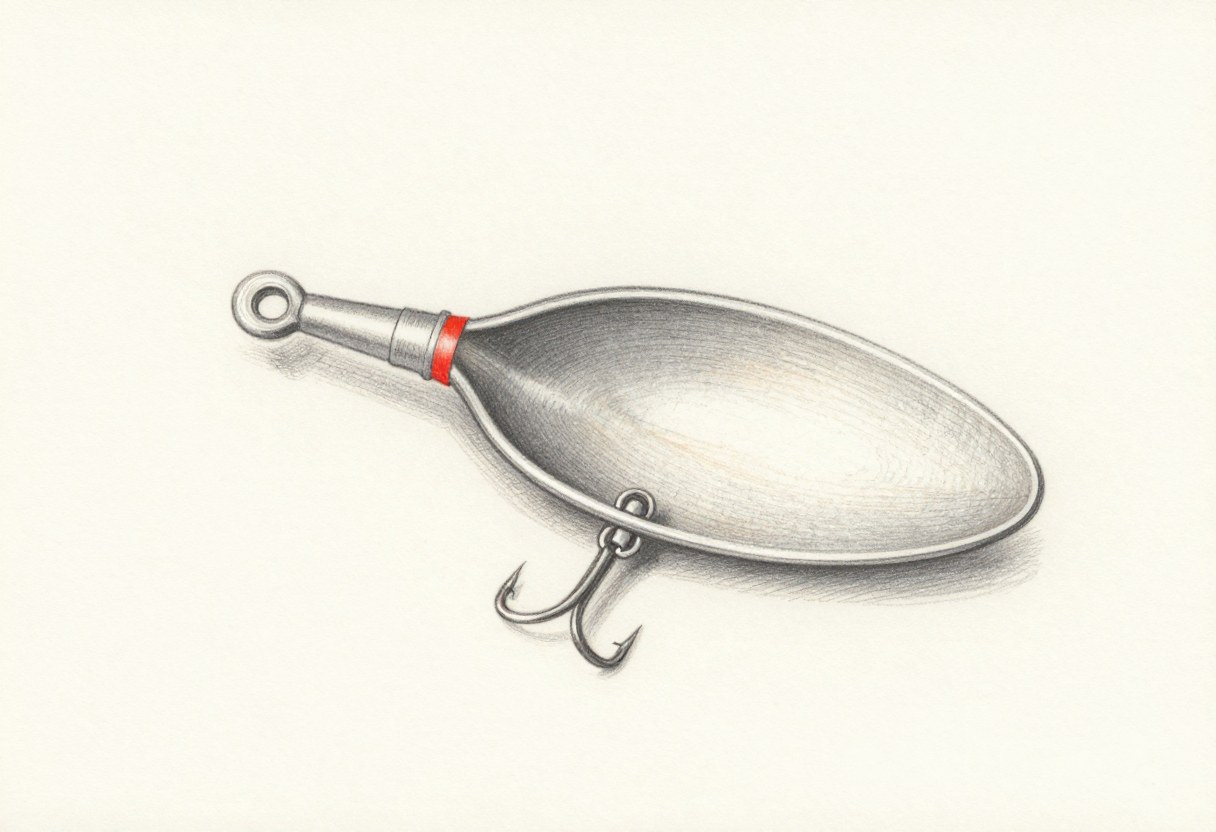
A curved piece of metal that wobbles and flashes like a wounded baitfish. It casts a long way and works in lakes and rivers.
Depth: Surface to deep, depending on weight and how long you let it sink
 Jigs
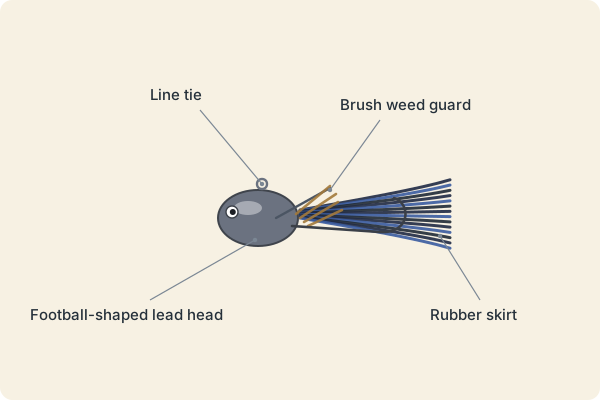
JigsA weighted, skirted jig with a weed guard, pitched into heavy cover and hopped along the bottom for big bass.
Depth: Bottom, from 2 to 25 feet
 Jigs
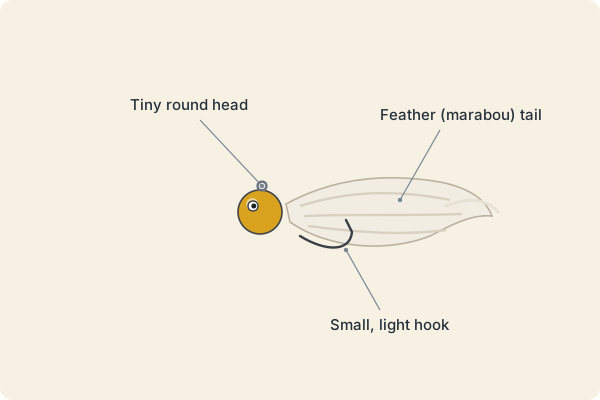
JigsA tiny feathered or hair-tailed jig for crappie and bluegill, fished under a bobber or on a slow retrieve.
Depth: About 3 to 15 feet
 Flies
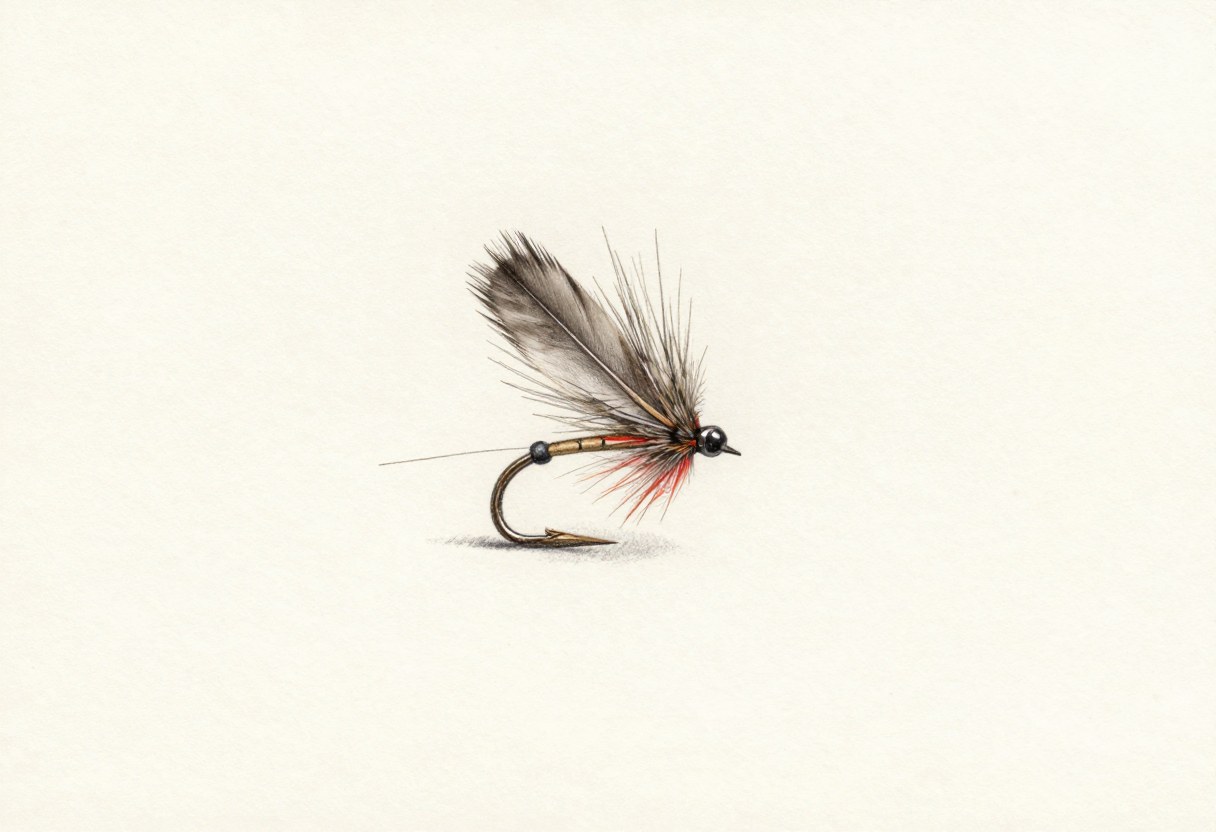
FliesA fly that floats on the surface to imitate insects hatching or landing on the water, used for trout rising to feed.
Depth: Surface
 Flies
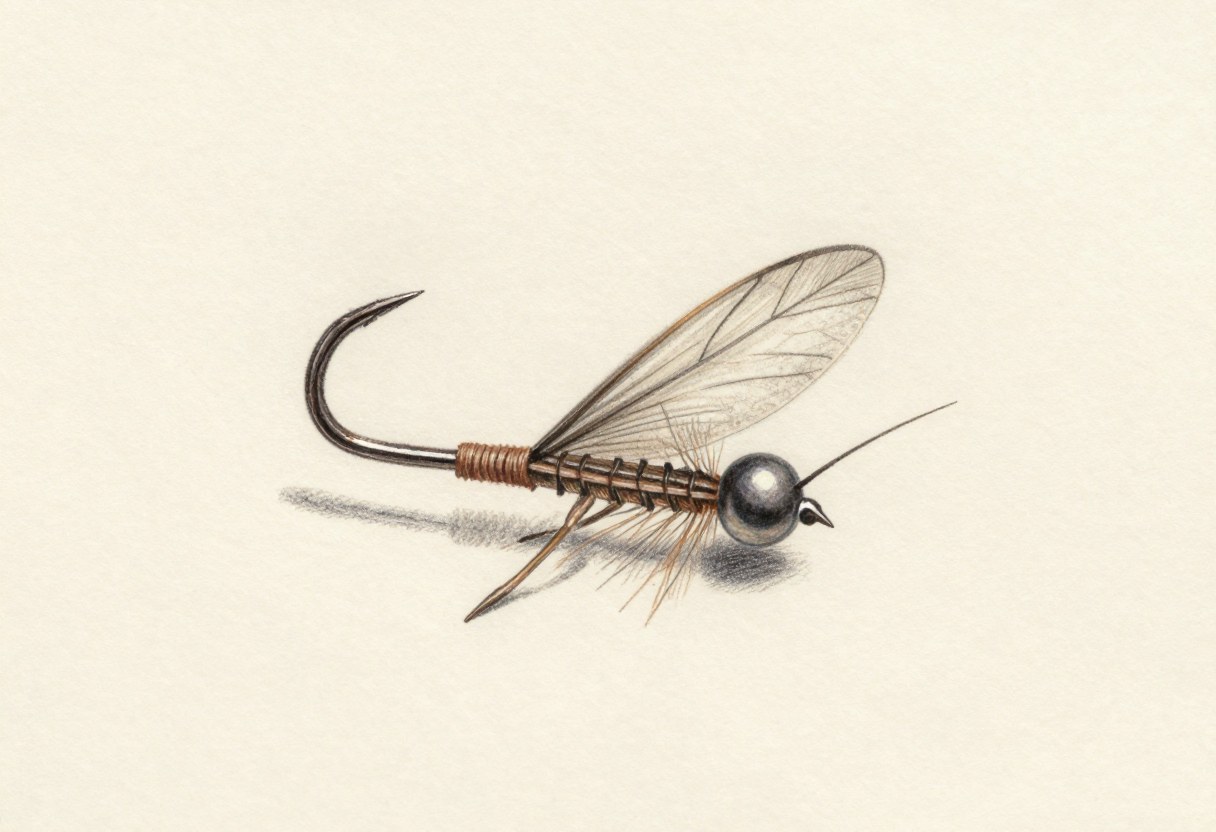
FliesA fly that sinks to imitate insect larvae drifting in the current. Trout feed below the surface much of the time, so nymphs catch more fish than dry flies.
Depth: Below the surface, near the bottom
 Flies
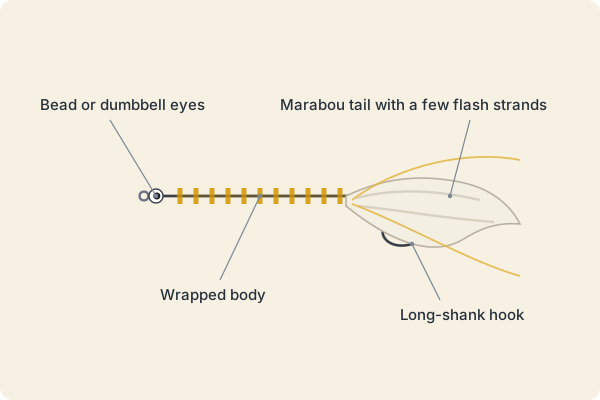
FliesA larger fly that imitates a baitfish, sculpin, or leech, stripped back through the water to draw strikes from bigger fish.
Depth: Near the surface to deep, depending on the line and fly weight
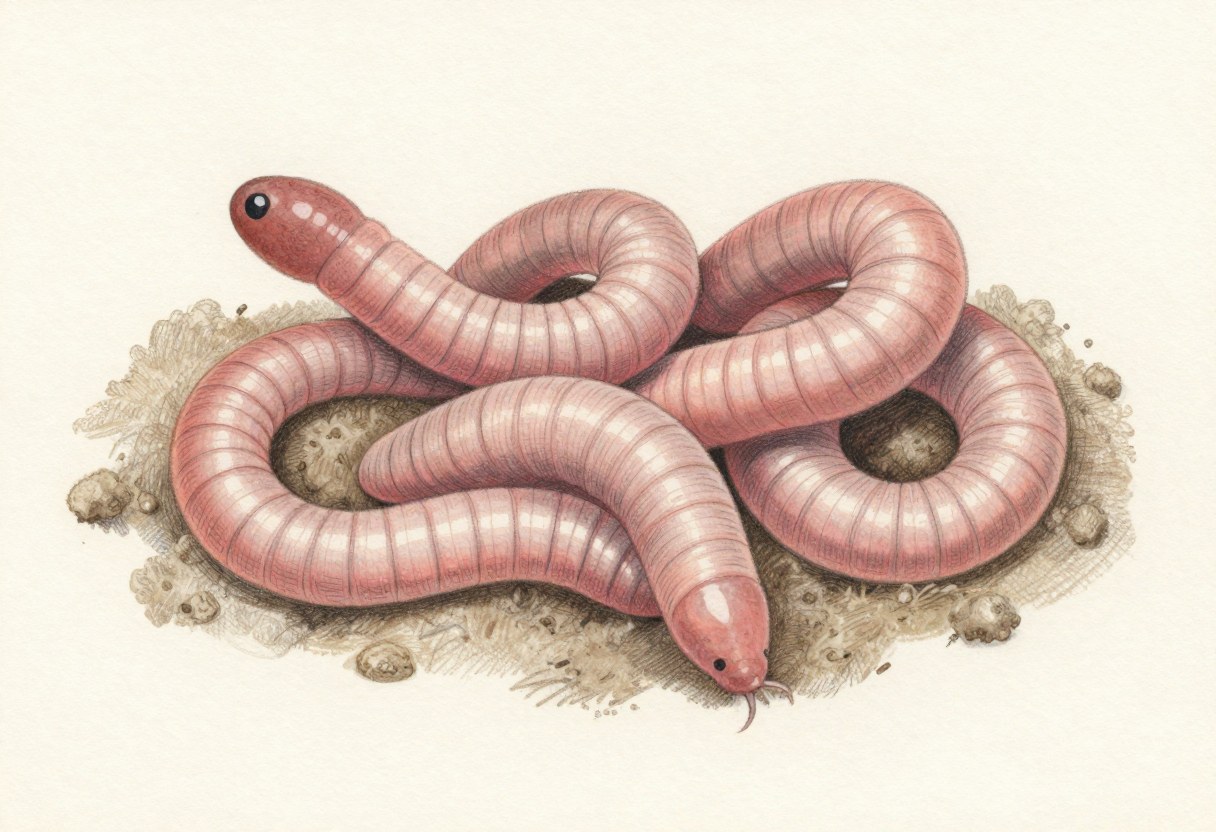 Live & Natural Bait
Big earthworms that nearly every freshwater fish will eat. They are cheap, easy to find, and the best beginner bait there is.
Depth: Any, depending on the rig
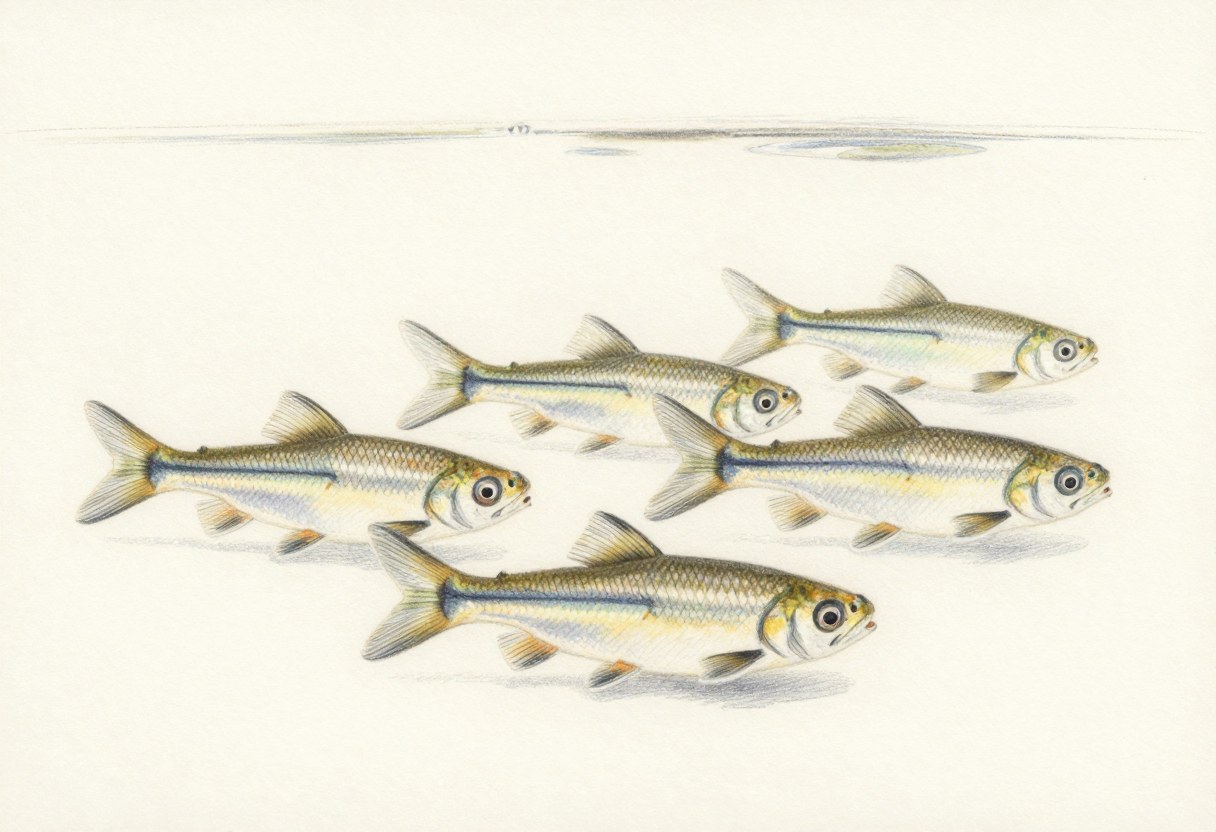 Live & Natural Bait
Small live fish used for crappie, walleye, bass, and pike. They give off natural vibration and scent and are very effective.
Depth: Any, depending on the rig
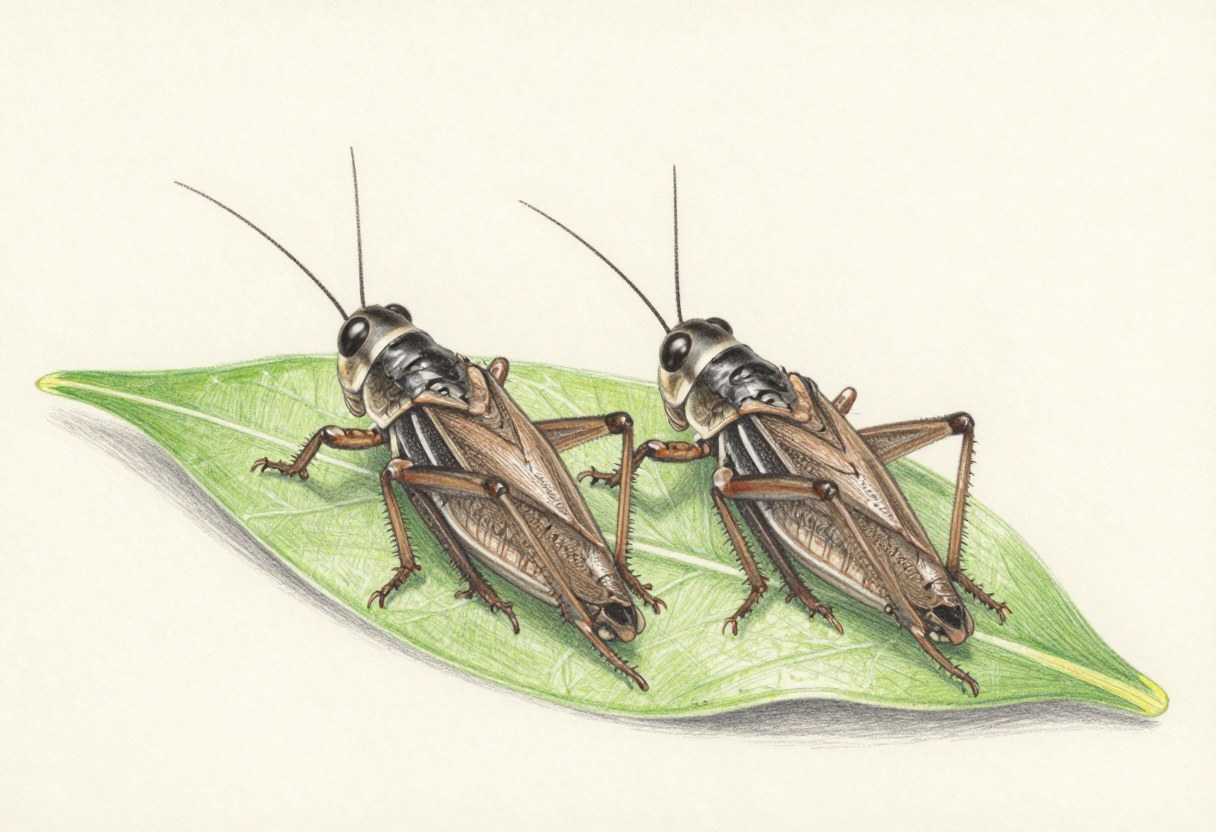 Live & Natural Bait
Live insects that bluegill and other panfish love, simple to fish under a bobber in summer.
Depth: Surface to a few feet
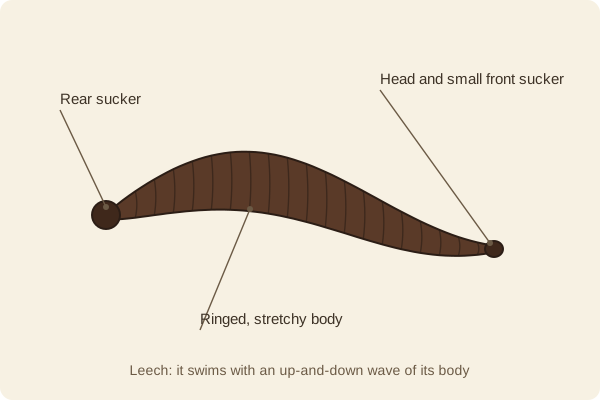 Live & Natural Bait
A favorite walleye bait that swims with a seductive wiggle, fished under a slip bobber or on a jig.
Depth: Any, along weed edges and drop-offs
 Live & Natural Bait
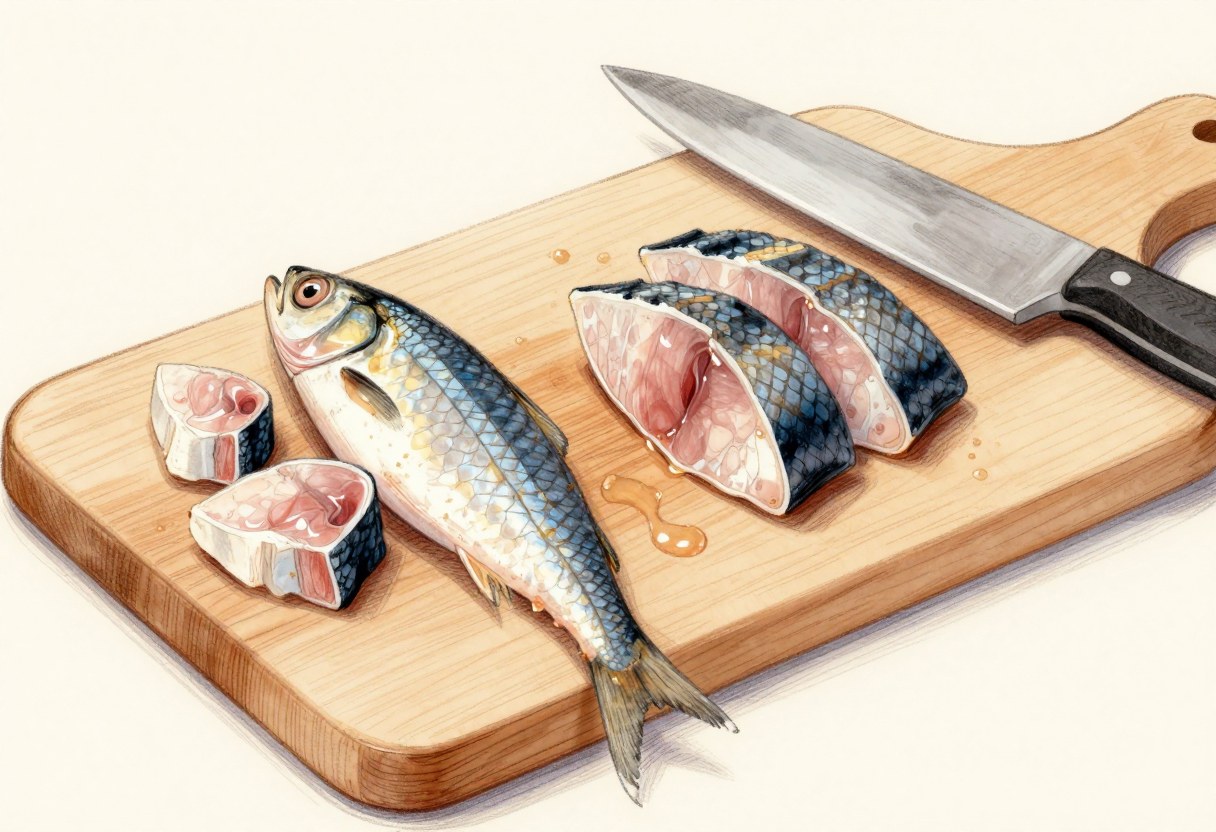
Chunks of oily fish, such as shad, used on the bottom for catfish, which find it by scent.
Depth: Bottom
 Live & Natural Bait
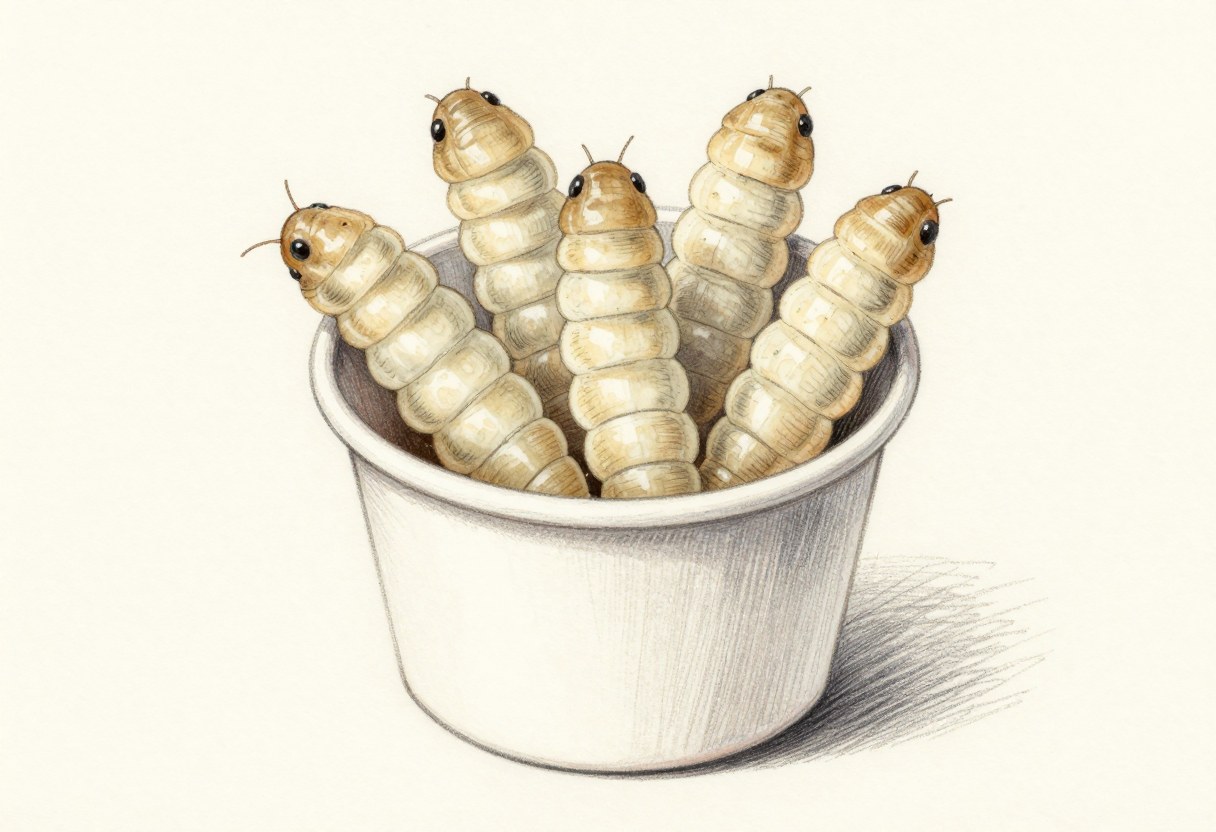
Small, soft, cream-colored grubs that are a top choice for ice fishing and for small panfish.
Depth: Any, but often fished under the ice
 Rigs & Setups
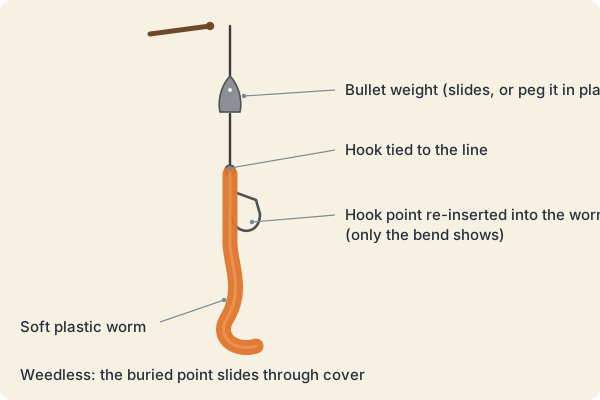
The standard weedless way to rig a soft plastic: a sliding bullet weight, an offset hook, and the hook point buried in the bait.
Depth: Bottom
 Rigs & Setups
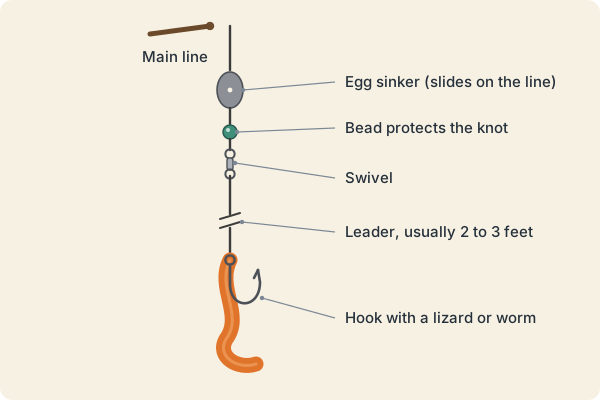
A rig with a sliding weight, a bead, a swivel, and a long leader that drags a soft plastic along the bottom, good for covering flats and points.
Depth: Bottom, mostly 5 to 20 feet
 Rigs & Setups
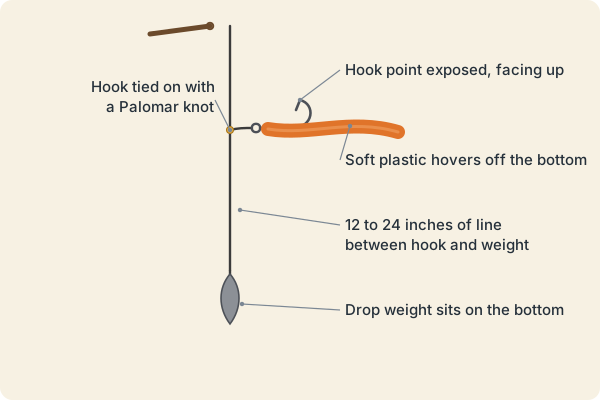
A finesse rig that holds a soft plastic above a weight on the bottom, so the bait stays at the fish's level and can be shaken in place.
Depth: Any, mostly 8 to 30 feet
 Rigs & Setups
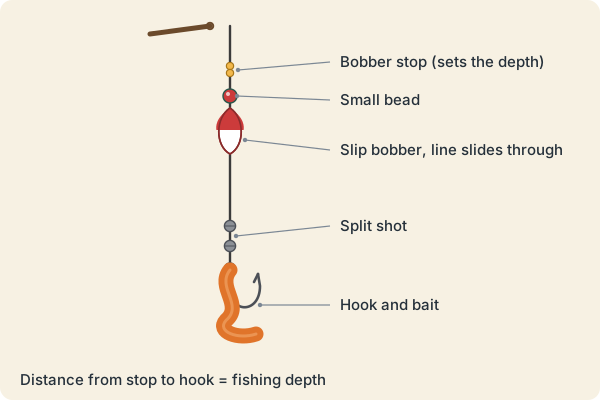
A float rig whose bobber slides up the line to a stop you set, so you can fish a bait at any depth and still cast easily.
Depth: Any, set by the bobber stop
 Rigs & Setups
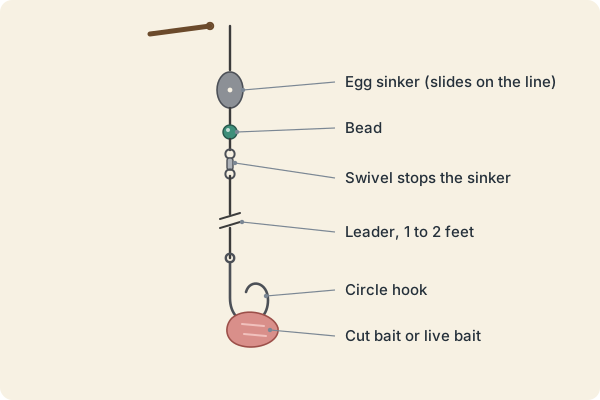
A simple rig with a sliding weight, a swivel, and a leader with a circle hook, used for catfish and other bottom feeders.
Depth: Bottom