
Paddle-Tail Swimbait
Also called: swimbait
A soft plastic baitfish with a paddle tail that wiggles when reeled, usually on a weighted jig head. It is simple and catches many species.
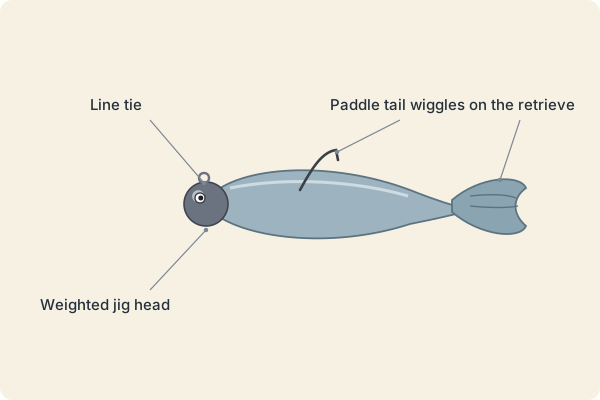
- Type
- Soft Plastics
- Target fish
- Bass, Pike & Walleye, Trout & Salmon
- Skill
- Beginner-friendly
- Depth
- Any depth, set by the weight of the jig head
- Best seasons
- Spring through fall
Note: Some states restrict or ban lead sinkers and jigs in certain waters, so check your state's rules and consider tungsten, steel, or other non-lead options.
When it works best
- When fish are feeding on shad or other baitfish.
- Along points, ledges, and open water.
- When you want a simple lure that needs little technique.
How to fish it
- Choose a jig head heavy enough to reach the depth you want.
- Cast and let it sink to the level of the fish.
- Reel at a steady speed so the tail wiggles.
- Or hop it along the bottom with short lifts.
Tips
- Match the size and color to the local baitfish.
- A lighter head runs shallower and a heavier one runs deeper.
Common mistakes
- Using a head that is too heavy and snags.
- Reeling too fast, so the tail does not move.
- Ignoring the size of the local baitfish.
Gear
A medium-power spinning or casting rod with 10- to 15-pound line is a good all-round choice.
Often confused with
- Grub on a jig head: a smaller curly-tail soft plastic, often used for panfish.
Fish it catches
Field notes
Paddle-tail swimbaits look like fleeing baitfish, which is exactly what bass, walleye, and pike are looking for.
Related guides
What works varies by water, season, and the fish that day, so use this as a starting point. Regulations on live bait, hook type and number, lead tackle, and baitfish transport differ by state and water body. Check your state's current fishing rules; our state resources directory links to each state's official regulations and license portal.