
Nymph
Also called: nymph fly
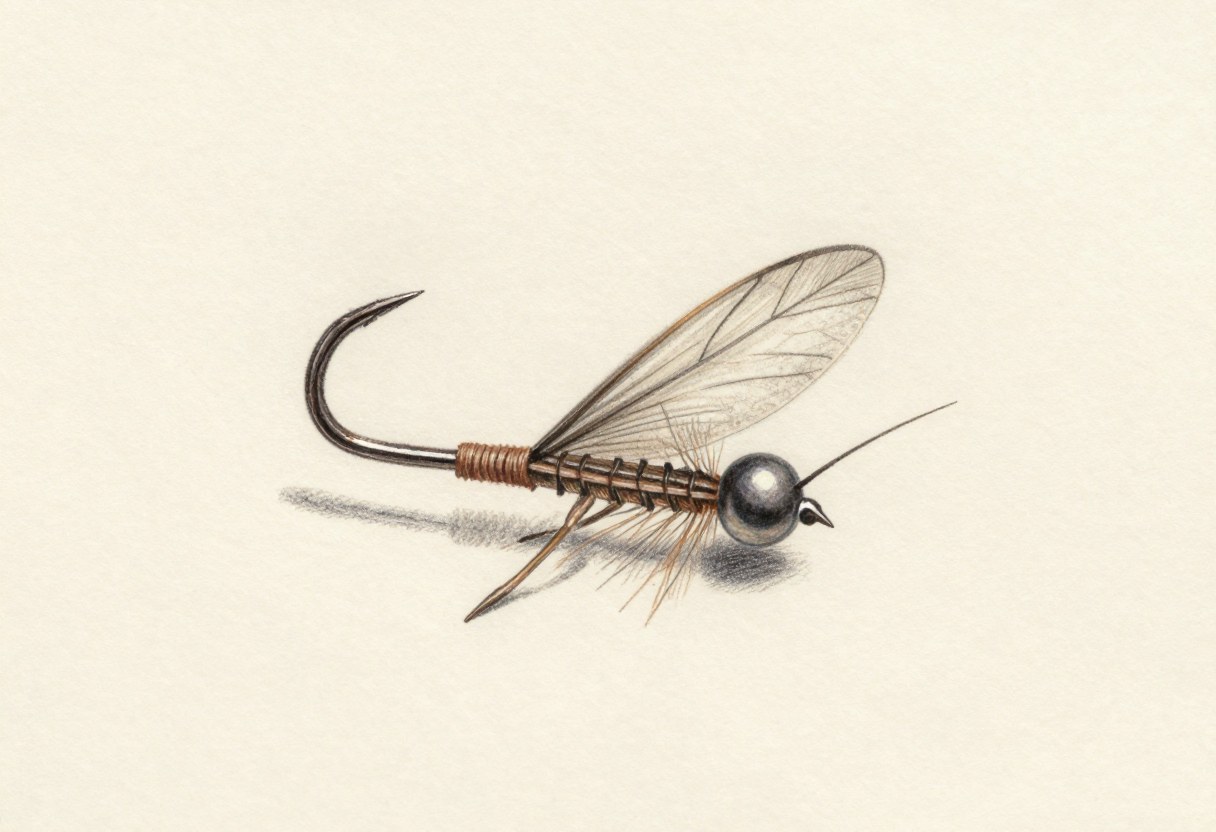
A fly that sinks to imitate insect larvae drifting in the current. Trout feed below the surface much of the time, so nymphs catch more fish than dry flies.
- Type
- Flies
- Target fish
- Trout & Salmon, Panfish
- Skill
- Takes some practice
- Depth
- Below the surface, near the bottom
- Best seasons
- All year, including winter
Note: Rules on hooks, barbs, and the number of flies vary by water, so check your state's rules.
When it works best
- When there is no hatch and no fish are rising.
- In cold weather, when fish feed on the bottom.
- In faster water, where fish see food drift by.
How to fish it
- Add a little weight, such as split shot, so the fly sinks.
- Cast upstream and let the fly drift along the bottom.
- Watch a strike indicator or the end of the fly line.
- Set the hook at any pause, twitch, or dip.
Tips
- Adjust the depth until the fly ticks the bottom now and then.
- Use bead-head nymphs to get down faster.
- Try two nymphs at once, if the rules allow.
Common mistakes
- Fishing too shallow.
- Letting the line drag the fly.
- Waiting too long to set the hook.
Gear
A light fly rod with a floating line, a tapered leader, and a strike indicator is a common setup.
Often confused with
- Dry fly: floats on the surface.
Fish it catches
Field notes
Many trout eat most of their food below the surface. A nymph is often the most reliable fly in the box.
Related guides
What works varies by water, season, and the fish that day, so use this as a starting point. Regulations on live bait, hook type and number, lead tackle, and baitfish transport differ by state and water body. Check your state's current fishing rules; our state resources directory links to each state's official regulations and license portal.