
Shallow Crankbait
Also called: square-bill, crankbait
A short-lipped, fat-bodied plug that dives a few feet and bounces off cover. It is one of the simplest ways to cover water and trigger bass in spring and fall.
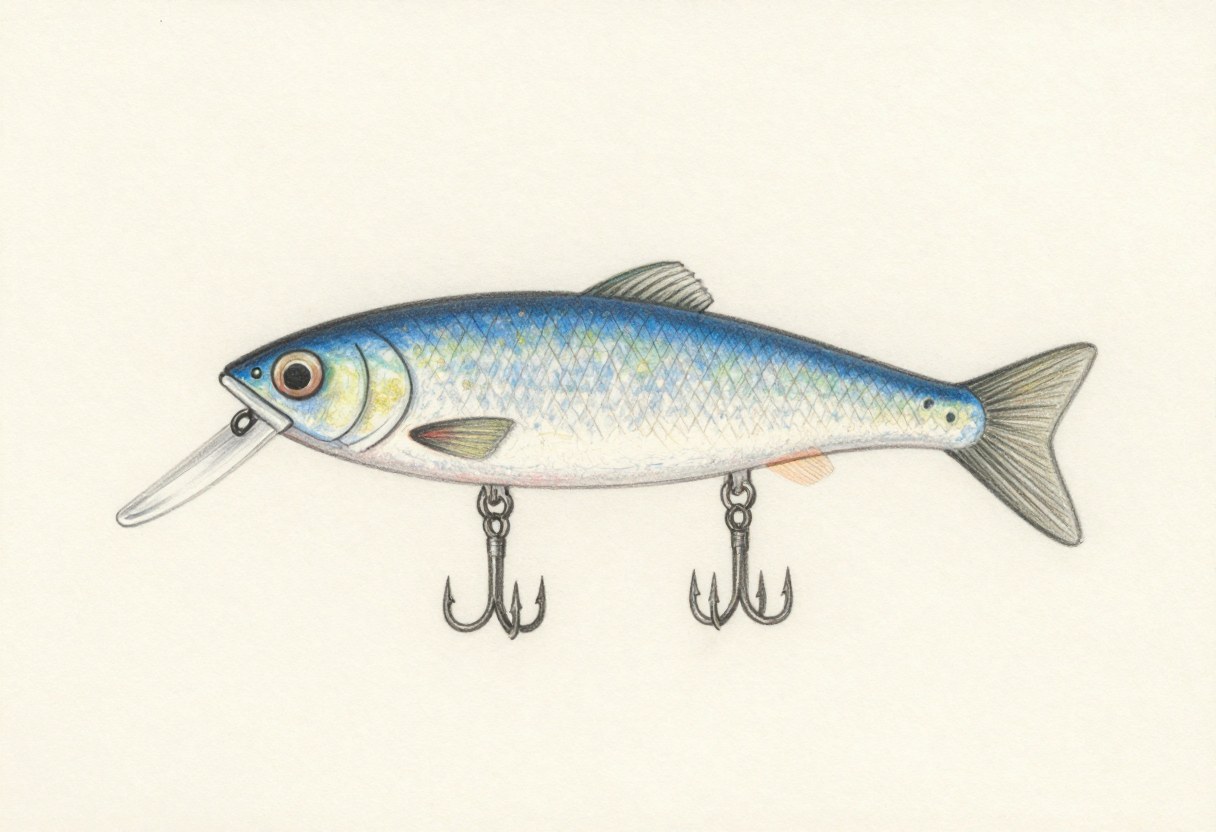
- Type
- Hard Baits
- Target fish
- Bass, Pike & Walleye
- Skill
- Beginner-friendly
- Depth
- About 1 to 6 feet, depending on the lip and the line
- Best seasons
- Spring and fall
Note: Treble hooks are sharp and can injure people and fish. Pinch the barbs down, keep hooks covered when you are not fishing, and use pliers to remove them. Some waters limit the number of hooks or require single or barbless hooks, so check your state's rules.
When it works best
- When bass move shallow in spring and feed around wood, rock, and docks.
- In stained water, where its vibration helps fish find it.
- In fall, when bass chase baitfish in shallow water.
How to fish it
- Cast past the cover you want to fish, such as a log, rock pile, or dock.
- Reel steadily until the lure hits the cover or bottom.
- Pause or speed up after each bump, since the change in motion often triggers the strike.
- Vary your retrieve speed until you find what the fish want.
Tips
- Square-bill lips deflect off wood and rock, so they help avoid snags.
- Monofilament lets the lure run a little shallower, while fluorocarbon lets it dive a little deeper.
- Match the color to the water: natural shades in clear water and brighter ones in murky water.
Common mistakes
- Reeling too fast, which makes the lure blow out and lose its action.
- Fishing with dull hooks, since a crankbait's hooks do all the work.
- Using heavy line that stops the lure from diving.
Gear
A medium-power rod with a moderate action helps keep the hooks in the fish during the fight.
Often confused with
- Deep-diving crankbait: has a much longer lip and runs far deeper.
Fish it catches
Field notes
A shallow crankbait is a good first hard bait because the lure does the work: you just cast and reel. Learning to feel it bump cover is the key skill.
Related guides
What works varies by water, season, and the fish that day, so use this as a starting point. Regulations on live bait, hook type and number, lead tackle, and baitfish transport differ by state and water body. Check your state's current fishing rules; our state resources directory links to each state's official regulations and license portal.