
Drop-Shot Rig
Also called: drop shot
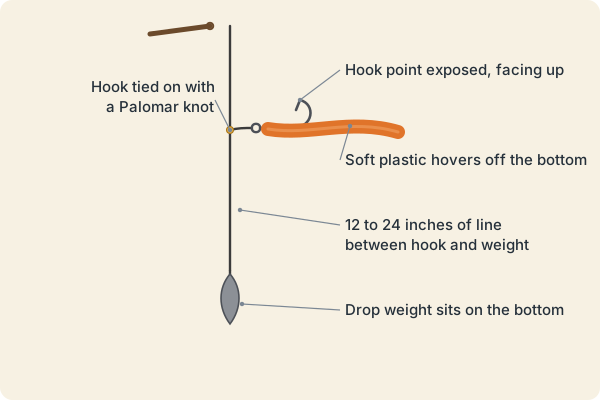
A finesse rig that holds a soft plastic above a weight on the bottom, so the bait stays at the fish's level and can be shaken in place.
- Type
- Rigs & Setups
- Target fish
- Bass, Panfish, Pike & Walleye
- Skill
- Takes some practice
- Depth
- Any, mostly 8 to 30 feet
- Best seasons
- Summer and winter, or any time fish are finicky
Note: Some states restrict or ban lead sinkers and split shot in certain waters, so check your state's rules and consider tungsten, steel, or other non-lead options.
When it works best
- When fish are on the bottom or suspended near it and are not chasing faster baits.
- In clear, deep water.
- On heavily fished waters.
How to fish it
- Tie a hook to the line with a Palomar knot and leave a long tag end.
- Pass the tag end back through the eye so the hook points up.
- Tie a drop weight to the end of the tag, 12 to 24 inches below the hook.
- Cast or drop it straight down and keep the weight on the bottom.
- Shake the rod tip gently so the bait quivers without moving the weight.
Tips
- Thin line, such as 6- to 10-pound test, helps the bait move.
- Nose-hook the plastic so it moves naturally.
Common mistakes
- Dragging the weight, which pulls the bait away from the fish.
- Using heavy line.
- Setting the hook too hard.
Gear
A medium-light spinning rod with a sensitive tip and light line is the common setup.
Often confused with
- Carolina rig: drags the bait behind the weight along the bottom.
Fish it catches
Field notes
A drop-shot keeps the bait in front of the fish without moving it away. It is a quiet, patient way to catch fish that ignore other lures.
Related guides
What works varies by water, season, and the fish that day, so use this as a starting point. Regulations on live bait, hook type and number, lead tackle, and baitfish transport differ by state and water body. Check your state's current fishing rules; our state resources directory links to each state's official regulations and license portal.