
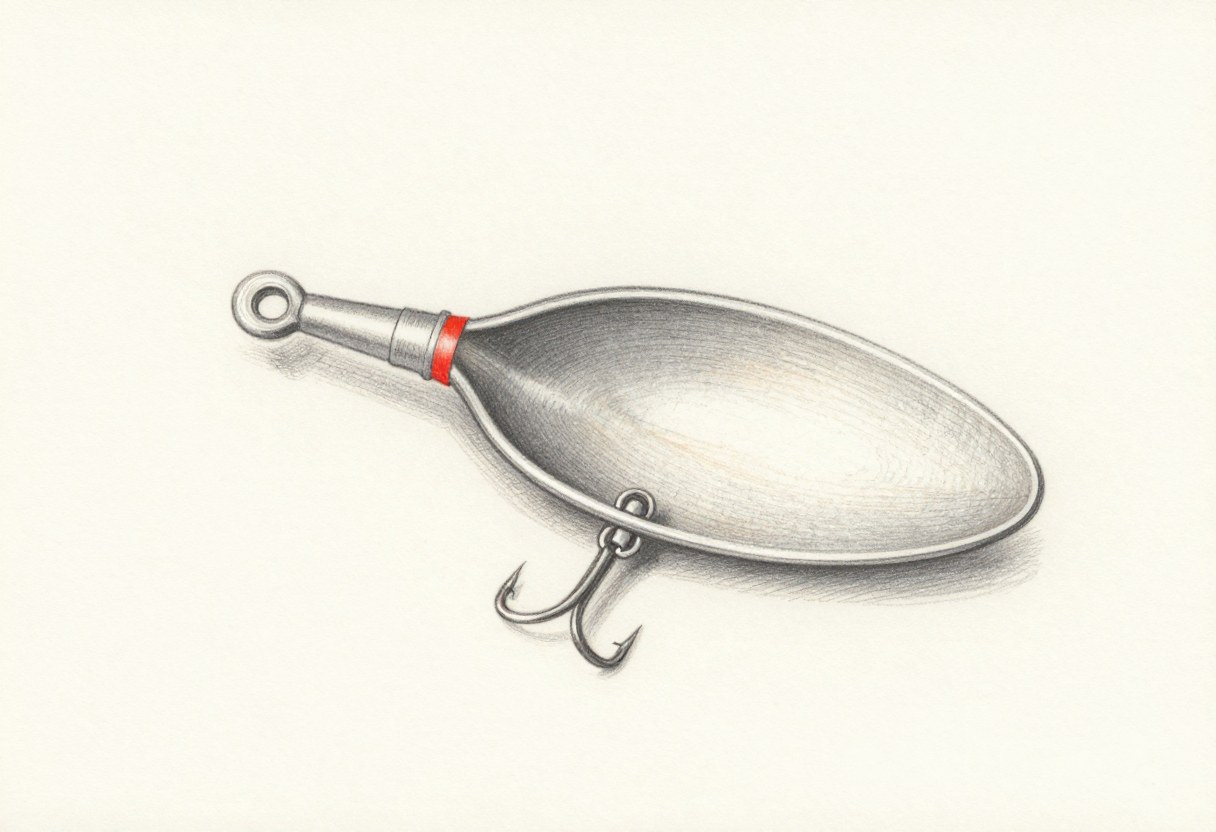
Casting Spoon
Also called: spoon
A curved piece of metal that wobbles and flashes like a wounded baitfish. It casts a long way and works in lakes and rivers.
- Type
- Spinners & Spoons
- Target fish
- Trout & Salmon, Pike & Walleye, Bass
- Skill
- Beginner-friendly
- Depth
- Surface to deep, depending on weight and how long you let it sink
- Best seasons
- Spring through fall
Note: Treble hooks are sharp and can injure people and fish. Pinch the barbs down, keep hooks covered when you are not fishing, and use pliers to remove them. Some waters limit the number of hooks or require single or barbless hooks, so check your state's rules.
When it works best
- For trout, pike, and walleye in lakes and rivers.
- When you need to cast far or fish deep.
- When fish are chasing baitfish.
How to fish it
- Cast and let the spoon sink to the depth you want.
- Reel with a steady retrieve so it wobbles.
- Or lift the rod and let the spoon flutter down, which can trigger a strike.
- Vary the speed until you find what the fish want.
Tips
- Use a swivel to avoid line twist.
- Silver works in bright conditions and gold or copper works in murky water.
Common mistakes
- Reeling too fast, so it spins instead of wobbles.
- Skipping a swivel.
- Fishing the same depth all day.
Gear
A medium-power spinning rod handles most spoons.
Often confused with
- Inline spinner: has a spinning blade rather than a wobbling body.
Fish it catches
Field notes
Spoons have been catching fish for generations. Their simple shape makes them one of the most reliable lures to keep in a tackle box.
Related guides
What works varies by water, season, and the fish that day, so use this as a starting point. Regulations on live bait, hook type and number, lead tackle, and baitfish transport differ by state and water body. Check your state's current fishing rules; our state resources directory links to each state's official regulations and license portal.