
Deep-Diving Crankbait
Also called: deep crank
A crankbait with a long lip that pulls it down 10 feet or more, used to reach fish on deep points, ledges, and humps.
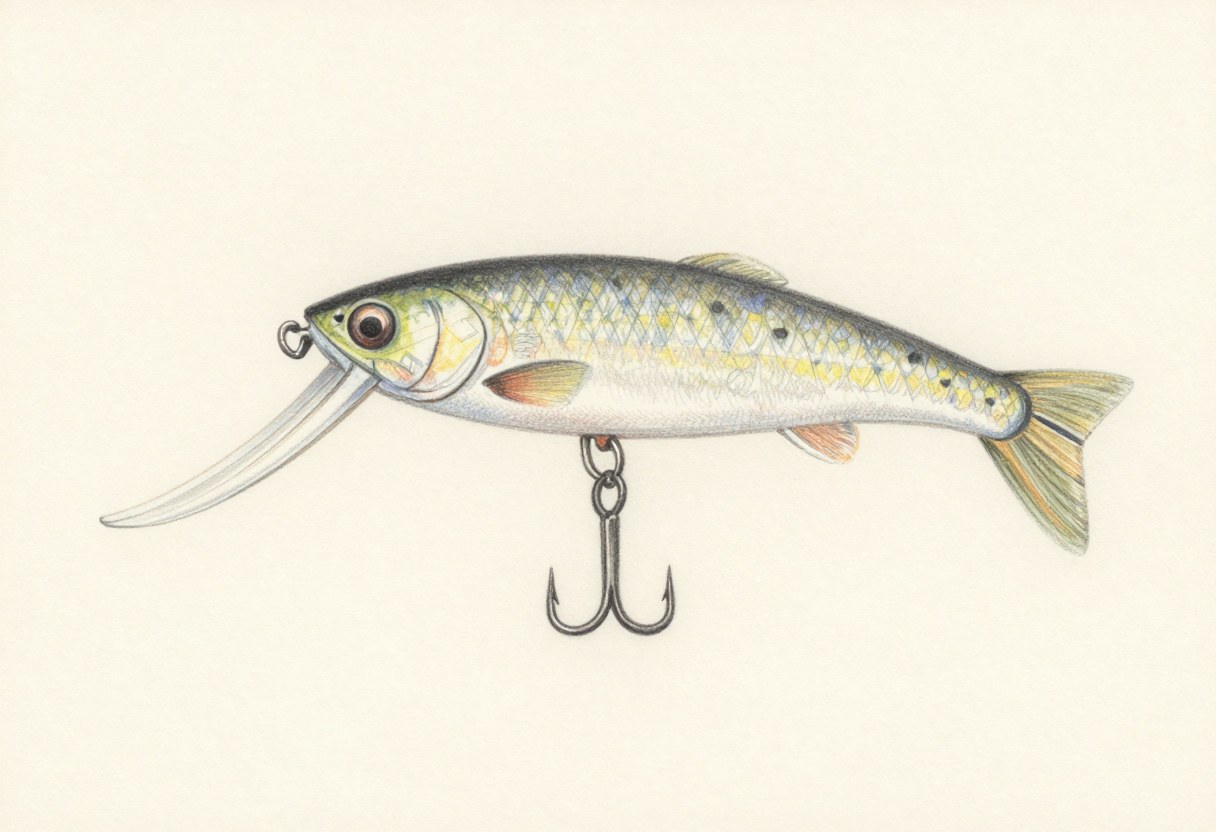
- Type
- Hard Baits
- Target fish
- Bass, Pike & Walleye
- Skill
- Takes some practice
- Depth
- About 8 to 20 feet or more, depending on the lip, line, and cast
- Best seasons
- Summer and winter, when fish hold deep
Note: Treble hooks are sharp and can injure people and fish. Pinch the barbs down, keep hooks covered when you are not fishing, and use pliers to remove them. Some waters limit the number of hooks or require single or barbless hooks, so check your state's rules.
When it works best
- When fish are on deep points, ledges, or humps in summer heat.
- In cold water, when fish move to deeper structure.
- When the shallow bite is slow.
How to fish it
- Make a long cast, since a longer cast gives the lure more time to reach its running depth.
- Crank down quickly with your rod tip low until the lure digs in.
- Keep a steady retrieve and let it bump the bottom.
- Pause when it hits something, then continue.
Tips
- Thinner line lets a crankbait dive deeper, so many anglers use light fluorocarbon.
- A longer rod helps with casting distance.
- Check the hooks often, since they dull on rocks.
Common mistakes
- Reeling slowly, which keeps the lure from reaching depth.
- Using heavy line, which limits how deep it dives.
- Fishing it in water that is shallower than its running depth.
Gear
A longer rod with a slow or moderate action casts further and keeps hooks in fish.
Often confused with
- Shallow crankbait: has a short lip and runs only a few feet deep.
Fish it catches
Field notes
Deep-diving crankbaits let you reach fish that most anglers never cast to. They take a little more practice than shallow ones because you have to get the depth and cast distance right.
Related guides
What works varies by water, season, and the fish that day, so use this as a starting point. Regulations on live bait, hook type and number, lead tackle, and baitfish transport differ by state and water body. Check your state's current fishing rules; our state resources directory links to each state's official regulations and license portal.