
Waxworms
Also called: wax worms, bee moth larvae
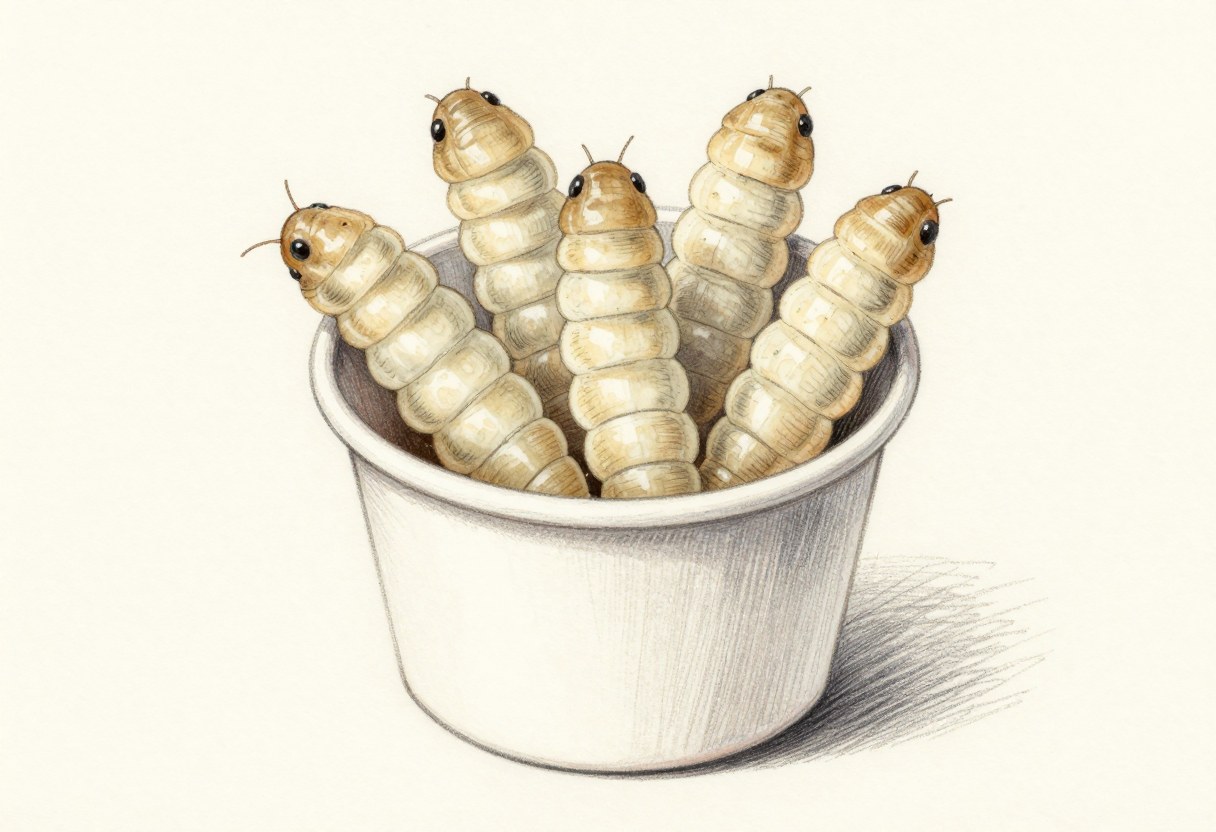
Small, soft, cream-colored grubs that are a top choice for ice fishing and for small panfish.
- Type
- Live & Natural Bait
- Target fish
- Panfish
- Skill
- Beginner-friendly
- Depth
- Any, but often fished under the ice
- Best seasons
- Winter and early spring
Note: Rules on live bait differ by state and water body, and many places limit which baitfish and other bait you can use and move between waters. Never dump leftover bait into a lake or stream, since it can spread invasive species and disease. Check your state's current rules.
When it works best
- For bluegill, perch, and crappie, especially through the ice.
- When fish are picky and want a small bait.
- On a small jig or hook.
How to fish it
- Hook one or two waxworms on a small jig or hook.
- Lower it to the depth where fish are.
- Jig gently or hold still.
- Lift the rod when you feel a bite.
Tips
- Keep waxworms cool, but not frozen.
- Use a small hook so the bait stays alive.
Common mistakes
- Letting the bait get warm.
- Using a hook that is too large.
- Fishing too fast.
Gear
A short ultralight rod with 2- to 4-pound line is a common ice setup.
Often confused with
- Crickets: summer insect bait for panfish.
Fish it catches
Field notes
Waxworms are a winter standby. Their soft bodies and scent bring panfish up to a small jig.
Related guides
What works varies by water, season, and the fish that day, so use this as a starting point. Regulations on live bait, hook type and number, lead tackle, and baitfish transport differ by state and water body. Check your state's current fishing rules; our state resources directory links to each state's official regulations and license portal.