
Tube Bait
Also called: tube jig
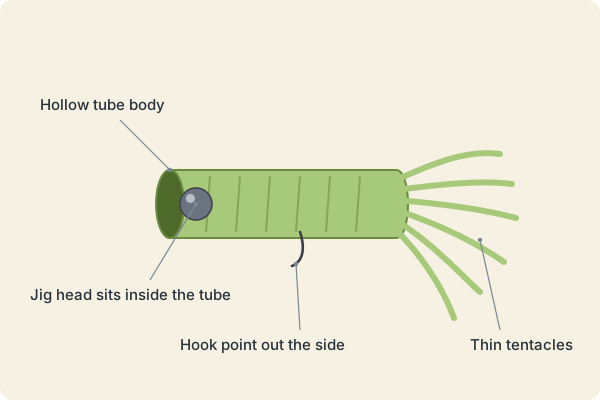
A hollow, skirted soft plastic with a jig head inside, used to imitate crawfish or baitfish, especially along rocky bottoms.
- Type
- Soft Plastics
- Target fish
- Bass, Panfish
- Skill
- Takes some practice
- Depth
- Bottom, shallow to deep
- Best seasons
- Spring through fall
Note: Some states restrict or ban lead sinkers and jigs in certain waters, so check your state's rules and consider tungsten, steel, or other non-lead options.
When it works best
- Along rocky bottoms, ledges, and points where crawfish live.
- For smallmouth bass and for crappie around brush.
- When fish are feeding slowly.
How to fish it
- Slide the jig head into the tube so the hook point comes out the side.
- Cast and let it sink to the bottom.
- Hop it slowly along the bottom with small lifts.
- Let it fall each time, and watch the line for a bite.
Tips
- Small tubes work well for crappie and bluegill.
- Natural browns and greens imitate crawfish.
Common mistakes
- Hopping it too fast.
- Using a jig head that is too heavy.
- Not watching the line.
Gear
A medium-power spinning rod with light line is a good match.
Often confused with
- Grub on a jig head: a solid soft plastic with a curled tail.
Fish it catches
Field notes
Tube baits are a smallmouth favorite. They tumble across the bottom like a crawfish and are easy to fish slowly.
Related guides
What works varies by water, season, and the fish that day, so use this as a starting point. Regulations on live bait, hook type and number, lead tackle, and baitfish transport differ by state and water body. Check your state's current fishing rules; our state resources directory links to each state's official regulations and license portal.