
Spinnerbait
A wire-framed lure with a skirted jig head and one or two spinning blades. It is one of the best choices for stained water and shoreline cover.
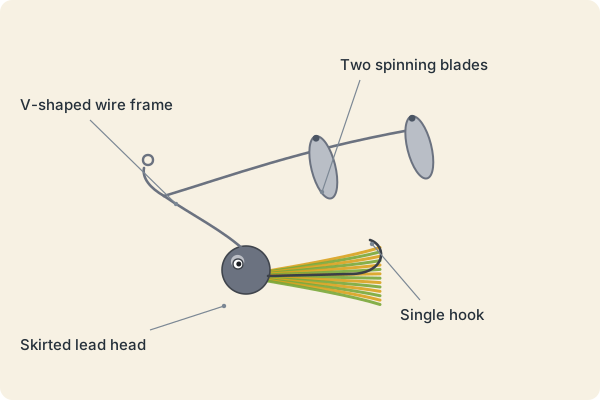
- Type
- Spinners & Spoons
- Target fish
- Bass, Pike & Walleye
- Skill
- Beginner-friendly
- Depth
- About 1 to 10 feet, depending on weight and retrieve
- Best seasons
- Spring and fall
Note: Some states restrict or ban lead sinkers and jigs in certain waters, so check your state's rules and consider tungsten, steel, or other non-lead options.
When it works best
- In stained or murky water, where the blades' flash and vibration stand out.
- Around weeds, wood, and docks, since the wire arm helps keep the hook out of snags.
- On windy days, when a little commotion helps.
How to fish it
- Cast beyond the cover you are fishing.
- Reel steadily, keeping the blades turning.
- Slow-roll it along the bottom in cooler water, or burn it just under the surface in warm water.
- Let it flutter down after bumping a log or branch, since fish often strike then.
Tips
- Willow-leaf blades give flash in clear water, and Colorado blades give more thump in murky water.
- Add a trailer hook if fish are short-striking.
Common mistakes
- Choosing the wrong blade for the water clarity.
- Reeling so fast that it blows to the surface.
- Setting the hook before the fish has eaten it.
Gear
A medium-heavy rod handles the lure's weight and helps set the hook.
Often confused with
- Buzzbait: has a single large blade that churns the surface instead of running underwater.
Fish it catches
Field notes
Spinnerbaits are forgiving: you can reel them at most speeds and they rarely snag. That makes them a great way to learn to fish around cover.
Related guides
What works varies by water, season, and the fish that day, so use this as a starting point. Regulations on live bait, hook type and number, lead tackle, and baitfish transport differ by state and water body. Check your state's current fishing rules; our state resources directory links to each state's official regulations and license portal.