
Stick Bait
Also called: Senko-style, wacky worm
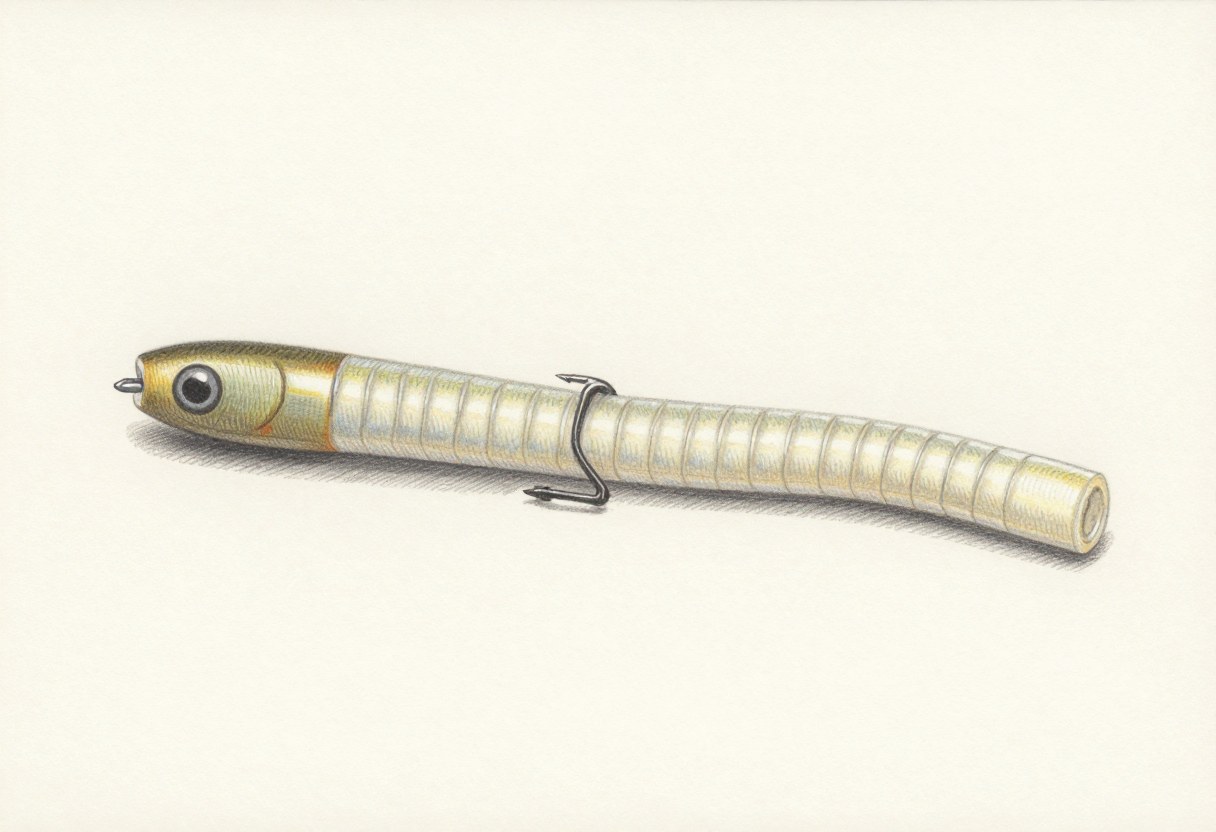
A thick, straight soft plastic with no tail, rigged with a hook through the middle and left to fall slowly with a shimmy.
- Type
- Soft Plastics
- Target fish
- Bass
- Skill
- Beginner-friendly
- Depth
- Shallow to mid-depth, falling slowly
- Best seasons
- Spring through fall
When it works best
- In clear water or on heavily fished waters.
- When bass are finicky and ignore faster lures.
- Around docks, weeds, and shorelines.
How to fish it
- Hook the bait through the middle, which is called wacky rigging, or rig it Texas-style.
- Cast and let it sink on a slack line with no weight.
- Give it small twitches now and then, then let it fall again.
- Watch the line, and set the hook when it jumps or moves off.
Tips
- Keep the line slack so the bait falls naturally.
- Salt-impregnated baits fall faster.
- Use a light hook so it does not weigh the bait down.
Common mistakes
- Adding weight, which ruins the slow fall.
- Fishing it with a tight line.
- Not watching the line, so the bite goes unnoticed.
Gear
A medium-power spinning rod with light line works well for the slow fall.
Often confused with
- Plastic worm: has a tail and is usually fished with a weight.
Fish it catches
Field notes
A stick bait is the easiest soft plastic to fish: cast it, let it fall, and wait.
Related guides
What works varies by water, season, and the fish that day, so use this as a starting point. Regulations on live bait, hook type and number, lead tackle, and baitfish transport differ by state and water body. Check your state's current fishing rules; our state resources directory links to each state's official regulations and license portal.