
Inline Spinner
Also called: Mepps-style spinner, in-line spinner
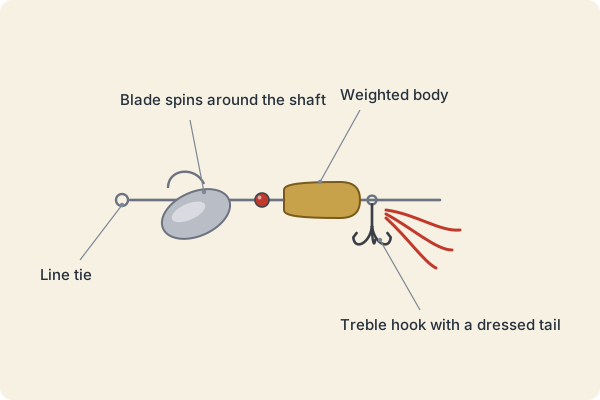
A small lure with a blade that spins around a straight wire shaft. It is a classic for trout streams and a good all-round starter lure.
- Type
- Spinners & Spoons
- Target fish
- Trout & Salmon, Panfish, Bass, Pike & Walleye
- Skill
- Beginner-friendly
- Depth
- About 1 to 10 feet, depending on weight and retrieve
- Best seasons
- Spring through fall
Note: Treble hooks are sharp and can injure people and fish. Pinch the barbs down, keep hooks covered when you are not fishing, and use pliers to remove them. Some waters limit the number of hooks or require single or barbless hooks, so check your state's rules.
When it works best
- In streams and rivers for trout, and in lakes for panfish and bass.
- In clear or lightly stained water.
- When you want a simple lure that needs little technique.
How to fish it
- Cast across or slightly upstream in a stream.
- Reel just fast enough to keep the blade turning.
- Let it sweep through pools and along the edges of current.
- Slow down to fish deeper, or speed up to fish shallower.
Tips
- Use a swivel to prevent line twist, since inline spinners tend to twist the line.
- Smaller sizes (1/16 to 1/8 ounce) are good for trout and panfish.
Common mistakes
- Reeling too fast, so the blade lifts the lure to the surface.
- Fishing without a swivel.
- Using a size too large for small fish.
Gear
A light or ultralight spinning rod with light line is a good match for small spinners.
Often confused with
- Spinnerbait: has a bent wire arm and a skirted head.
Fish it catches
Field notes
Inline spinners are among the first lures many anglers learn. They catch fish in almost any water as long as the blade keeps turning.
Related guides
What works varies by water, season, and the fish that day, so use this as a starting point. Regulations on live bait, hook type and number, lead tackle, and baitfish transport differ by state and water body. Check your state's current fishing rules; our state resources directory links to each state's official regulations and license portal.