
Trout Fishing for Beginners
The trout you'll meet, the light gear and simple baits that catch them, how to read a stream, and how to handle and release them well.
Published October 15, 2026
Why Trout Are Worth Learning
Trout live in some of the prettiest water there is — cold, clear streams, mountain lakes, and tailwaters — and they reward anglers who slow down and pay attention. They're also more approachable than their reputation suggests. Many states stock trout in ponds, lakes, and streams close to cities, and a simple setup of light spinning gear and a few baits catches plenty of them. Learn a handful of principles — how trout use current, why stealth matters, and how to keep them healthy — and trout fishing becomes one of the most rewarding ways to spend a morning outdoors.
1. The Trout You'll Meet
- Rainbow trout are the most widely stocked and caught, recognizable by a pink stripe along the side and small dark spots. They're aggressive, energetic fighters.
- Brown trout are golden-brown with dark and red spots, and are famously wary, particularly the larger ones. They often feed more at dawn, dusk, and night.
- Brook trout are technically a char, with wormlike pale markings on a dark back and bright red spots with blue halos. They live in small, cold, clear headwater streams and are often eager biters.
- Cutthroat trout are native to the western US and named for the red slashes under the jaw. Many populations are protected or carry special regulations.
- Stocked versus wild. Stocked trout, raised in hatcheries and released on a schedule, are generally easier to catch and a good place to start. Wild trout are warier and often protected by special rules.
2. Light Gear Wins
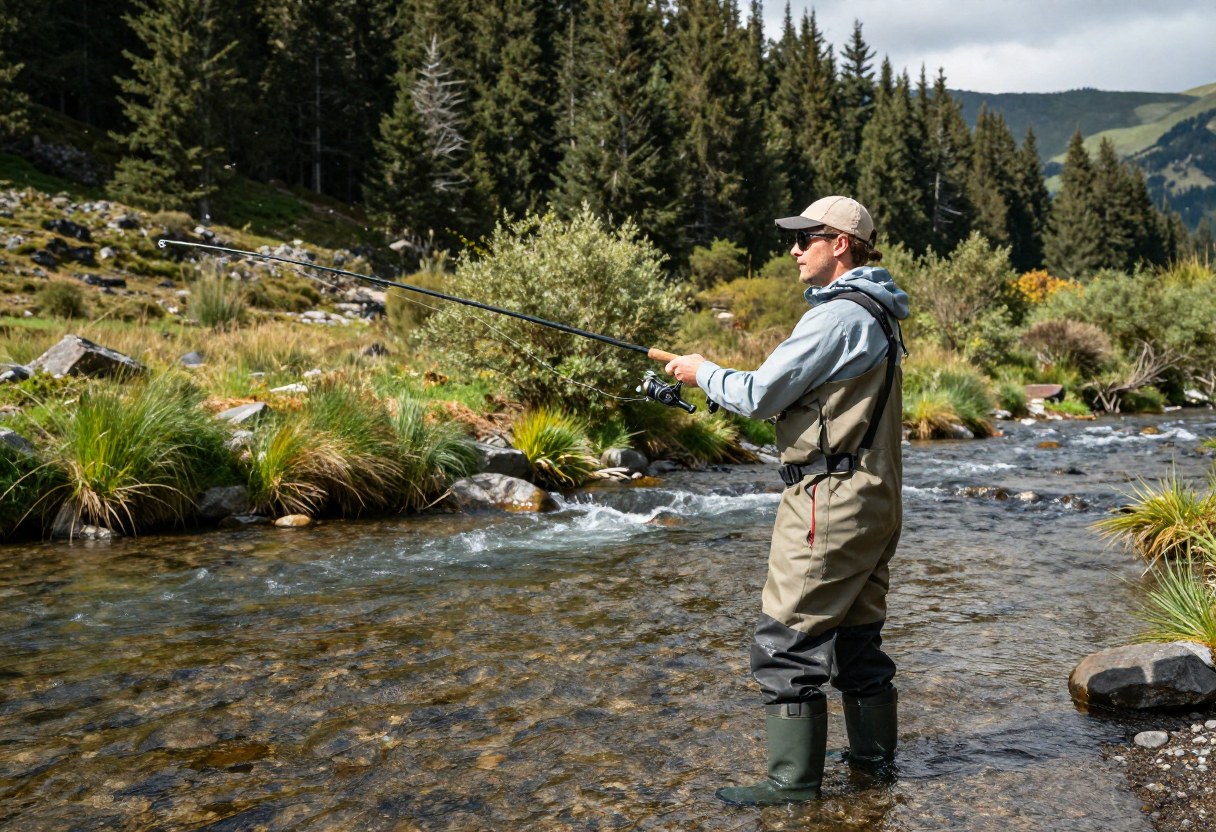
- A light or ultralight spinning rod, roughly five and a half to seven feet, with a small reel, is ideal. See our guide to choosing your first fishing rod and reel for the basics.
- Line in the 2- to 6-pound range, usually with a clear fluorocarbon or monofilament leader. Trout in clear water see heavy line easily, so lighter is better. Our fishing line guide explains the differences.
- Small hooks, typically sizes 8 to 12, with a few split shot and a small bobber or float for bait fishing.
- Learn a couple of dependable knots, such as the improved clinch, from our guide to essential fishing knots.
- A small net, forceps or pliers, and polarized sunglasses that let you see into the water and spot fish and structure.
3. Baits and Lures
- Natural bait is the easiest way to start. Nightcrawlers or pieces of worm, salmon eggs, and kernel corn are classics, particularly on stocked fish. Check the local regulations, since some waters limit or prohibit certain baits.
- Prepared dough baits are scented, floating baits made for trout, often fished a foot or two off the bottom on a light line, and especially popular in stocked lakes.
- Small inline spinners and small spoons cover water quickly and trigger strikes from active fish. Cast across or upstream and reel at a steady pace that keeps the blade turning.
- Small jigs and soft plastics work well in lakes and slower pools.
- Flies are the classic option, and our beginner's guide to fly fishing is the place to start. A fly on a spinning rig, using a clear bubble float, is a simple way to try it.
- See our lures and baits guide for a broader look at matching offerings to conditions.
4. Reading a Trout Stream
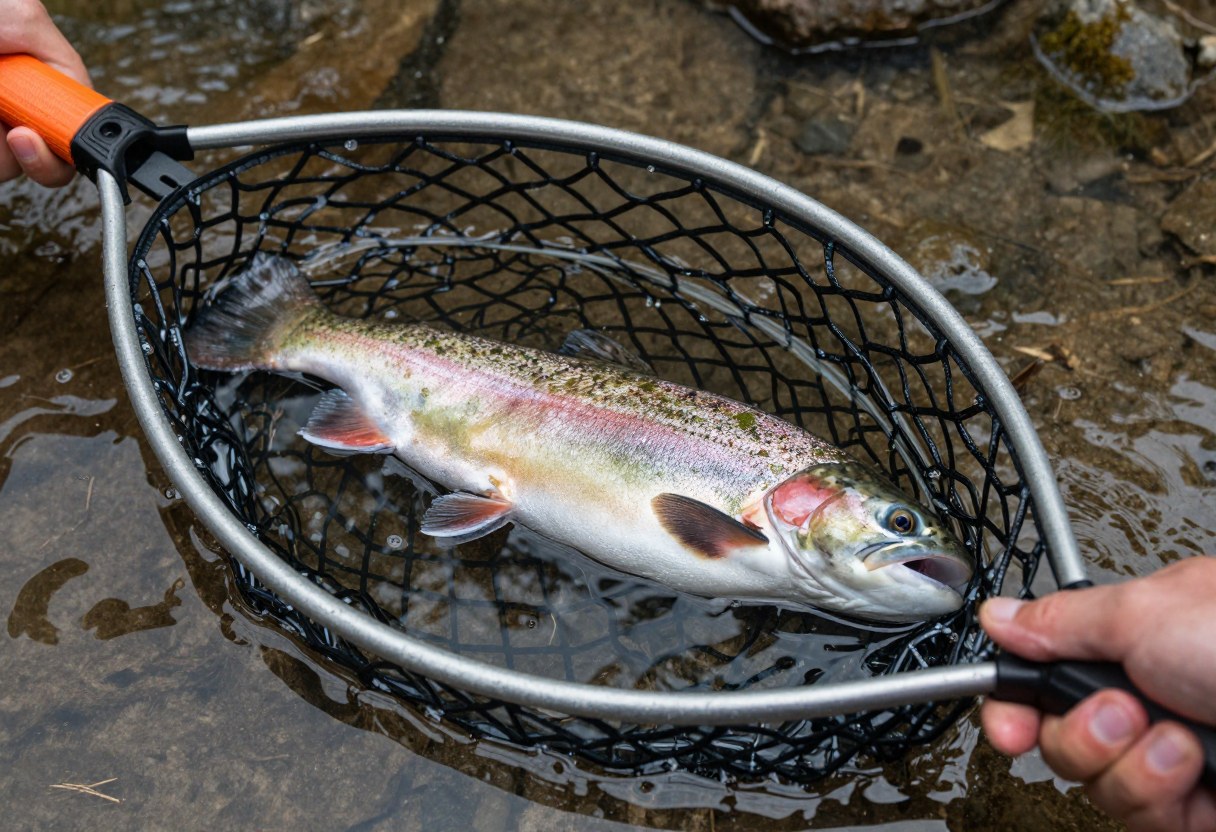
Trout position themselves to rest in slower water while staying close to faster current that brings food. Our guide to reading water covers the general ideas; for trout in particular:
- Look for current seams, where fast and slow water meet. A trout can sit in the slow side and dart into the fast side to grab drifting food.
- Fish pools and the heads and tails of runs, the deeper, slower stretches of a stream, especially where the current first enters.
- Check behind rocks, logs, and boulders, where the obstruction creates a pocket of calm water.
- Cast near undercut banks and overhanging vegetation, which offer both shelter and shade.
- In small streams, trout are often in the best-looking spots, so move carefully and cast to the most promising pockets one at a time.
5. Stealth and Presentation
- Trout are easily spooked. Walk softly, avoid stomping on the bank, keep your shadow off the water, and stay low when you approach a pool.
- Approach from downstream and cast upstream, because trout face into the current and are less likely to see you behind them. Your bait or lure then drifts down naturally toward the fish.
- Let bait drift naturally with the current, without drag, and keep the line fairly tight so you can feel strikes.
- Make your first cast count. The first presentation to a fish is the one most likely to work.
- Change what you're doing if nothing bites: switch baits, adjust depth, or move to a new spot, rather than casting repeatedly to the same place.
6. When and Where
- Trout are most active in cool water, roughly 50 to 65 degrees Fahrenheit. Spring and fall are generally prime, and in summer, fish early and late, or head to higher, colder water.
- Early morning and evening are the best times, and overcast days often outperform bright sun.
- Find out when your state stocks local waters. Fresh-stocked fish are plentiful and eager, and agencies publish stocking schedules. Our state resources directory links to each state's wildlife agency.
- Be careful in high water. After storms or snowmelt, streams can be fast, cold, and dangerous to wade.
7. Wading and Stream Safety
- Cold water can sap your strength quickly, and a fall into a cold stream is a genuine risk. Dress in layers appropriate for the water temperature, not just the air.
- Wear boots with good traction, and use a wading staff in current. Move slowly, test each step, and keep your feet apart.
- Never wade water you can't see the bottom of or that's above your knees in strong current.
- Tell someone where you're going, and know the basics from our hiking safety guide, since many trout streams are remote.
Don't Skip This: Check the regulations for the specific water before you fish. Trout streams often have special rules — artificial lures only, single barbless hooks, size or bag limits, or catch-and-release sections — and violating them is easy to do accidentally.
8. Handling, Releasing, and Keeping
- Wet your hands before touching a trout to protect its protective slime layer, and keep it in the water as much as possible.
- Use a rubber net, and avoid squeezing the fish or touching its gills. Barbless hooks and pliers make quick release easier.
- Hold a trout facing into the current after catching it, and let it swim away on its own once it's recovered. Our catch-and-release guide covers it in detail.
- If you're keeping fish, check the limits, then clean and ice them promptly. Trout are excellent eating, and our guide to cleaning and filleting fish covers the process.
- Prevent the spread of invasive species and disease. Clean, drain, and dry your boots and gear before moving to a different waterway, as many areas require.
Common Mistakes
- Using line that's too heavy, which trout in clear water can see.
- Spooking fish with heavy steps, shadows, or by approaching from upstream.
- Fishing in warm water, where trout are sluggish and stressed.
- Ignoring special regulations for the water.
- Handling trout roughly or keeping them out of the water too long.
Quick Decision Checklist
- I have a light spinning rod, 2–6 lb line, small hooks, and a few baits or small spinners
- I've checked the regulations and any special rules for this water
- I'm fishing early or late, in cool water, and approaching quietly from downstream
- I'm targeting current seams, pool edges, and cover
- I'm wading carefully, with a staff and traction, and someone knows where I am
- I'll handle fish with wet hands and release them gently
Glossary
- Riffle: A shallow, fast stretch of stream where water breaks over rocks.
- Seam: The line where fast and slow currents meet, a prime feeding spot for trout.
- Stocked Trout: Hatchery-raised trout released into public waters on a schedule.
- Barbless Hook: A hook with its barb flattened or removed, making release easier on the fish.
Final Takeaway
Trout fishing comes down to light gear, a quiet approach, and finding where fish rest and feed: seams, pools, and cover in cool, clean water. Check the rules, wade safely, and handle every fish with wet hands, and a stream near you can become a place you return to for years.
Trout regulations, bait rules, stocking schedules, and water conditions vary by state and waterbody and change over time — always check current local rules before you fish.