
Brown Trout
Salmo trutta
A wary, golden-brown trout from Europe, now established across much of the US, famous for outsmarting anglers and growing large.
- Type
- Trout & Salmon
- Water
- Cold water
- Habitat
- Streams, Rivers, Lakes, Reservoirs
- Typical size
- 10 to 18 inches in most streams; trophy fish can be much larger
- Range
- Native to Europe and western Asia, and introduced and established in cool waters across much of North America.
- Best seasons
- Spring and fall; low-light hours, cloudy days, and night during summer
How to identify it
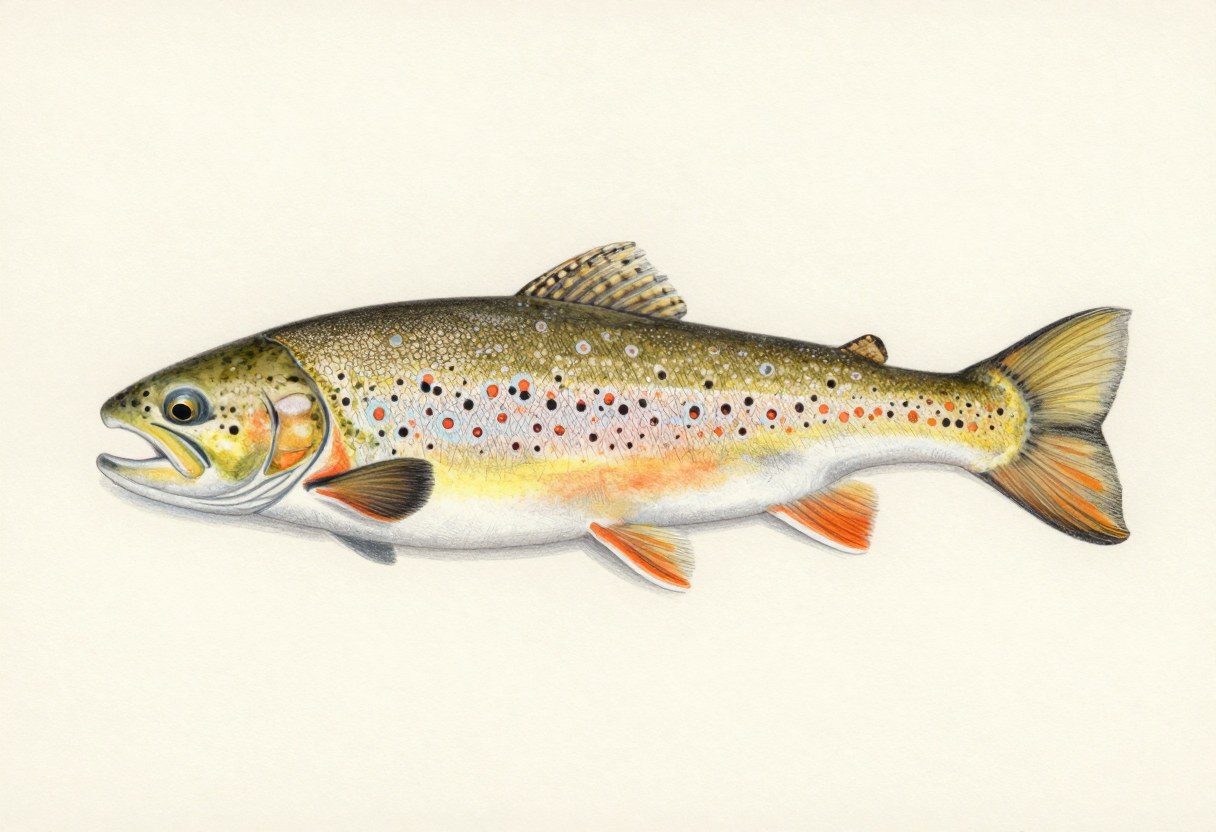
- The body is golden-brown to olive with dark brown or black spots and red or orange spots surrounded by pale blue halos.
- The tail has few or no spots and a nearly square edge.
- The adipose fin often has an orange margin.
- Spawning males develop a hooked lower jaw.
Often confused with
- Rainbow Trout: a pink side stripe and many small black spots, including on the tail.
- Brook Trout: pale wormlike markings on a dark back and orange-red fins edged in white.
Best baits and lures
- Nightcrawlers and worms
- Minnows
- Small spinners and spoons
- Streamer flies
- Nymphs and dry flies
Techniques
- Fish deep pools and undercut banks at dawn, dusk, and after dark
- Swing streamers through pools and runs
- Stay low, move slowly, and cast from downstream
- Fish cloudy, overcast days when fish feel safe
Fishing notes
Brown trout are more tolerant of warm and degraded water than other trout, and they grow large by being cautious and often feeding at night. Larger fish tend to hide under cut banks, logs, and deep pools during the day and feed when light is low.
Because they are so wary, stealth and a careful presentation matter more for browns than for any other trout. Long leaders, light line, and quiet wading all help.
Because browns are not native, some states encourage harvest in streams where they compete with native trout, while others protect trophy fish. Check the local regulations.
Related guides
Size limits, bag limits, legal baits, and seasons vary by state and waterbody and change over time. Check your state's current regulations — our state resources directory links straight to each state's official fishing rules and license portal.