
Black Crappie
Pomoxis nigromaculatus
A speckled, silvery panfish prized for its sweet, flaky fillets, found around brush, docks, and submerged trees in clear lakes and ponds.
- Type
- Panfish
- Water
- Warm water
- Habitat
- Lakes, Ponds, Reservoirs, Rivers
- Typical size
- 8 to 12 inches; a 14-inch fish is a trophy
- Range
- Native to the eastern and central US and southern Canada, and introduced across the country, particularly in clear lakes and reservoirs.
- Best seasons
- Spring, when fish move shallow to spawn, and fall; suspended in deeper water in summer and winter
How to identify it
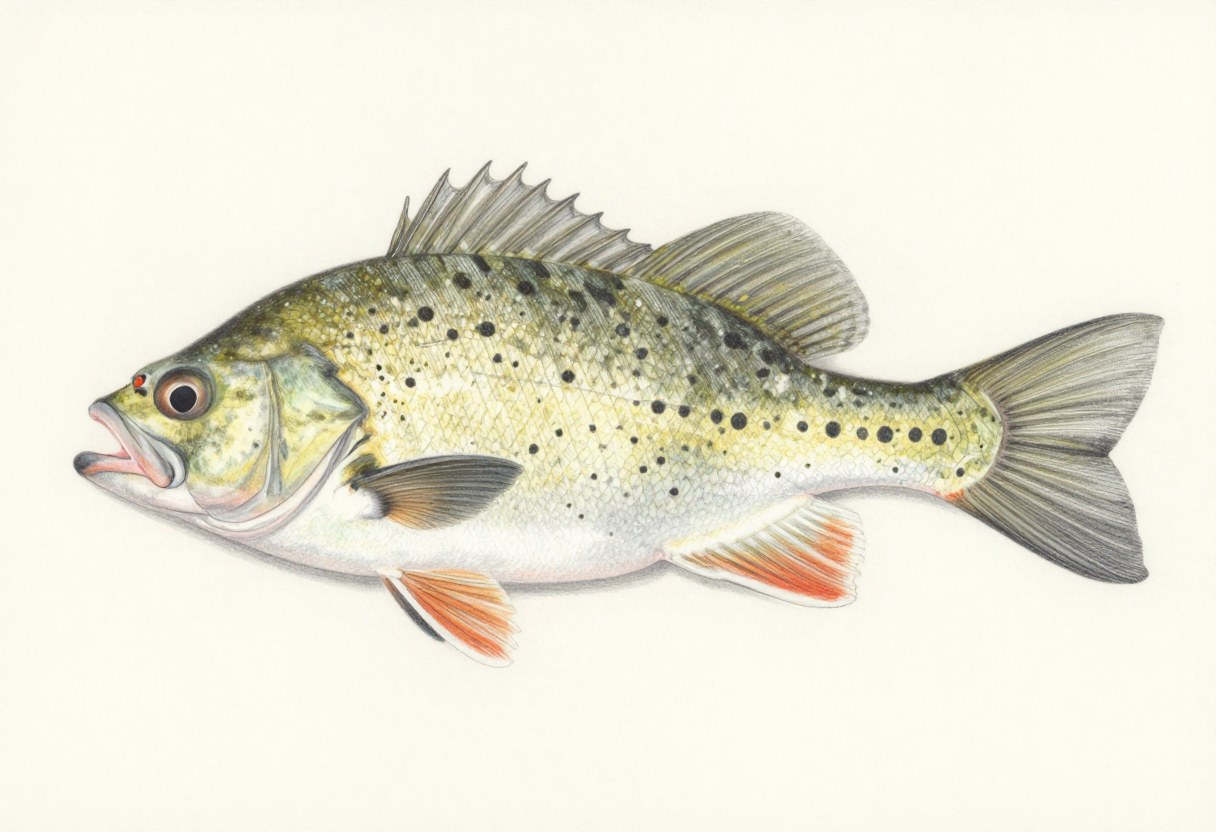
- Irregular black blotches and speckles cover the silvery-green sides.
- The dorsal fin has seven or eight spines.
- The dorsal fin base is about as long as the distance from its start to the eye.
- The mouth is large and upturned, on a deep, compressed body.
Often confused with
- White Crappie: faint vertical bars rather than a random speckle pattern, and five or six dorsal spines.
Best baits and lures
- Small live minnows
- Marabou jigs
- Tube jigs
- Small spinners
- Small crankbaits
Techniques
- Dip a jig or minnow beside brush piles, docks, and submerged trees
- Fish shallow cover in spring when water reaches the 60s
- Troll or drift jigs over open water for suspended fish
- Use a light line and a sensitive rod
Fishing notes
Crappie gather around vertical cover: submerged brush, fallen trees, bridge pilings, and docks. Find the cover and you often find a school. In spring, they move shallow to spawn and are easy to catch; the rest of the year they suspend at a particular depth, and finding that depth is the key.
They have thin, tender mouths, which is why they are often called papermouths. Set the hook gently and keep a steady pull when you land them.
Check your water's regulations, since many lakes have size or bag limits for crappie.
Related guides
Size limits, bag limits, legal baits, and seasons vary by state and waterbody and change over time. Check your state's current regulations — our state resources directory links straight to each state's official fishing rules and license portal.