
Rainbow Trout
Oncorhynchus mykiss
The most widely stocked trout in North America: a spotted, energetic fighter of cold, clear streams and lakes.
- Type
- Trout & Salmon
- Water
- Cold water
- Habitat
- Streams, Rivers, Lakes, Reservoirs
- Typical size
- 8 to 16 inches for stocked fish; wild fish and steelhead can run much larger
- Range
- Native to Pacific drainages of North America and stocked in cold waters across the country and around the world.
- Best seasons
- Spring and fall; early and late in the day in summer
How to identify it
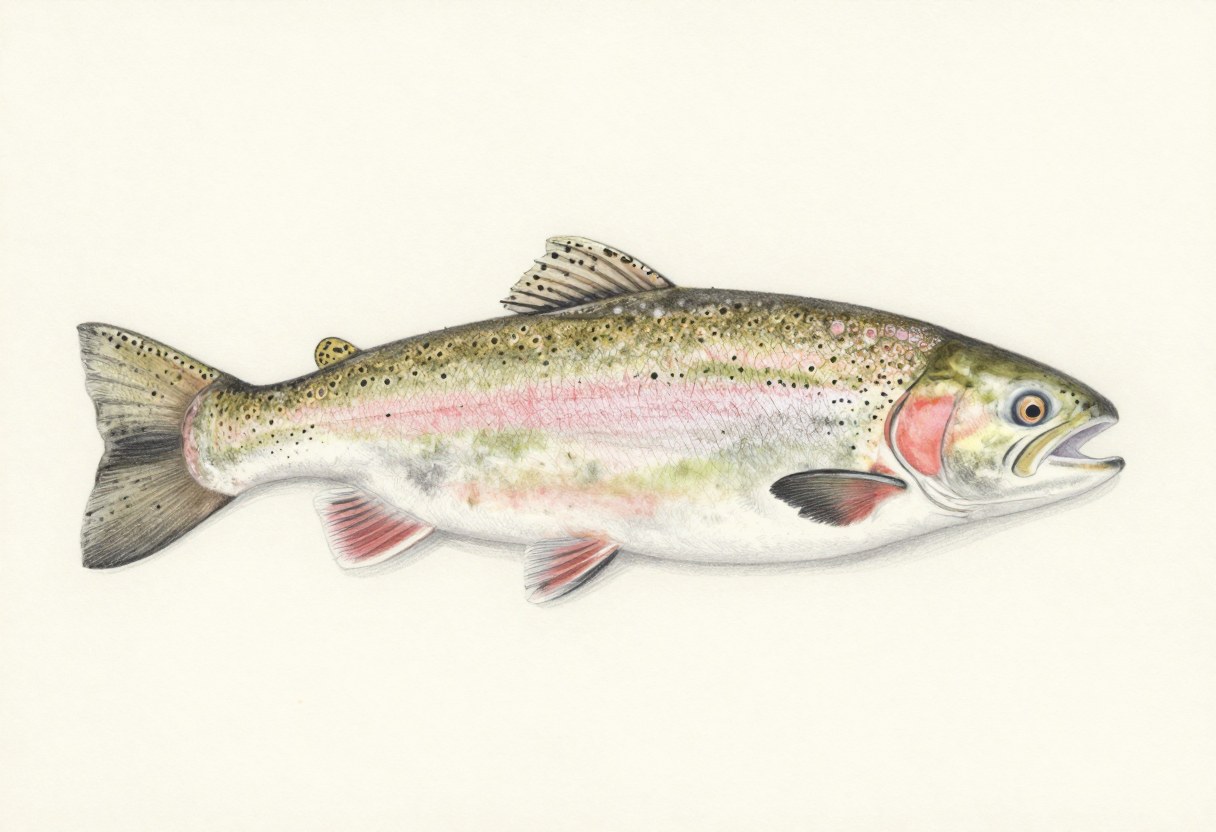
- A pink-to-red stripe runs along the side, often brightest on spawning fish.
- Small black spots cover the back, sides, dorsal fin, and tail fin.
- The tail is slightly squared or shallowly forked rather than deeply forked.
- The body is silvery with an olive back, and there is no red slash under the jaw.
Often confused with
- Cutthroat Trout: red or orange slashes under the lower jaw, with spots concentrated toward the tail.
- Brown Trout: gold-brown body with dark and red spots surrounded by pale halos, and few or no spots on the tail.
- Steelhead: not a different species: steelhead are the sea-run form of the rainbow trout, and are silvery and often much larger.
Best baits and lures
- Nightcrawlers and worm pieces
- Salmon eggs
- Floating dough baits
- Small inline spinners and spoons
- Flies and nymphs
- Small jigs
Techniques
- Drift bait through current seams and pools
- Cast small spinners across and upstream
- Float dough bait a foot or two off the bottom in stocked lakes
- Approach from downstream and stay low and quiet
Fishing notes
Rainbow trout are most active in cool water, roughly 50 to 65 degrees. They hold in the slower water beside faster current — seams, pool edges, and the pockets behind rocks — and dart out to grab food as it drifts past.
Stocked fish are generally easier to catch than wild ones. Many states publish stocking schedules, and a freshly stocked pond or stream is a good place for a beginner to start.
Trout waters often carry special rules: artificial lures only, single barbless hooks, reduced limits, or catch-and-release sections. Check the regulations for the specific water before you fish, and wet your hands before handling any fish you plan to release.
Related guides
Size limits, bag limits, legal baits, and seasons vary by state and waterbody and change over time. Check your state's current regulations — our state resources directory links straight to each state's official fishing rules and license portal.