
White Crappie
Pomoxis annularis
A pale, barred crappie that tolerates muddy water better than its black cousin and fills many southern and midwestern reservoirs.
- Type
- Panfish
- Water
- Warm water
- Habitat
- Lakes, Reservoirs, Ponds, Rivers
- Typical size
- 8 to 12 inches
- Range
- Native to the central and eastern US, and widely introduced elsewhere, with its strongest populations in turbid reservoirs and slow rivers.
- Best seasons
- Spring spawn; fall; suspended near cover in summer and winter
How to identify it
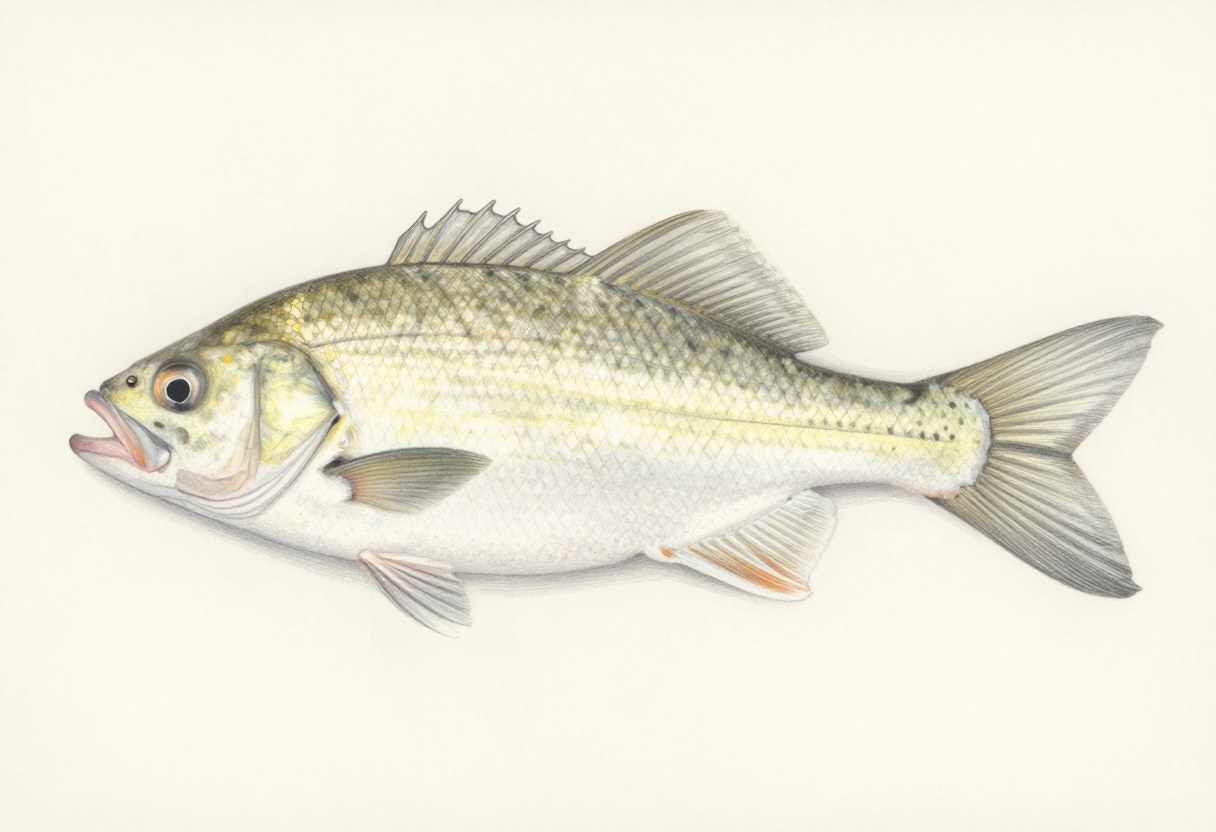
- The silvery-white sides carry faint dark vertical bars, though they can be indistinct, and a pale, plain look overall.
- The dorsal fin has five or six spines.
- The dorsal fin base is shorter than the distance from its start to the eye.
- The body is olive-green on the back, with a large upturned mouth.
Often confused with
- Black Crappie: irregular black blotches, a darker body, and seven or eight dorsal spines.
Best baits and lures
- Small live minnows
- Marabou and tube jigs
- Small spinners
- Small crankbaits
Techniques
- Fish jigs and minnows around brush piles and standing timber
- Troll slowly over open water to find suspended schools
- Fish shallow cover in spring
- Use light line and a sensitive rod
Fishing notes
White crappie are the crappie of choice in muddy reservoirs and river backwaters, where black crappie struggle. They school tightly around submerged structure and often suspend at one depth, so a sonar unit or a systematic depth search with jigs is helpful.
Crappie spawn in shallow water in spring, and that is when many anglers catch their biggest fish and best numbers. Release some of the largest females to protect the fishery.
They are among the best-tasting freshwater fish, with mild, white flesh.
Related guides
Size limits, bag limits, legal baits, and seasons vary by state and waterbody and change over time. Check your state's current regulations — our state resources directory links straight to each state's official fishing rules and license portal.