
Brook Trout
Salvelinus fontinalis
A jewel-colored char of cold, clean headwater streams, native to eastern North America and a sign of healthy water.
- Type
- Trout & Salmon
- Water
- Cold water
- Habitat
- Streams, Rivers, Lakes
- Typical size
- 6 to 12 inches in most streams; larger fish live in some lakes and remote waters
- Range
- Native to eastern North America, from the Appalachians and Great Lakes to the Northeast and eastern Canada, and introduced in parts of the West.
- Best seasons
- Spring and fall; cool mornings and evenings in summer
How to identify it
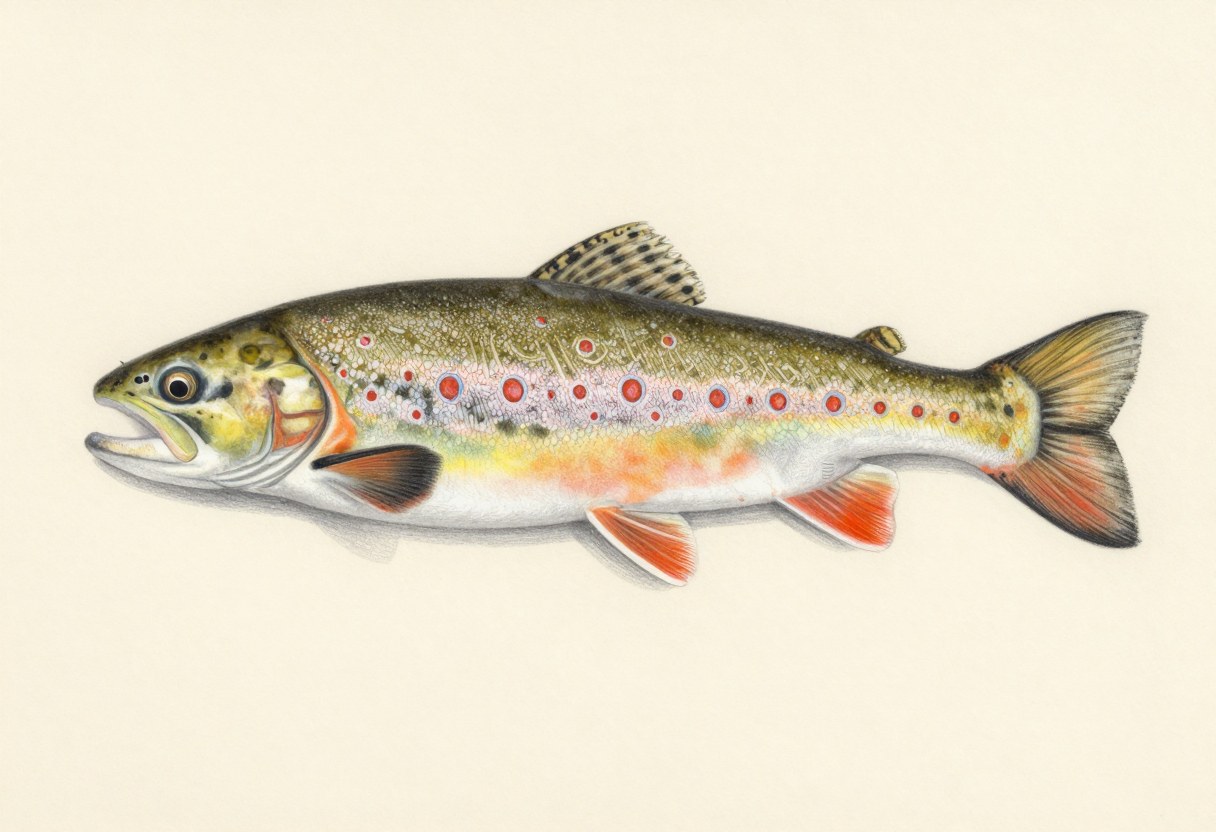
- Pale cream, wormlike markings cover the dark olive back and the dorsal fin.
- Red spots surrounded by blue halos dot the sides.
- The lower fins are orange-red with white leading edges bordered in black.
- The tail is squared, and the belly of spawning males turns orange.
Often confused with
- Brown Trout: red spots with halos but no wormlike back pattern, and no white-edged lower fins.
- Lake Trout: a deeply forked tail and pale spots on a gray-green body, found in deep lakes.
Best baits and lures
- Worms
- Small spinners
- Small spoons
- Flies and nymphs
- Salmon eggs
Techniques
- Approach small streams quietly and cast to pocket water and pools
- Drift worms or flies through riffles and pool heads
- Fish small spinners across current seams
- Release fish quickly, since brook trout are sensitive to warm water and handling
Fishing notes
Brook trout are technically a char, not a true trout, and they are the only trout native to much of the eastern United States. They need cold, clean, well-shaded water, and populations have declined where streams warm or silt up.
They are often eager biters in the small streams where they live, but they spook easily, so approach quietly and keep your shadow off the water.
Many native brook trout waters carry special rules, such as catch-and-release or single-hook limits, so check your regulations before you fish.
Related guides
Size limits, bag limits, legal baits, and seasons vary by state and waterbody and change over time. Check your state's current regulations — our state resources directory links straight to each state's official fishing rules and license portal.