
Smallmouth Bass
Micropterus dolomieu
A bronze, hard-fighting bass of clear, rocky lakes and cool rivers, famous for pound-for-pound strength and acrobatic leaps.
- Type
- Bass
- Water
- Cool water
- Habitat
- Lakes, Rivers, Streams, Reservoirs
- Typical size
- 1 to 3 lb; over 5 lb is a trophy
- Range
- Native to the Great Lakes, upper Mississippi, and Ohio River basins and the Ozarks, and introduced widely across the US and southern Canada, including the West.
- Best seasons
- Late spring through fall, with the best action in water of roughly 60 to 75 degrees
How to identify it
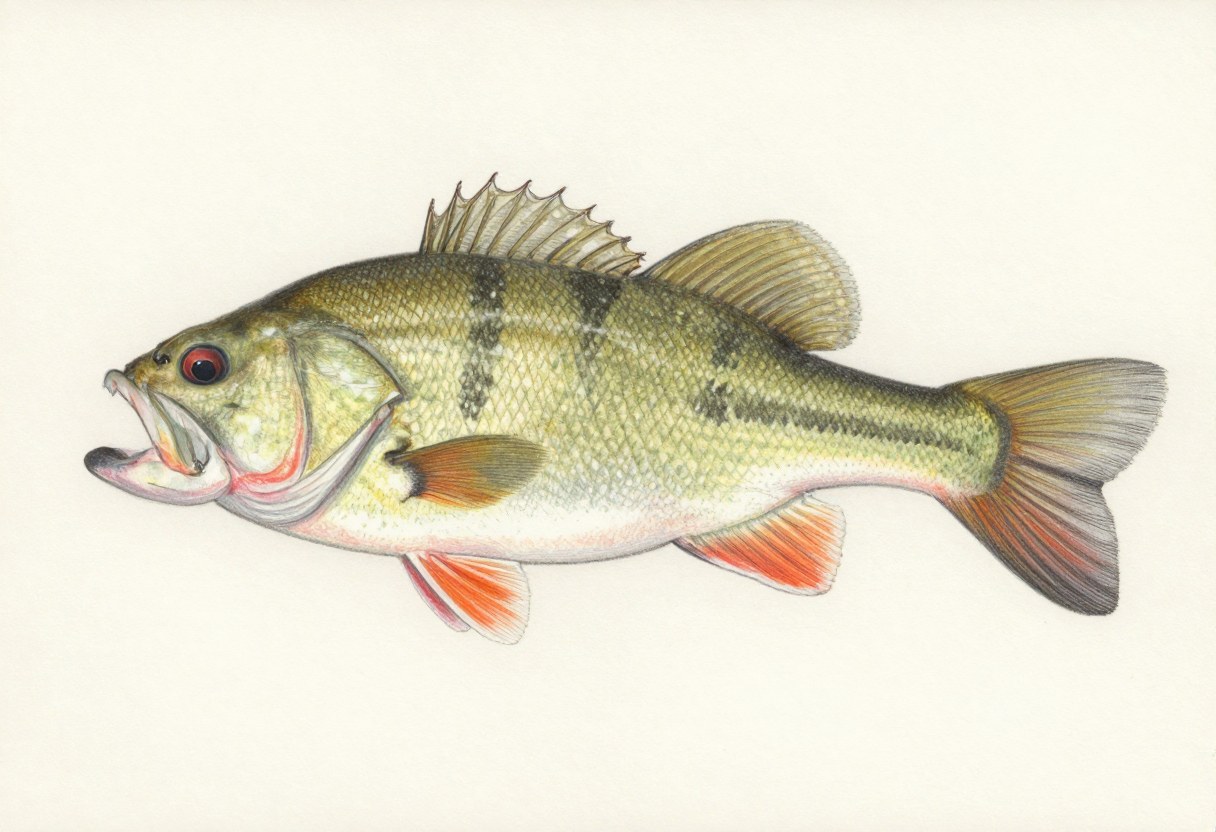
- The upper jaw ends below the middle of the eye and does not reach past it.
- Dark vertical bars mark the sides, especially on smaller fish and in clear water.
- The body is bronze or brown rather than green, and the eye is reddish.
- The two dorsal fins are joined with only a shallow notch between them.
Often confused with
- Largemouth Bass: the jaw extends past the eye, a horizontal stripe replaces the vertical bars, and the dorsal fin is deeply notched.
- Spotted Bass: a horizontal stripe of blotches with rows of small spots below it, and a patch of teeth on the tongue.
Best baits and lures
- Tube jigs
- Soft plastic crawfish and grubs
- Live crawfish and minnows
- Jerkbaits
- Inline spinners
- Topwater lures
Techniques
- Drag or hop a tube jig across rock and gravel
- Cast to current seams and boulders in rivers
- Work a jerkbait along rocky points in cool water
- Fish topwater at dawn and dusk over shallow flats
Fishing notes
Smallmouth bass want clean, well-oxygenated water with rock, gravel, or boulders. In lakes they hold on rocky points, drop-offs, and humps; in rivers they sit in the slack water just behind boulders and along current seams, waiting to dart out at crawfish and minnows.
They fight harder than their size suggests, and they are sensitive to warm water and rough handling. Wet your hands, keep fish in the water as much as possible, and release them gently, particularly in summer.
Black bass rules often differ by species and by waterbody, with seasonal catch-and-release periods in many states. Check the current regulations before you keep a fish.
Related guides
Size limits, bag limits, legal baits, and seasons vary by state and waterbody and change over time. Check your state's current regulations — our state resources directory links straight to each state's official fishing rules and license portal.