
Bluegill
Lepomis macrochirus
The classic first fish: a feisty, abundant sunfish that bites worms and tiny flies in nearly every pond and lake in the country.
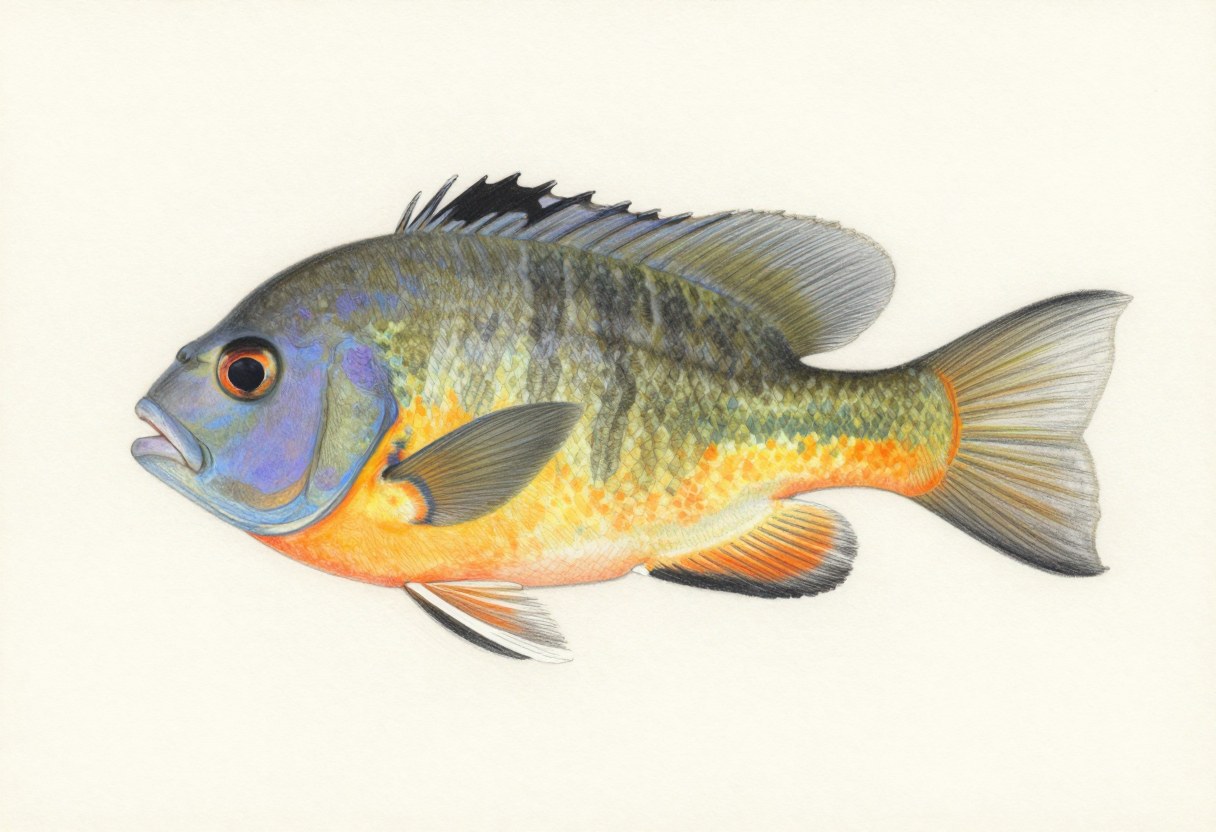
- Type
- Panfish
- Water
- Warm water
- Habitat
- Ponds, Lakes, Reservoirs, Rivers, Streams
- Typical size
- 6 to 9 inches, up to about half a pound; a 10-inch fish is a trophy
- Range
- Native to the eastern and central US, and introduced across North America, where it is among the most common freshwater fish.
- Best seasons
- Late spring through summer, especially when fish are on their spawning beds
How to identify it
- The ear flap, extending back from the gill cover, is solid dark blue-black right to its edge.
- A dark spot sits at the rear base of the soft dorsal fin.
- The body is deep and compressed, with a small mouth and faint vertical bars.
- Breeding males have a bright orange-yellow breast and a blue cheek.
Often confused with
- Redear Sunfish: the ear flap has a red or orange margin, and there is no spot on the dorsal fin.
- Pumpkinseed: a bright red-orange spot on the ear flap and orange-spotted, wavy-lined cheeks.
- Green Sunfish: a larger mouth that reaches the middle of the eye, and a pale edge on the ear flap.
Best baits and lures
- Worms
- Crickets
- Small jigs
- Small flies and popping bugs
- Tiny spinners
Techniques
- Suspend a worm under a small bobber near docks, weeds, and shade
- Fish beds in shallow water in late spring and early summer
- Cast tiny jigs along weed edges
- Use a light rod and a small hook
Fishing notes
Bluegills nest in colonies in shallow water in late spring and early summer, fanning out round depressions on sandy or gravel bottoms. Finding a bed means you may catch dozens of fish in a short time, which is why they are the perfect first fish for kids.
Keep the gear light: a small hook, a short piece of worm, and a small bobber. Many anglers keep bluegills for the table, but heavy harvest of the largest males can hurt a pond's fishery, so consider releasing the biggest ones.
They are excellent eating when cleaned promptly and cooked fresh.
Related guides
Size limits, bag limits, legal baits, and seasons vary by state and waterbody and change over time. Check your state's current regulations — our state resources directory links straight to each state's official fishing rules and license portal.