
Camping With Kids: A Practical Guide
How to plan a first family camping trip that goes well — where to go, what to bring, how to keep kids warm, safe, and entertained.
Published October 15, 2026
Lower the Bar, Raise the Fun
Camping with kids isn't camping with small adults. Children get cold faster, bored sooner, and scared more easily — and they notice absolutely everything, from the stars to the bugs. The families who keep camping are usually the ones who set their expectations low on the first few trips: a short drive, an easy campsite, a simple menu, and a plan that bends around naps, snacks, and weather. Get the basics right and kids often remember camping as the best part of their year.
1. Start Small
- Camp close to home for the first trip, so you can bail out easily if the weather turns or someone melts down.
- Try a backyard campout first. It lets kids get used to sleeping in a tent and lets you find gear problems with the bathroom a few steps away.
- Plan just one or two nights at first, then build up.
- Choose a campground with amenities, such as restrooms, drinking water, and a ranger or camp host, rather than remote backcountry. A developed site with a playground or lake can be perfect.
- Reserve ahead for popular campgrounds. Our state resources directory links to each state's park camping reservation system.
2. Choosing the Site
Our guide to campsite selection covers the general principles. With kids in mind:
- Look for a flat, level site away from steep drops, busy roads, and water you can't supervise.
- Pick a spot with natural boundaries and shade, and a site close to the restrooms and water source.
- Check for hazards, such as dead branches overhead ("widowmakers"), poison ivy, and ant mounds.
- Choose a site that suits your group: a loop with other families can mean playmates, but also noise.
3. Gear That Makes a Difference
Start with our camping gear checklist, then adjust for kids.
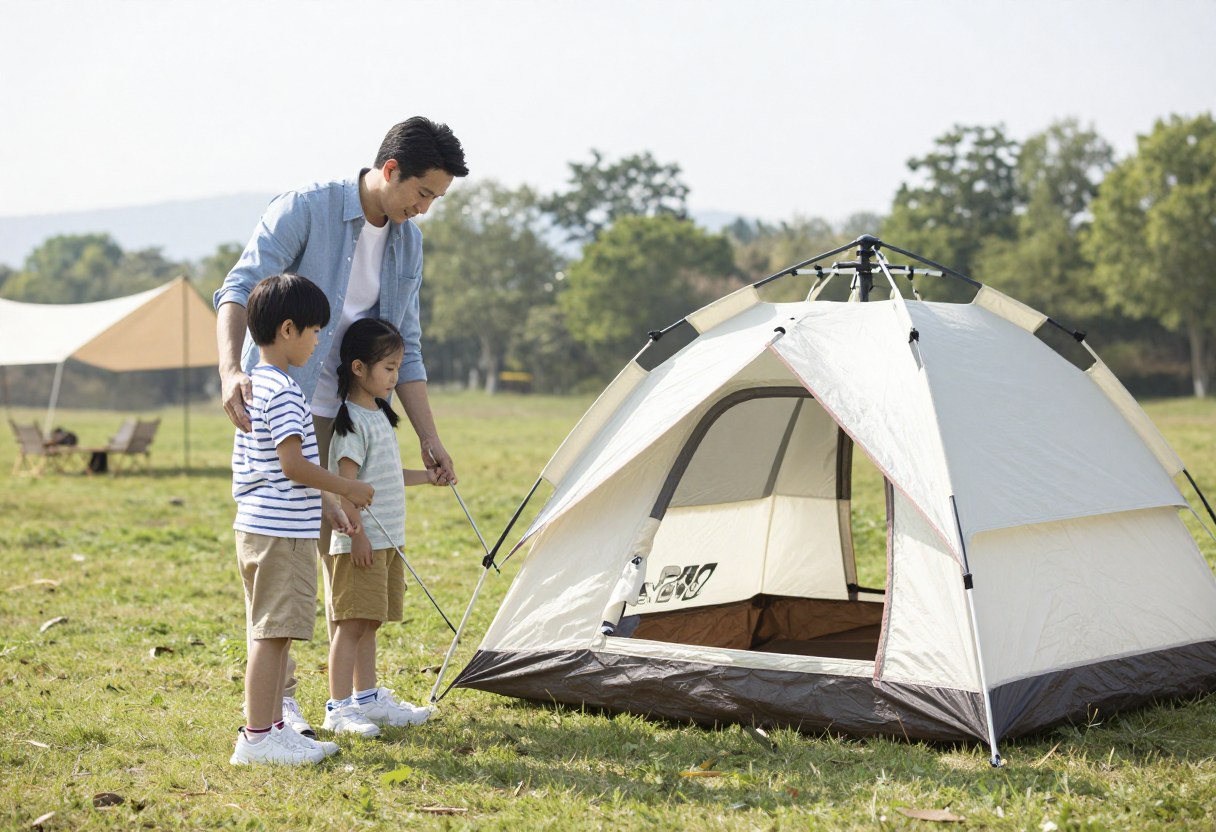
- A tent with more room than the label suggests. A tent rated for four is comfortable for two adults and two small kids. See our tent guide.
- Sleeping bags rated for the lowest expected temperatures, with insulated pads underneath. Kids lose heat quickly, and the ground draws warmth away. See our sleeping bag guide.
- Warm layers, hats, and a dry change of clothes, including pajamas. Nights get colder than daytime forecasts suggest. Our layering guide explains how.
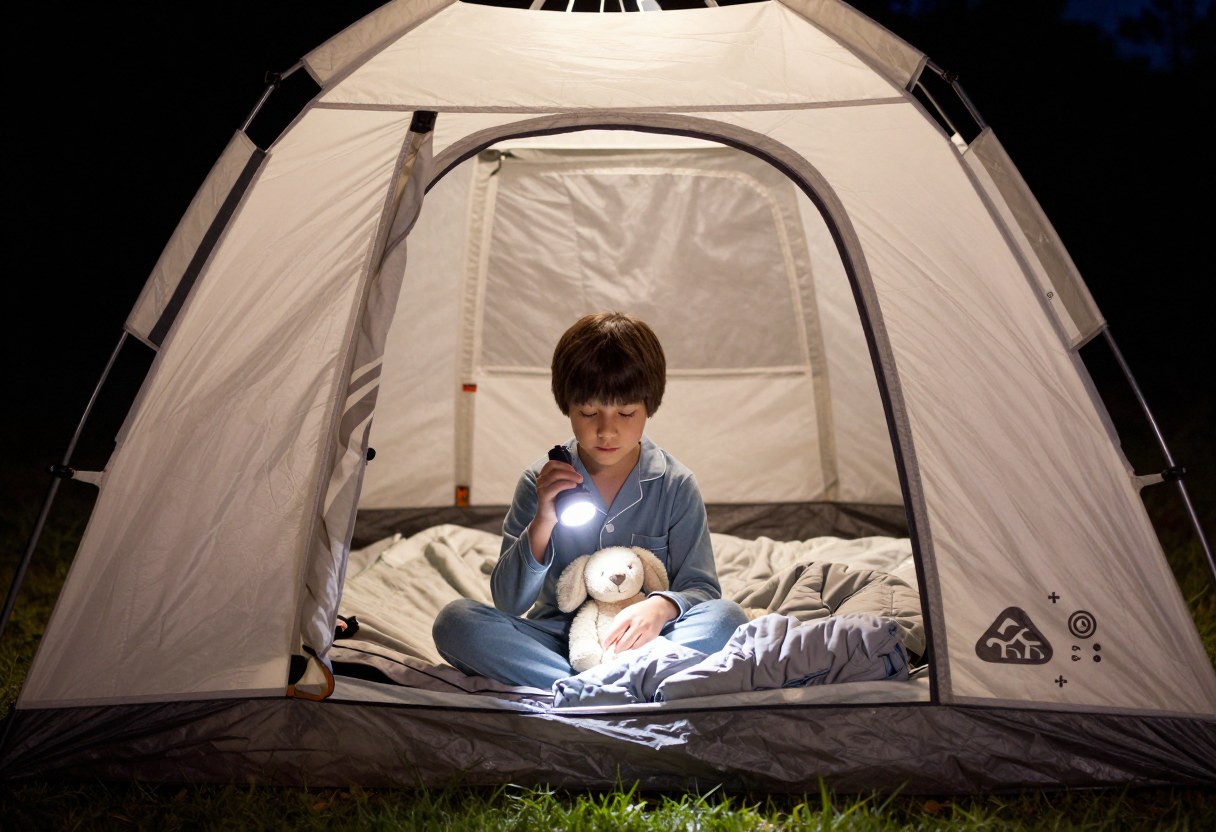
- A headlamp or small flashlight for each child, which is also a favorite toy.
- Comfort items, such as a favorite stuffed animal or blanket, and a few familiar books.
- A simple first aid kit, sunscreen, bug repellent, and a whistle for each child.
4. Safety Basics for Kids
- Teach safety rules early. Establish clear boundaries for how far they can wander, and a buddy system.
- Give each child a whistle, and teach them that three blasts means "I need help." If a child gets lost, the rule is to stop, stay put, and blow the whistle rather than wander.
- Supervise around water constantly. Lakes, rivers, and even shallow creeks are hazards for small children.
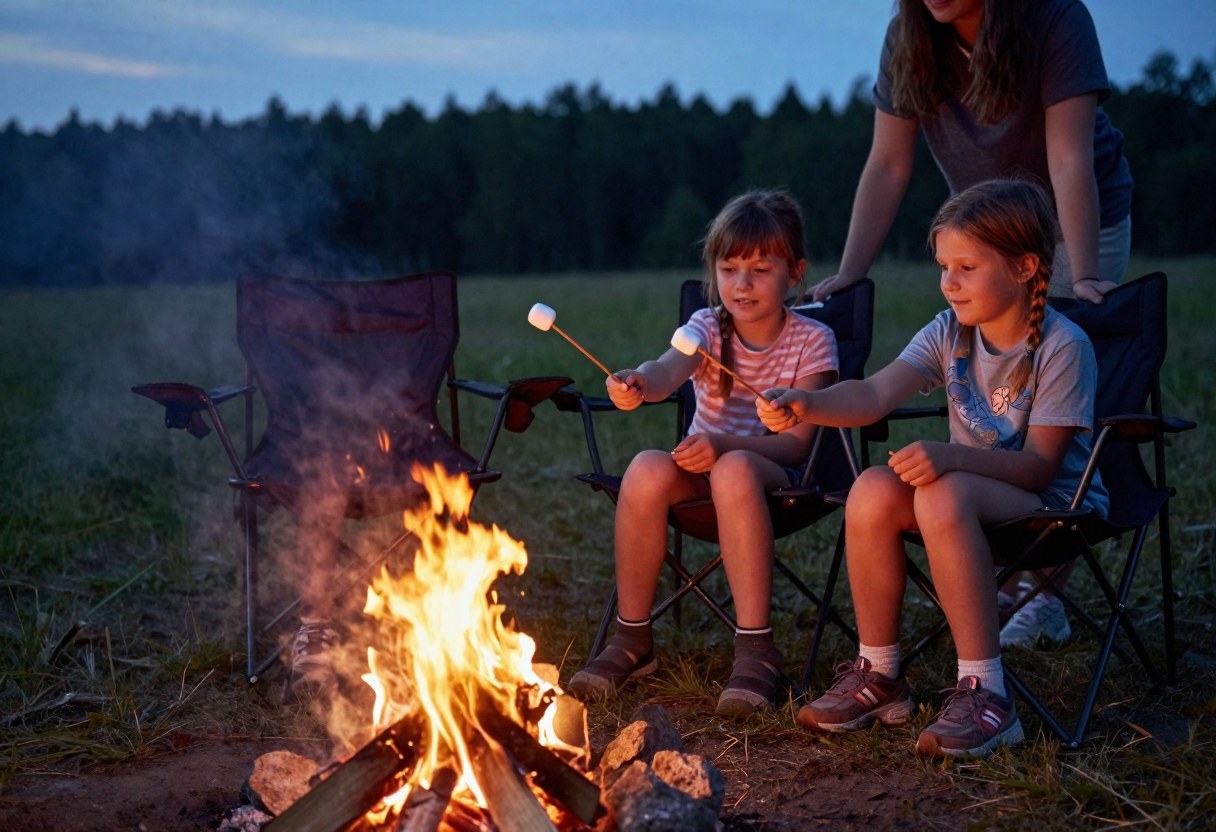
- Establish campfire rules: kids stay a set distance back, never run near the fire, and never touch it without an adult. Our campfire safety guide covers building and putting out a fire safely.
- Teach them to recognize poison ivy, and to leave wildlife alone. Teach "leaves of three, let it be," and the rule to never feed or approach animals.
- Store food properly. Follow the rules in our bear safety guide, and keep food out of tents.
- Check for ticks each day, especially in the hair, behind the ears, and in skin folds.
- Write your phone number on a card in your child's pocket, in case of separation.
Don't Skip This: Teach every child over about three the "stay put and blow the whistle" rule before you ever leave home, and practice it. A kid who stays where they are is far easier to find than one who keeps walking.
5. Food
- Keep meals simple and familiar. Camp isn't the time to experiment with food kids won't eat. Our camp cooking guide has easy options.
- Pre-prep at home, by chopping, mixing, and packing meals in advance.
- Bring plenty of snacks. Hungry kids make for unhappy campers.
- Make s'mores — and let kids help cook. It's both a treat and a way to keep them engaged.
- Bring more water than you think you need, and make sure kids drink regularly.
6. Keeping Kids Busy and Happy
- Give them real jobs: gathering kindling, setting up the tent, filling water bottles. Kids love being useful.
- Plan simple activities: a nature scavenger hunt, bug-watching with a magnifying glass, rock skipping, short walks, or a junior ranger program at a park.
- Try fishing, even from the shore. Our guide to choosing your first rod and reel is a good start.
- Stargazing is a highlight. Away from town, the night sky is amazing. See our stargazing for beginners guide for easy ideas.
- Leave unstructured time. Kids often create their own best games, given sticks, dirt, and freedom.
- Bring a few quiet games and books for rain. Weather happens.
7. Sleep and Bedtime
- Stick to a bedtime routine as best you can, with a story, a flashlight, and a familiar sleeping spot.
- Expect an adjustment. Kids may wake in the night in an unfamiliar place, and the first night is often the hardest.
- Dress kids in warm, dry layers, with a hat, and make sure they're not too hot, either.
- Pack earplugs for adults, because tent noise carries.
8. Leave No Trace as a Family
- Teach kids to leave things as they found them — pack out trash, stay on trails, and respect wildlife. Our Leave No Trace guide explains the principles in simple terms.
- Make it a game, such as a "trash detective" hunt for litter before you leave.
Common Mistakes
- Going too far, too long, too soon.
- Underestimating how cold kids get at night.
- Overplanning activities and leaving no downtime.
- Skipping the backyard test run.
- Not setting safety rules before the trip.
Quick Decision Checklist
- I've picked a nearby campground with amenities and reserved a site
- Our tent is roomy, and our sleeping bags and pads are warm enough
- Each child has a headlamp or flashlight, a whistle, and warm layers
- We've set boundaries and practiced "stay put and blow the whistle"
- We have simple meals, plenty of snacks and water, and a campfire plan
- We've left room for downtime and bad weather
Glossary
- Widowmaker: A dead or hanging tree branch that could fall without warning, a hazard when choosing a campsite.
- Camp Host: A volunteer or staff member at a campground who can help with questions and issues.
- Junior Ranger Program: A park program with activities and badges designed to teach kids about nature and history.
- R-Value: A rating of how well a sleeping pad insulates you from the cold ground — the higher the number, the warmer the pad.
Final Takeaway
Camping with kids works best when you keep it short, close, and simple, bring warm sleeping gear, set clear safety rules, and leave room for kids to explore and play. Do that, and the first trip often turns into a family tradition.
Campground rules, fire restrictions, wildlife conditions, and weather vary by location and season — check current conditions and requirements for where you're going, and adapt to your children's ages and needs.