How to Choose the Right Tent for Your Camping Style
Season rating, capacity, and weight tradeoffs explained, so you buy a tent that fits how you actually camp.
Published August 11, 2026
Why "Best Tent" Isn't a Real Question
There's no single best tent — only the best tent for a specific combination of how you camp, where, in what season, and how you get your gear to the site. A family driving to a summer campground and a solo backpacker crossing an alpine pass in October need fundamentally different tents, even though both items are technically "a tent." This guide walks through the tradeoffs — season rating, capacity, weight, and a few other factors — so you can match a tent to your actual camping style instead of buying based on price or a single spec in isolation.
1. Start With How You Camp
Before looking at any spec, answer this: how does your gear get to the campsite?
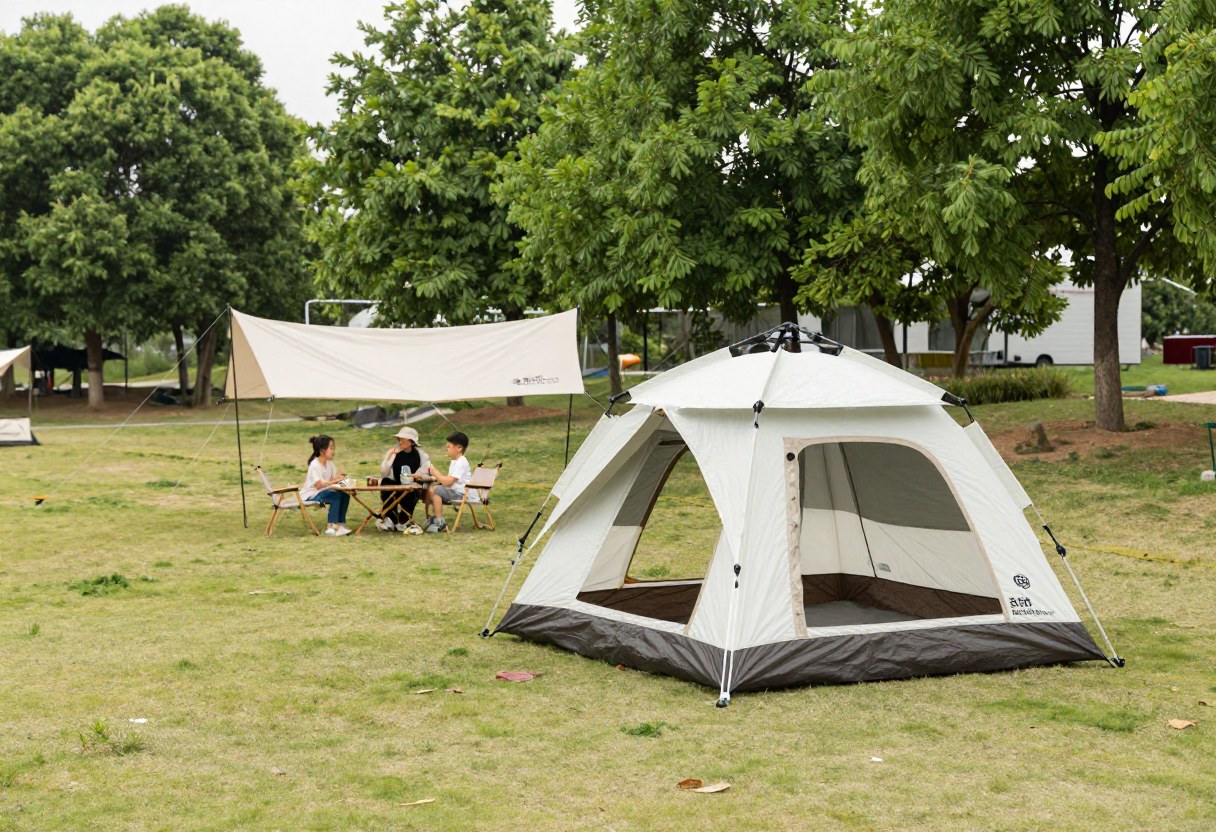
- Car camping: You drive to (or very near) your site. Weight and pack size are nearly irrelevant — comfort, space, and ease of setup matter far more.
- Backpacking: You carry the tent for miles, sometimes for days. Weight and packed size become primary decision factors, often outweighing comfort features.
- Walk-in camping: A short carry (often under a quarter-mile) from a parking area to a tent site — a middle ground where weight matters somewhat, but not to backpacking extremes.
This single distinction should narrow your search dramatically before you even look at season rating or capacity — a tent built for one style is often a poor fit for the other.
2. Season Ratings Explained
Tents are typically categorized by season rating, describing the weather conditions they're built to handle. This is one of the most misunderstood specs for beginners.
| Rating | Built For | Typical Use |
|---|---|---|
| 3-Season | Spring, summer, fall in moderate conditions — rain, wind, mild cold | The most common category; covers the vast majority of camping and backpacking trips |
| 3-Season+ / Extended Season | 3-season conditions plus light snow load and colder temperatures | Shoulder-season trips into early winter or high elevation, without full winter mountaineering demands |
| 4-Season | Heavy snow load, sustained high wind, sub-freezing winter conditions | Winter camping, mountaineering, exposed high-altitude or high-latitude trips |
What Actually Changes Between Ratings
- Pole structure: 4-season tents use more poles and a more geodesic (heavily cross-braced) design to resist wind and snow load; 3-season tents use simpler, lighter pole structures.
- Fabric and mesh ratio: 3-season tents often use more mesh paneling for ventilation and weight savings; 4-season tents reduce mesh in favor of solid fabric to retain warmth and block wind-driven snow.
- Ventilation design: 4-season tents need to balance snow/wind protection against condensation management, since sealing out cold air more aggressively also traps more interior moisture — a genuine engineering tradeoff, not just "more protection is strictly better."
Don't Skip This: Don't buy a 4-season tent "to be safe" if you're mainly camping in mild 3-season conditions. The added weight, cost, and reduced ventilation of a 4-season tent are real downsides in conditions that don't need that level of protection — matching the rating to your actual trips matters as much as not underbuying for genuinely harsh conditions.
3. Capacity: Why the Listed Number Is Optimistic
Tent capacity (e.g., "2-person," "4-person") describes how many sleeping pads can technically fit side by side inside — it does not account for gear storage, comfortable movement, or the reality that most campers want more room than the bare minimum.
A Practical Rule of Thumb
Size up by one person from your actual group size for meaningfully more comfort, especially for car camping where weight isn't a concern:
- A solo camper often does better with a "2-person" tent for gear storage and elbow room.
- A couple often prefers a "3-person" tent for the same reason.
- A family of four is frequently more comfortable in a "5- or 6-person" tent, especially for multi-night trips with kids' gear involved.
When to Stick to Listed Capacity or Size Down
- Backpacking flips this logic somewhat — the weight and pack-size cost of sizing up is real, so many backpackers accept a snugger fit (or a true minimum) in exchange for a lighter pack, especially solo.
- Solo ultralight backpacking sometimes intentionally uses a genuinely minimal 1-person tent for maximum weight savings, accepting very little spare room as the tradeoff.
Capacity and Vestibules
A vestibule (a covered but unenclosed area outside the main tent body, usually under the rainfly) provides gear storage without counting toward interior "capacity" — a tent with a generous vestibule can feel much more livable than its capacity rating alone suggests, since wet boots, packs, and cooking gear can stay covered but outside the sleeping area.
4. Weight and Packed Size
This is where car camping and backpacking priorities diverge most sharply.
Car Camping
- Weight is essentially a non-issue; a 15–20+ lb tent is completely reasonable if it delivers more space, easier setup, and better weather features.
- Packed size mostly matters only in terms of trunk/storage space, not something you're carrying any real distance.
Backpacking
- Total pack weight target is commonly cited in the range of 20–35 lbs for a multi-day trip depending on trip length and personal capability — the tent is one of the "big three" gear weight categories (alongside sleeping bag and backpack), so tent weight has an outsized effect on overall pack weight.
- Trail weight vs. packaged weight: manufacturers often list two numbers — packaged weight (everything included, stuff sacks, extra guy lines) and trail/minimum weight (just the essential tent body, poles, and rainfly, leaving accessories at home). Compare tents using the same measurement type, since mixing them makes comparisons misleading.
- Ultralight tents (using minimal, often single-wall or trekking-pole-supported designs) can weigh under 2 lbs for a solo setup, at a cost premium and often a livability tradeoff (less headroom, less weather margin, sometimes more condensation-prone single-wall designs).
- Splitting tent weight between backpacking partners (one carries the tent body, the other the poles/rainfly) is a common practical strategy for reducing individual pack weight on shared trips.
| Camping Style | Reasonable Tent Weight Range |
|---|---|
| Car camping (any size) | No real limit — 10–25+ lbs common for family tents |
| Backpacking, budget-conscious | 4–7 lbs (2-person) |
| Backpacking, mid-tier | 3–5 lbs (2-person) |
| Backpacking, ultralight | Under 3 lbs (2-person), often under 2 lbs (solo) |
5. Freestanding vs. Trekking-Pole (Non-Freestanding) Tents
A structural decision that matters most for backpacking, though it appears occasionally in car camping too.
| Type | Pros | Cons |
|---|---|---|
| Freestanding | Stands on its own with its own pole structure; easy to reposition after setup; doesn't require staking to hold shape | Heavier due to dedicated pole structure |
| Trekking-pole supported | Significantly lighter, since it uses trekking poles you're already carrying instead of dedicated tent poles | Requires proper staking to hold shape; harder to pitch well on rocky or hard ground where stakes don't set well; not usable without trekking poles or a substitute |
For a first backpacking tent, freestanding is generally the easier and more forgiving choice — trekking-pole tents reward experience with site selection and staking technique that beginners haven't built yet.
6. Weather Protection Features Worth Understanding
Rainfly Coverage
- Full-coverage rainfly (extends close to the ground on all sides) offers significantly better wind and rain protection than a partial-coverage fly, at a small weight cost.
- Vestibule size and number affects both gear storage and how well the entry area stays protected during entry/exit in rain.
Waterproof Ratings
- Both the tent floor and rainfly have a hydrostatic head rating (measured in millimeters), indicating how much water pressure the fabric resists before leaking. Floor ratings are typically higher than rainfly ratings, since the floor deals with standing water/ground moisture pressure while the fly primarily sheds falling rain.
- A footprint (a separate ground tarp cut to the tent's dimensions) adds protection against ground moisture and abrasion, extending the tent floor's lifespan — a worthwhile inexpensive addition regardless of camping style.
Ventilation
- Mesh panels and adjustable vents manage condensation, which builds up from body moisture and breath inside an enclosed tent overnight, especially in cold or humid conditions.
- Double-wall tents (separate inner tent body and outer rainfly, with an air gap between) manage condensation better than single-wall tents, since moisture condenses on the outer layer rather than directly above the sleeping area — a meaningful comfort factor, especially in humid climates.
Wind Resistance
- Pole count and geometry (more poles, more cross-bracing, dome/geodesic shapes) generally improve wind resistance compared to simpler A-frame or single-hoop designs.
- Guy-out points (attachment points for additional guy lines beyond the main structure) add stability in wind when properly staked and tensioned — worth using even if not strictly required by calm conditions, since weather can shift overnight.
7. Setup Considerations
- Freestanding tents with color-coded poles/clips are generally the fastest and most beginner-friendly to set up, an underrated factor for a first tent, especially if setting up in fading light or bad weather.
- Practice setup at home before your first trip. Learning a tent's specific pole configuration and rainfly attachment in your living room or backyard, without weather or time pressure, avoids a frustrating first-trip experience.
- Solo setup capability matters if you'll sometimes be pitching camp alone — some larger family tents are genuinely difficult for one person to manage, worth considering if solo car camping is a realistic scenario for you.
8. Matching Tent Type to Camping Style: Recommendations
| Camping Style | Recommended Tent Profile |
|---|---|
| Family car camping | 3-season, sized up for comfort, full-coverage rainfly, prioritize livability and easy setup over weight |
| Solo/couple car camping | 3-season, 2–3 person capacity, moderate weight acceptable, vestibule for gear storage |
| First backpacking trips | 3-season, freestanding, 1 size up from group count if weight allows, mid-tier weight rather than full ultralight |
| Experienced multi-day backpacking | 3-season or 3-season+, weight-optimized, freestanding or trekking-pole depending on comfort with staking technique |
| Ultralight/thru-hiking style | Minimal 3-season, often trekking-pole supported, single-wall accepted for weight savings |
| Winter/mountaineering | 4-season, geodesic pole structure, reduced mesh, strong guy-out system — see our winter camping guide for setup technique once you're in the field |
| Shoulder-season backpacking (cold, possible light snow) | 3-season+/extended season, balancing weight against added cold/snow capability |
9. Budget Overview
| Tent Type | Typical Range (USD, approximate) |
|---|---|
| Entry-level car camping tent (3–4 person) | $80–$200 |
| Mid-tier family car camping tent (6+ person) | $200–$450 |
| Entry-level backpacking tent (2-person) | $150–$300 |
| Mid-tier backpacking tent (2-person) | $300–$500 |
| Ultralight backpacking tent (1–2 person) | $400–$700+ |
| 4-season mountaineering tent | $450–$900+ |
Budget tip: For backpacking specifically, the price premium buys weight savings and durability more than raw functionality — a budget backpacking tent will keep you dry and sheltered just as effectively as an expensive ultralight one, it will simply weigh more. Decide how much weight savings is actually worth to you before assuming the most expensive option is necessary.
10. Common Buying Mistakes
- Buying based on capacity number alone, without accounting for gear storage or the reality that listed capacity is a tight fit.
- Overbuying a 4-season tent for 3-season conditions, adding unnecessary weight, cost, and reduced ventilation for protection you don't need most of the year.
- Choosing a trekking-pole tent as a first backpacking tent without the staking experience to pitch it well, leading to a frustrating and poorly-protected first setup.
- Ignoring vestibule size, then discovering there's nowhere dry to store boots and packs on a rainy trip.
- Not practicing setup before the first trip, leading to a stressful first pitch in real weather or fading daylight.
- Comparing backpacking tent weights inconsistently (packaged weight vs. trail weight) and ending up with a heavier tent than expected.
- Skipping a footprint to save a small amount of money, then dealing with a punctured or prematurely worn tent floor.
Quick Decision Checklist
- I know whether I'm primarily car camping, backpacking, or a mix, and I'm choosing gear for that reality
- I've matched season rating to the actual conditions I'll camp in most often, not the most extreme case
- I've sized up from my group count if comfort matters more than weight (car camping), or accepted a snugger fit if weight matters more (backpacking)
- I understand my tent's weight in the context that matters for my style (irrelevant for car camping, a major factor for backpacking)
- I've checked vestibule size for gear storage needs
- I've decided between freestanding and trekking-pole supported, appropriate to my staking experience
- I've considered a footprint as an add-on
- I've practiced setup before relying on the tent for a real trip
Glossary
- Season Rating: A classification (3-season, 3-season+, 4-season) describing the weather conditions a tent is designed to handle.
- Vestibule: A covered, unenclosed area outside the main tent body (under the rainfly) used for gear storage.
- Footprint: A separate ground tarp cut to a tent's dimensions, placed underneath to protect the tent floor.
- Hydrostatic Head Rating: A measurement (in millimeters) of how much water pressure a fabric resists before leaking, used to rate tent floors and rainflies.
- Freestanding: A tent design that holds its shape via its own pole structure without requiring stakes.
- Trekking-Pole Tent: A lightweight tent design that uses trekking poles (rather than dedicated tent poles) for structure, requiring proper staking to hold shape.
- Double-Wall / Single-Wall: Describes whether a tent has a separate inner body and outer rainfly with an air gap (double-wall, better condensation management) or a single combined layer (single-wall, lighter but more condensation-prone).
- Trail Weight: A tent's weight measured with only essential components (body, poles, rainfly), excluding stuff sacks and extra accessories — used for backpacking weight comparisons.
This guide covers general principles for common recreational camping and backpacking. Conditions, personal comfort preferences, and specific trip demands vary — treat capacity and weight recommendations here as a starting framework to adjust based on your own experience.