Camp Cooking for Beginners
Simple, reliable meal planning and cooking techniques for your first few camping trips.
Published August 19, 2026
Why Camp Cooking Fails More Often From Planning Than Skill
Most disappointing camp meals aren't caused by a lack of cooking skill — they're caused by bad planning: the wrong stove for the trip, food that needed a fridge that never got one, or a meal that turns out to take twice as long as expected after a full day outdoors. Good camp cooking is mostly a planning problem with a small cooking-technique problem layered on top. This guide covers both, focused on getting a beginner through their first several trips with meals that are simple, reliable, and don't require restaurant-level skill to pull off well.
1. Match Your Cooking System to Your Trip Type
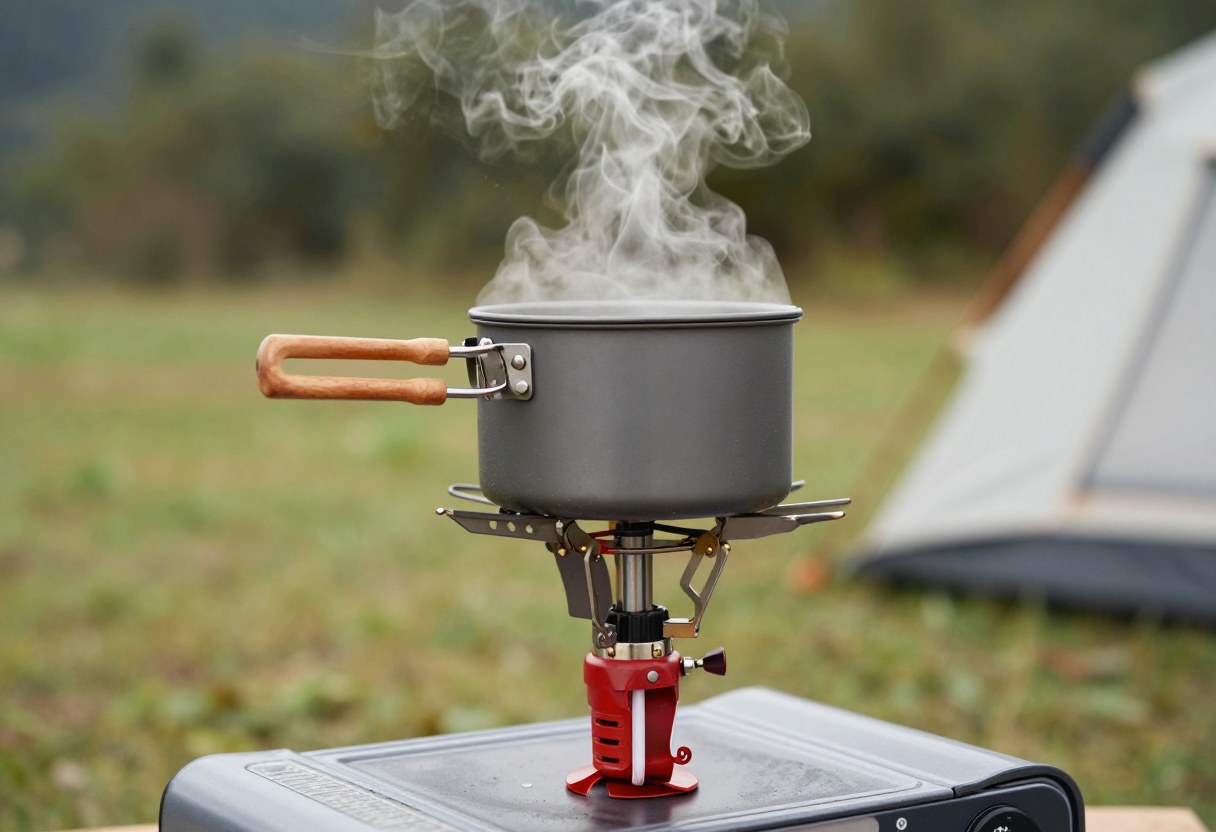
- Car camping: Weight and pack size barely matter — a two-burner propane camp stove, a full cooler, and real cookware are all reasonable choices, and give you the most flexibility and comfort.
- Backpacking: Weight matters a lot — a compact canister or liquid-fuel backpacking stove, dehydrated or freeze-dried meals, and minimal cookware (often a single pot) are the standard approach.
- Car camping with backpacking-style simplicity: A completely reasonable middle ground for beginners who want to practice simple meals before a backpacking trip, or who just prefer less cleanup — using a single-burner setup and simpler meals even when weight isn't a real constraint.
2. Stove Types Explained
| Stove Type | Best For | Pros | Cons |
|---|---|---|---|
| Two-burner propane camp stove | Car camping | Full-size cooking, two burners for real meal prep, easy to use | Heavy, bulky — not for carrying any distance |
| Canister backpacking stove | Backpacking, minimalist car camping | Lightweight, simple, fast boil times, easy to control flame | Canister performance drops in cold weather; empty canisters need packing out |
| Liquid-fuel backpacking stove | Backpacking, especially cold weather or international travel | Performs well in cold weather, fuel widely available, refillable bottle | Heavier and more maintenance than canister stoves, needs priming |
| Campfire cooking | Car camping, backpacking where fires are permitted | No stove weight/cost at all, classic experience | Depends on fire bans/regulations, less temperature control, slower |
For a true beginner's first few trips, a simple canister backpacking stove or a basic two-burner propane stove (matched to car vs. backpacking) is the easiest starting point — both are simple to light, control, and clean, without the priming and maintenance a liquid-fuel stove requires.
3. Meal Planning: The Real Skill
- Plan meals in advance, meal by meal, not just "bring food." Writing out breakfast/lunch/dinner for each day of the trip, including snacks, prevents both running short and overpacking.
- Prep at home whenever possible. Pre-chopping vegetables, pre-measuring spices into small bags, and pre-cooking components (like browning meat before freezing it for the cooler) meaningfully reduces camp cooking time and cleanup.
- Plan simpler meals for the first and last day, when you're setting up or breaking down camp and have less time/energy, and save more involved meals for full days in camp.
- Build in a genuinely simple backup meal (instant noodles, a dehydrated meal, canned soup) for the day something goes wrong — bad weather, a late arrival, or just low energy.
4. Food Storage and Safety
- Coolers (car camping): Pack with ice or ice packs, keep the cooler in shade, and organize with raw meat on the bottom/sealed separately from ready-to-eat food to avoid cross-contamination.
- Backpacking food storage: Use a bear canister, hang system (where required or recommended), or approved food storage locker where provided — this is often a legal requirement in bear country, not just a suggestion, and matters for both your safety and the animal's. See our bear safety guide for the full walkthrough.
- Perishables have a real clock. Plan meals with fresh/perishable ingredients for earlier in the trip, shifting to shelf-stable and dehydrated options as the trip goes on and cooler ice melts or backpacking food ages in your pack.
- Wash hands and surfaces before food prep, even in camp — it's easy to skip this outdoors, but the basic food safety practices from a home kitchen still apply.
Don't Skip This: Bear-resistant food storage isn't optional guidance in many backcountry areas — it's often a legal requirement, and improperly stored food is a genuine safety risk to both you and local wildlife. Check the specific storage requirements for your destination before the trip, not after arriving.
5. Simple, Reliable Beginner Meals
Car Camping
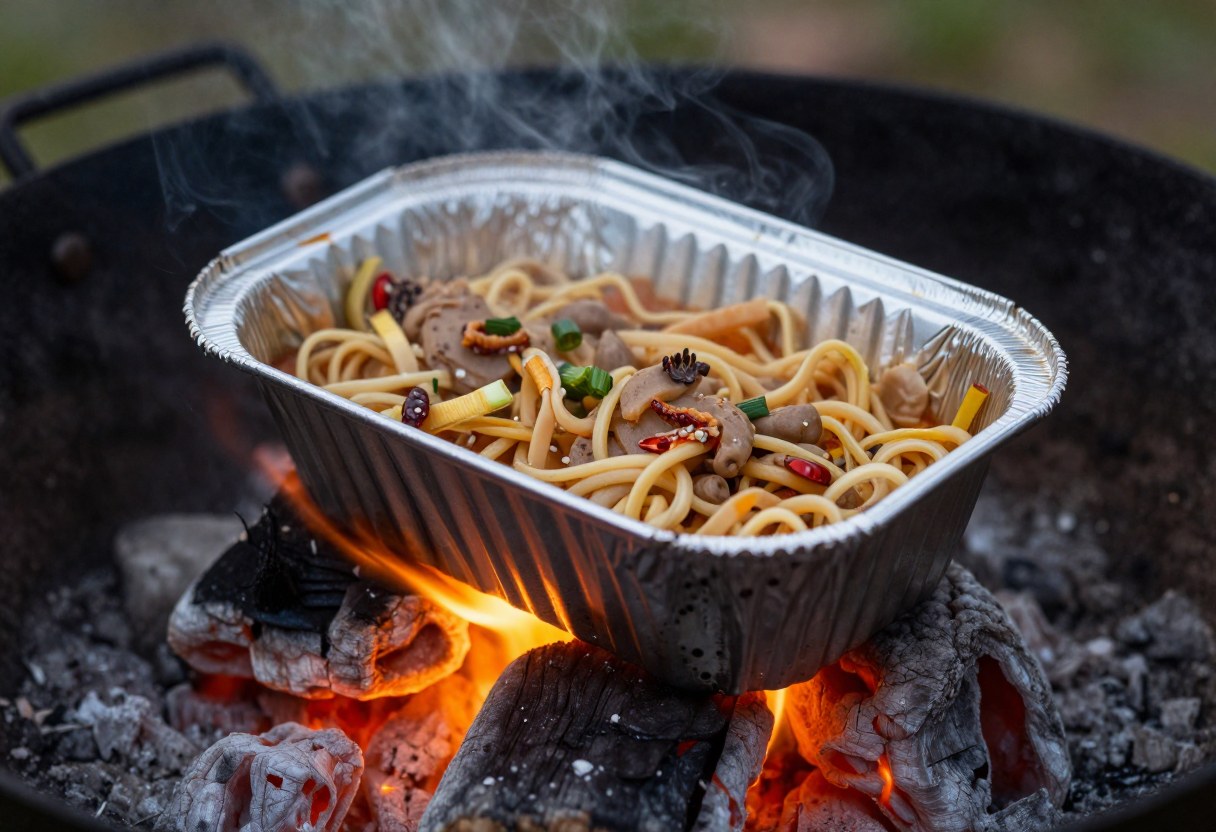
- Foil packet meals: Chopped vegetables, protein, and seasoning wrapped in foil and cooked directly on coals or a grate — minimal cleanup, hard to mess up, and easy to customize.
- One-pot pasta or rice dishes: Cooking pasta/rice with vegetables and a protein in a single pot keeps cleanup simple and is forgiving of imprecise timing.
- Breakfast: eggs and pre-cooked sausage/bacon, or a simple oatmeal with add-ins prepped at home.
Backpacking
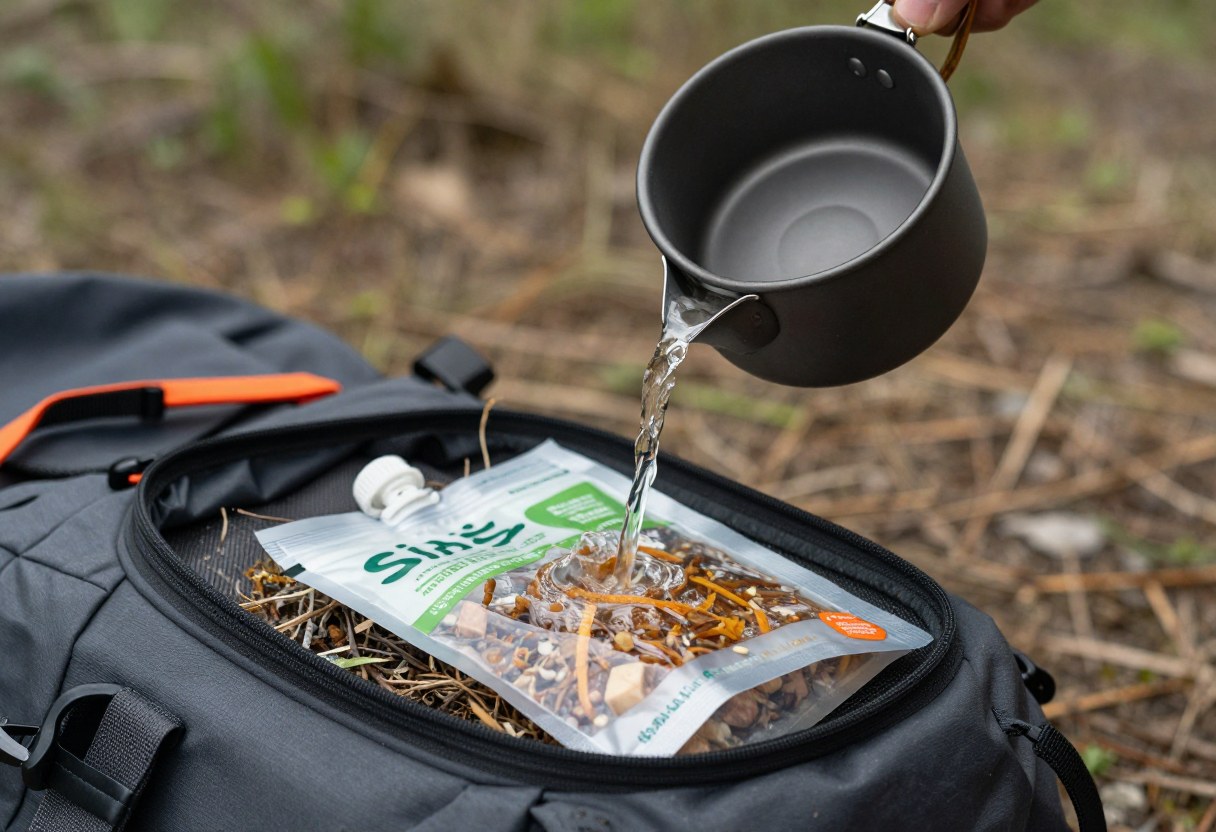
- Dehydrated or freeze-dried meals: Add boiling water, wait, eat — genuinely the simplest reliable option for a beginner backpacker, at a real cost premium over cooking from scratch.
- Instant rice or couscous with a shelf-stable protein (tuna packets, pre-cooked bacon bits) and dehydrated vegetables, cooked in a single pot.
- Breakfast: instant oatmeal with add-ins (nuts, dried fruit) packed separately and added at camp.
6. Basic Cooking Techniques Worth Knowing
- Boiling water efficiently: Use a lid to speed boiling and conserve fuel; at higher elevations, water boils at a lower temperature, meaning slightly longer cook times for anything relying on boiling.
- Managing heat on a camp stove or fire: Camp stoves often run hotter or less evenly than a home stovetop — starting with lower heat and adjusting up, rather than defaulting to high heat, reduces scorching, especially with one-pot meals.
- Foil packet basics: Double-wrap foil packets to prevent leaks, and place them on coals rather than open flame for more even cooking.
- Cleanup as you go: Boiling a small amount of water in a used pot right after cooking, then wiping it out, is far easier than letting food dry onto cookware overnight.
7. Common Camp Cooking Mistakes
- Overpacking ingredients "just in case", adding unnecessary weight and cooler space without a real plan for using them.
- Planning an ambitious, multi-step meal for the first night, when you're tired from travel and setup — save complex meals for a full day in camp.
- Not accounting for elevation or wind affecting stove performance and boil times, leading to longer-than-expected cooking and frustration.
- Improper food storage in bear country, creating real safety risk and, in many areas, a legal violation.
- Forgetting a backup meal, leaving no simple fallback if plans change or something goes wrong with the primary cooking plan.
- Not testing a new stove at home before the trip, discovering how to light and control it for the first time in the field rather than in a low-stakes setting.
Quick Decision Checklist
- I've matched my stove and cooking system to car camping vs. backpacking
- I've planned specific meals for each day, not just a general food list
- I've prepped what I can at home (chopping, measuring, pre-cooking) to reduce camp workload
- I have a plan for food storage appropriate to my destination (cooler organization or bear-safe storage)
- I've planned simpler meals for arrival/departure days and saved more involved meals for full days in camp
- I have a genuinely simple backup meal packed
- I've tested any new stove at home before relying on it in the field
Glossary
- Bear Canister: A hard-sided, animal-resistant container used to store food and scented items in bear country, often required in specific backcountry areas.
- Foil Packet Meal: A meal of ingredients wrapped in foil and cooked directly on coals or a grate, popular for its minimal cleanup and forgiving cook process.
- Canister Stove: A lightweight backpacking stove that screws directly onto a pressurized fuel canister, valued for simplicity and fast boil times.
- Liquid-Fuel Stove: A backpacking stove using refillable liquid fuel, generally more reliable in cold weather but requiring priming and more maintenance than canister stoves.
Final Takeaway
Reliable camp cooking comes down to matching your stove and meal complexity to your actual trip type, planning specific meals in advance rather than a vague food list, and prepping as much as reasonably possible at home. Start with simple, forgiving meals — foil packets and one-pot dishes for car camping, dehydrated meals for backpacking — and build up to more ambitious camp cooking once the basics feel comfortable.
Food storage requirements and fire/stove regulations vary by destination and season — check current local rules, especially in bear country or during fire restrictions, before finalizing a camp cooking plan.