
Spotted Bass
Micropterus punctulatus
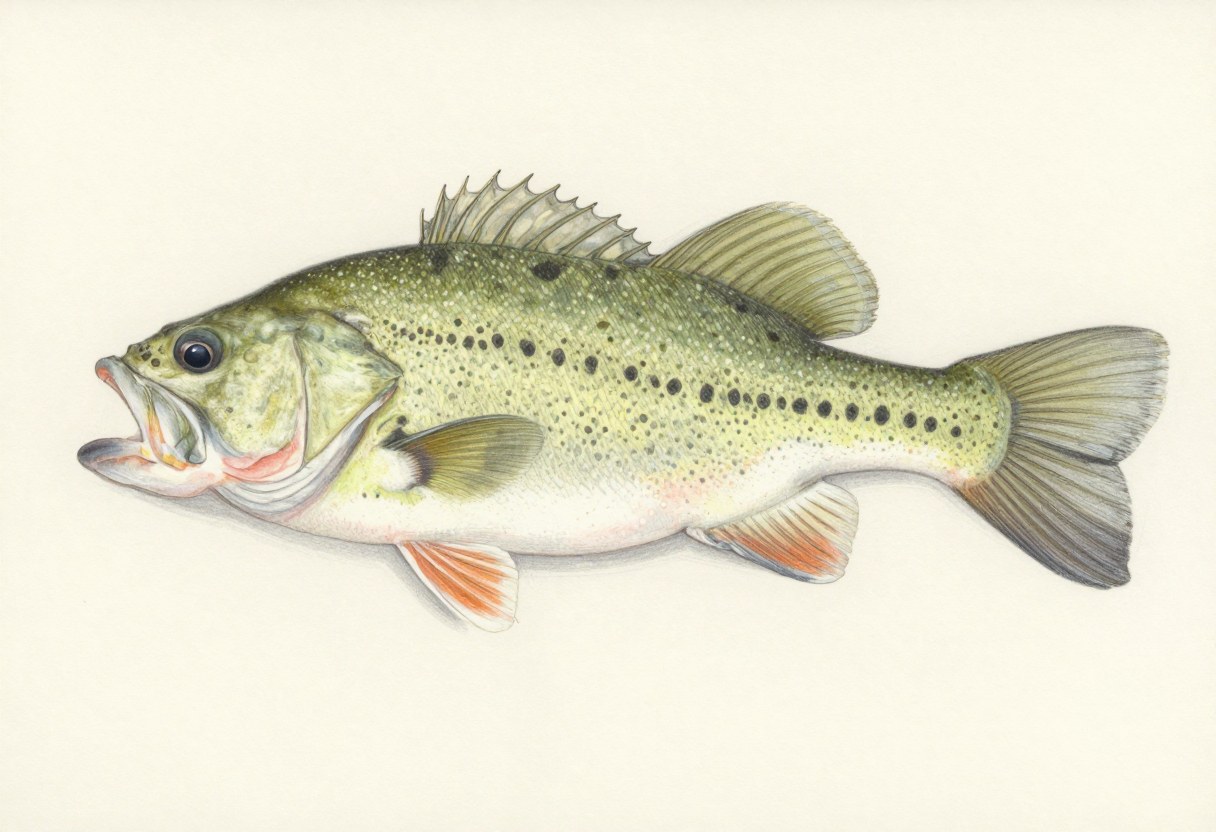
The middle sibling of the black basses: a scrappy fish of rocky reservoirs and clear streams, often mistaken for a small largemouth.
- Type
- Bass
- Water
- Warm water
- Habitat
- Reservoirs, Rivers, Streams, Lakes
- Typical size
- 1 to 2 lb; over 4 lb is a large fish
- Range
- Native to the Mississippi River basin and Gulf Coast streams from the Ohio River south to Texas and Alabama, and introduced in other regions, including parts of the West.
- Best seasons
- Spring and fall; deeper structure in summer
How to identify it
- The upper jaw ends at about the rear edge of the eye, not far beyond it.
- A dark stripe of blotches runs along the side, with neat rows of small dark spots on the lower sides.
- A small patch of teeth on the tongue gives it a rough feel; a largemouth's tongue is smooth.
- The dorsal fin has only a shallow notch, and the fish is usually smaller than a largemouth.
Often confused with
- Largemouth Bass: the jaw extends well past the eye, there are no rows of spots, and the dorsal fin notch is deep.
- Smallmouth Bass: vertical bars instead of a stripe, bronze color, and no tooth patch on the tongue.
Best baits and lures
- Small plastic worms
- Jigs
- Crankbaits
- Spinnerbaits
- Live minnows and crawfish
Techniques
- Fish rocky points, riprap, and steep banks
- Work deep brush and ledges in summer
- Cast crankbaits along current breaks in streams
- Use finesse worms in clear water
Fishing notes
Spotted bass share habits with both of their relatives. They like the rocky, clear conditions smallmouth prefer, but tolerate the warmer reservoirs where largemouth thrive, and they often hold deeper than either one.
Because they look so much like a small largemouth, many anglers misidentify them. That matters where size or bag limits differ by species, so learn the jaw-length and tongue-patch checks before you keep a fish.
They are an aggressive, schooling fish that often feed in packs, so when you catch one it pays to keep casting to the same spot.
Related guides
Size limits, bag limits, legal baits, and seasons vary by state and waterbody and change over time. Check your state's current regulations — our state resources directory links straight to each state's official fishing rules and license portal.