
Bass Fishing Techniques for Beginners
The core lures, retrieves, and structure-reading skills that catch bass consistently.
Published August 19, 2026
Why Bass Are the Fish Most Beginners Start With
Largemouth and smallmouth bass are aggressive, widely distributed, and genuinely rewarding to figure out — they'll hit a wide range of lures, tolerate a range of beginner mistakes, and give clear feedback (a blown-up strike, a stripped-clean worm) about what's working and what isn't. That combination is why bass fishing is where most freshwater anglers in North America actually learn the sport. This guide covers the small set of lures, retrieves, and structure-reading skills that account for the large majority of bass caught by beginners, rather than trying to cover every technique that exists.
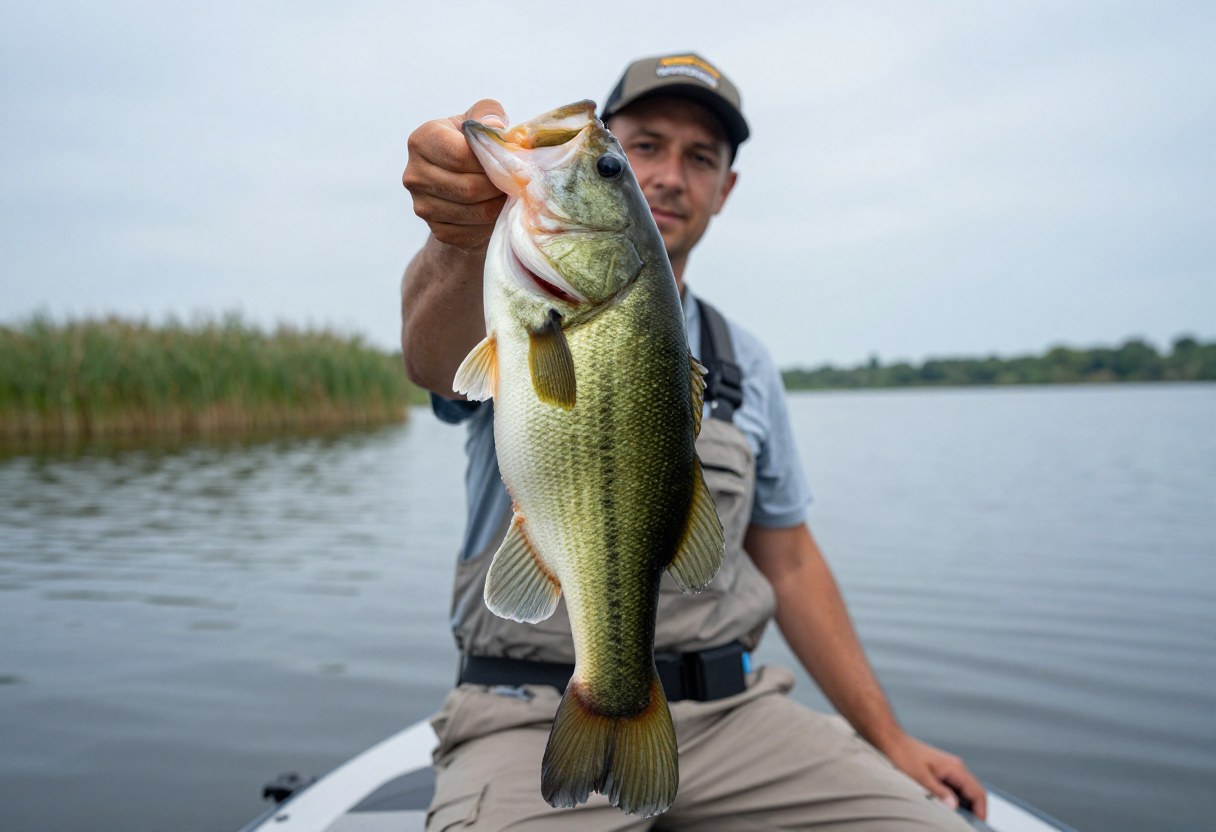
1. Largemouth vs. Smallmouth: Two Different Fish
- Largemouth bass favor slower, weedier, warmer water — lakes, ponds, and slow rivers with heavy cover (weeds, docks, laydowns, lily pads). They tend to ambush from cover rather than chase far.
- Smallmouth bass favor clearer, rockier, often cooler water — rocky lakes, and rivers/streams with current and gravel or rock bottoms. They tend to be more willing to chase a moving bait across open water.
- Most beginner-friendly techniques below work for both species, but largemouth generally reward fishing tight to visible cover, while smallmouth generally reward covering more open rocky or current-seamed water.
2. The Core Beginner Lure Lineup
You don't need a tackle box full of hundreds of lures to catch bass consistently — a small, well-chosen set covers most situations a beginner will encounter.
| Lure Type | What It Imitates | Best Conditions | Beginner Difficulty |
|---|---|---|---|
| Soft plastic worm (Texas-rigged) | A worm or eel-like prey item | Nearly any conditions, especially around cover | Easy — very forgiving, slow presentation |
| Spinnerbait | A fleeing baitfish, flash and vibration | Stained or murky water, moving fish, weedy cover | Easy — mostly a straight retrieve |
| Crankbait | A swimming baitfish | Covering water to locate active fish, moderate depth | Moderate — depth control takes some practice |
| Topwater popper/walker | A struggling or fleeing baitfish on the surface | Early morning, evening, calm water, aggressive fish | Moderate — timing the pause takes practice |
| Jig (with soft plastic trailer) | A crawfish or baitfish near the bottom | Around heavier cover, cooler water, bigger bites | Harder — bottom contact and bite detection take feel |
A soft plastic worm and a spinnerbait are the two most forgiving lures for a genuine first trip — both work with a simple retrieve, tolerate imprecise casting, and catch fish across a wide range of conditions while you're still building other skills.
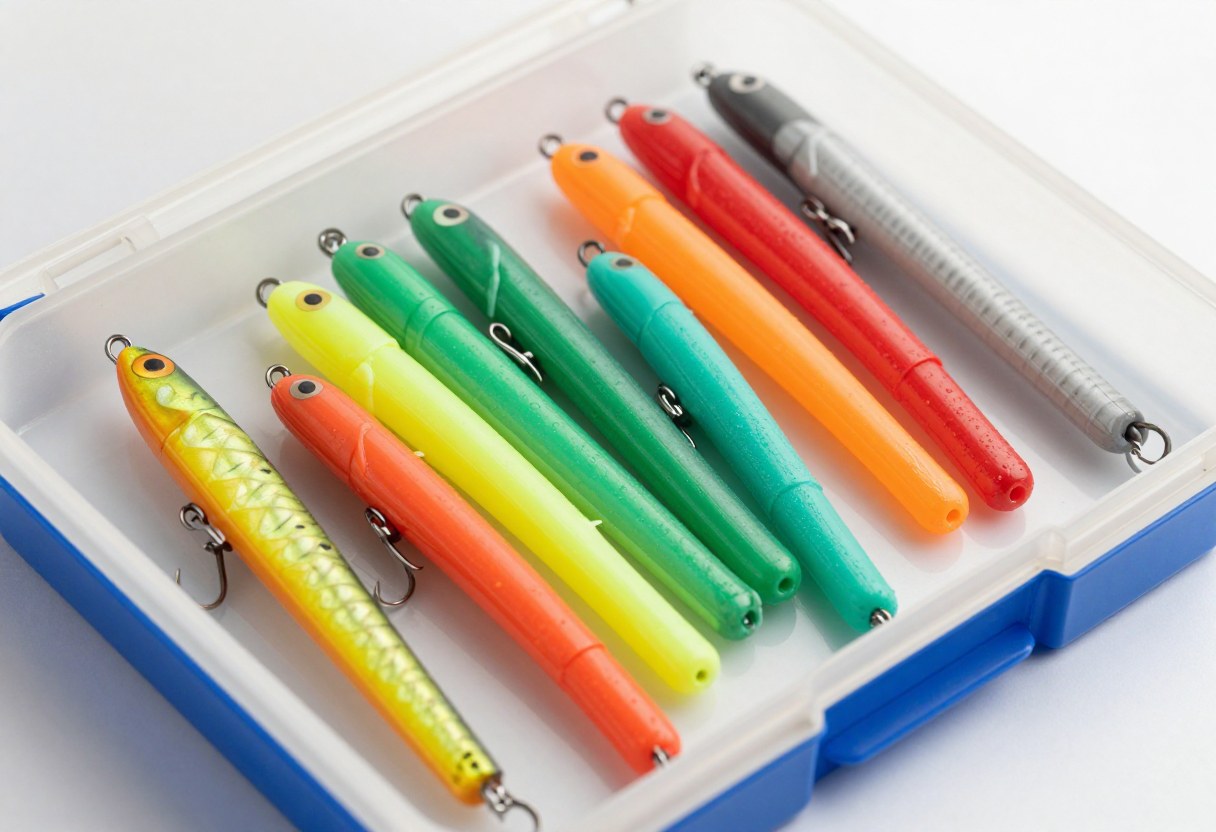
3. Basic Retrieves and When to Use Them
- Steady retrieve: Reeling at a constant, moderate pace — the default starting point for spinnerbaits and crankbaits, and a reasonable way to cover water and locate active fish before fine-tuning.
- Stop-and-go retrieve: Reeling briefly, then pausing, repeated in a rhythm — often triggers strikes from fish that were following but not committing to a steady retrieve, since the pause looks like an injured or resting prey item.
- Slow drag/hop (soft plastics and jigs): Working a bait along the bottom in short lifts and drops, letting it settle between movements — imitates a crawfish or bottom-feeding prey item, and is often more effective than a fast retrieve when fish are less aggressive.
- Topwater walk-the-dog: A rhythmic side-to-side rod motion that makes a topwater lure zigzag across the surface — takes practice to time consistently, but is one of the most exciting and visually obvious ways to draw a strike when it works.
Don't Skip This: When in doubt, slow down. The single most common beginner mistake with soft plastics and jigs is retrieving too fast — bass often want to inspect a bait that's barely moving, and a beginner's instinct to "keep it interesting" by reeling faster usually produces fewer strikes, not more.
4. Reading Structure and Cover
Bass relate to specific features rather than swimming randomly through open water — learning to identify and target these features is one of the highest-value skills for a beginner to build early.
- Weed edges and weed lines: The boundary between open water and a weed bed is a classic ambush zone — bass sit at the edge, using the weeds for cover while watching open water for prey.
- Docks and laydowns: Shade and structure from docks, and fallen trees ("laydowns") in the water, both provide cover bass use to ambush passing prey — casting tight to these features, not just near them, is often the difference between a strike and nothing.
- Points and drop-offs: A point (land extending into the water) or a drop-off (a sudden depth change) concentrates baitfish and gives bass a natural travel route and ambush zone.
- Rock and gravel structure: Especially important for smallmouth, but also holding largemouth in many lakes — rock holds crawfish and baitfish, and retains heat differently than surrounding areas, which can concentrate fish depending on season.
- Current seams (rivers and moving water): The boundary between fast and slow current gives bass an ambush point with minimal energy expenditure — a slower-moving zone right next to faster water is a consistently productive target.
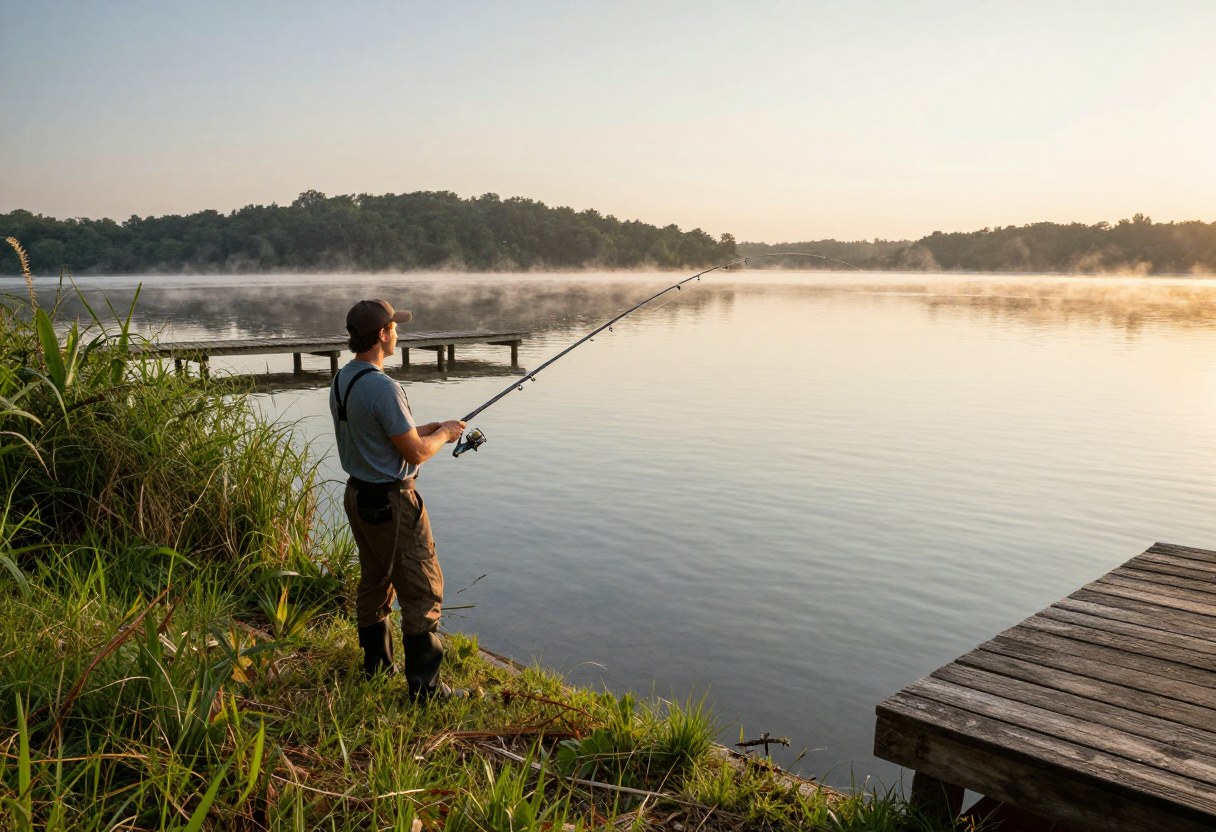
5. Seasonal Patterns: A Beginner-Level Overview
Bass behavior shifts through the year, and adjusting expectations by season helps a beginner avoid fishing the wrong technique for the conditions.
| Season | General Bass Behavior | Technique Implication |
|---|---|---|
| Spring (pre-spawn/spawn) | Moving toward shallow water to spawn; aggressive but sometimes bed-guarding rather than actively feeding | Shallow cover, moderate retrieves; sight-fishing to bedding fish is possible but ethically debated by some anglers |
| Summer | Often deeper or tucked into shade during hot midday; more active in low light | Early morning/evening topwater and moving baits; deeper structure or shaded cover during midday heat |
| Fall | Feeding aggressively to build reserves before winter, often chasing baitfish schools | Moving baits (spinnerbaits, crankbaits) covering water tend to outperform slow presentations |
| Winter | Slower metabolism, less aggressive, often holding deeper or in warmer pockets | Slow presentations (soft plastics, jigs) fished patiently; expect fewer but potentially larger bites |
6. Basic Gear for a First Bass Trip
- Rod and reel: A medium-power, medium-fast action spinning or baitcasting combo in the 6'6"–7' range is a versatile beginner setup; spinning gear is generally easier to learn casting accuracy with before moving to baitcasting.
- Line: 10–12 lb monofilament or fluorocarbon is a reasonable, forgiving starting line weight for the lure lineup above — heavy enough to handle typical bass sizes and some cover, light enough to cast easily.
- Terminal tackle: A small assortment of worm hooks (for Texas rigging), a few bullet weights, and a handful of extra soft plastics rounds out a minimal starting kit alongside the lures in Section 2.
7. Common Beginner Mistakes
- Retrieving too fast, especially with soft plastics and jigs, missing the slower, more deliberate presentation that often triggers more strikes.
- Casting to open water instead of structure, missing the cover and edges where bass actually concentrate.
- Setting the hook too gently on a soft plastic bite, since a Texas-rigged worm bite often requires a firmer, more deliberate hookset than a reaction-bite lure.
- Fishing the same depth and speed all day regardless of conditions, rather than adjusting to time of day, season, and how fish are responding.
- Overcomplicating lure selection early on, buying dozens of lures before learning to fish the basic lineup in Section 2 well.
Quick Decision Checklist
- I have at least a soft plastic worm and a spinnerbait, matched to medium-power rod/reel and 10–12 lb line
- I know the difference between largemouth and smallmouth water and I'm targeting the right one for my spot
- I'm casting to structure and cover, not just open water
- I've matched my retrieve speed to conditions, slowing down with soft plastics and jigs
- I've considered the season's general bass behavior pattern before choosing a technique
Glossary
- Texas Rig: A weedless soft plastic rigging method where the hook point is buried back into the bait, letting it be fished through cover with minimal snagging.
- Structure: Underwater features (points, drop-offs, rock, weed lines) that concentrate fish relative to open, featureless water.
- Cover: Physical objects (weeds, docks, laydowns) that provide shade, ambush points, or protection for fish, distinct from structure though the two often overlap.
- Walk-the-Dog: A topwater retrieve technique using rhythmic rod twitches to make a lure zigzag across the surface.
- Current Seam: The boundary between two different current speeds in moving water, often holding fish with minimal energy expenditure.
Final Takeaway
A small, well-chosen set of lures — a soft plastic worm and a spinnerbait to start — fished patiently around real structure and cover will catch more bass for a beginner than a large, unfocused tackle box fished randomly in open water. Slow down, target visible cover and structure, and adjust your approach as the season changes, and the rest of bass fishing's techniques will make a lot more sense once that foundation is in place.
Bass behavior and productive techniques can vary meaningfully by specific body of water — treat the seasonal and structure guidance here as a starting framework to adjust based on your own local observations over time.