
Northern Pike
Esox lucius
A long, toothy ambush predator of weedy northern lakes and rivers, known for savage strikes and hard runs.
- Type
- Pike & Walleye
- Water
- Cool water
- Habitat
- Lakes, Rivers, Reservoirs, Ponds
- Typical size
- 20 to 30 inches; fish over 40 inches are trophies
- Range
- Native to the northern US, Canada, Alaska, and northern Eurasia, including the Great Lakes region, and introduced in other states.
- Best seasons
- Spring, after ice-out, and fall; cool water through winter
How to identify it
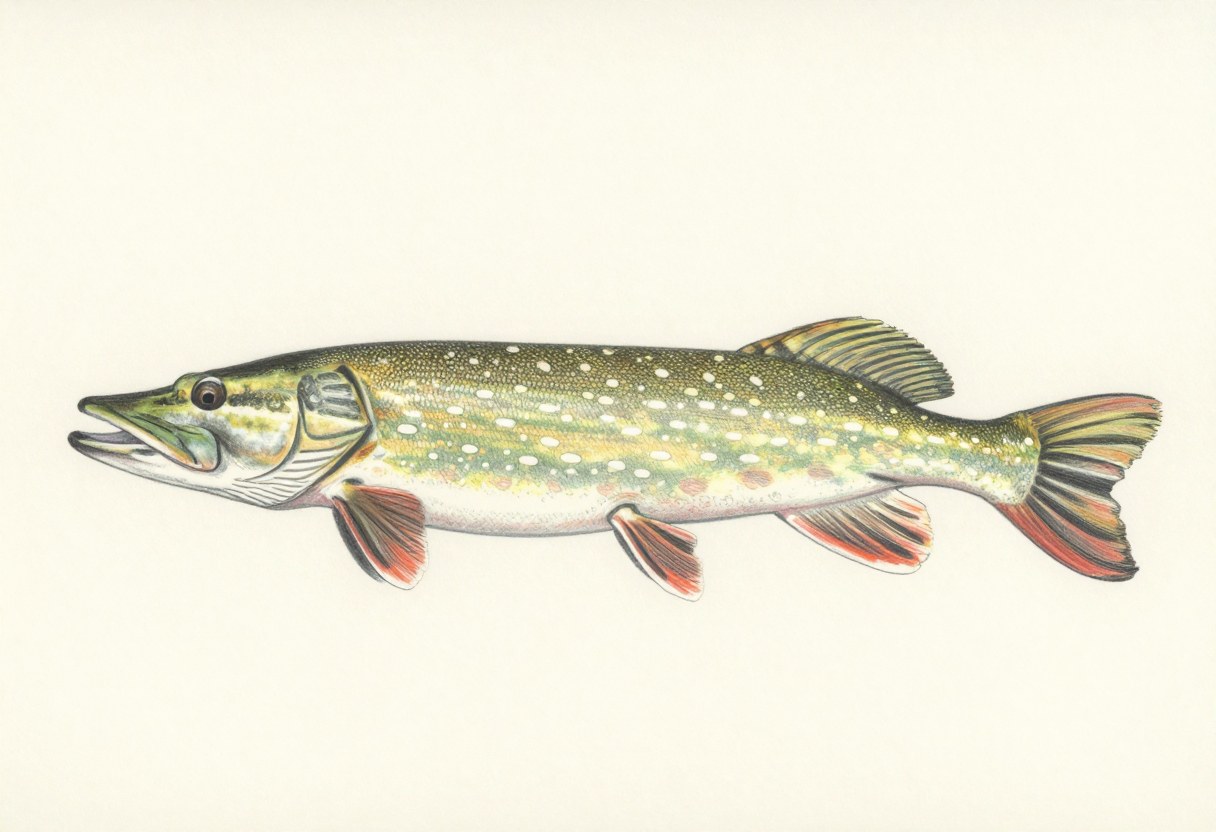
- Rows of pale, bean-shaped horizontal spots mark a green body.
- The cheek is fully scaled, but only the upper half of the gill cover has scales.
- The snout is broad and flat like a duckbill, and the tail lobes are rounded.
- The dorsal fin sits far back near the tail.
Often confused with
- Muskellunge: dark bars or spots on a lighter body, scales only on the upper half of both cheek and gill cover, and pointed tail lobes.
- Chain Pickerel: a smaller fish with a chain-link pattern on the sides and a dark bar below the eye.
Best baits and lures
- Large spoons
- Spinnerbaits
- Inline spinners
- Jerkbaits
- Large live or dead minnows
Techniques
- Cast spoons and spinnerbaits along weed edges and into pockets
- Use a steel or heavy fluorocarbon leader to resist the teeth
- Fish tip-ups with live bait through the ice
- Retrieve steadily and be ready for a strike near the boat
Fishing notes
Northern pike lie motionless in weeds waiting for prey to pass, then strike with startling speed. Look for weed edges, points, and drop-offs near shallow flats, especially in spring when they move shallow to spawn.
Their teeth are razor-sharp, so use a leader and long-nose pliers or a jaw spreader to unhook them. Never put your fingers in a pike's mouth, and hold them gently by the body.
Many states have size or slot limits for pike, and some waters are catch-and-release only. Check the current regulations.
Related guides
Size limits, bag limits, legal baits, and seasons vary by state and waterbody and change over time. Check your state's current regulations — our state resources directory links straight to each state's official fishing rules and license portal.