
Walleye
Sander vitreus
A low-light predator with big, glassy eyes and some of the best-tasting fillets in freshwater, popular from the Great Lakes to the Plains.
- Type
- Pike & Walleye
- Water
- Cool water
- Habitat
- Lakes, Reservoirs, Rivers
- Typical size
- 14 to 22 inches, 1 to 4 lb
- Range
- Native to Canada and the northern US, including the Great Lakes and the Mississippi basin, and widely stocked in lakes and reservoirs across the country.
- Best seasons
- Spring and fall; evenings, nights, and cloudy days
How to identify it
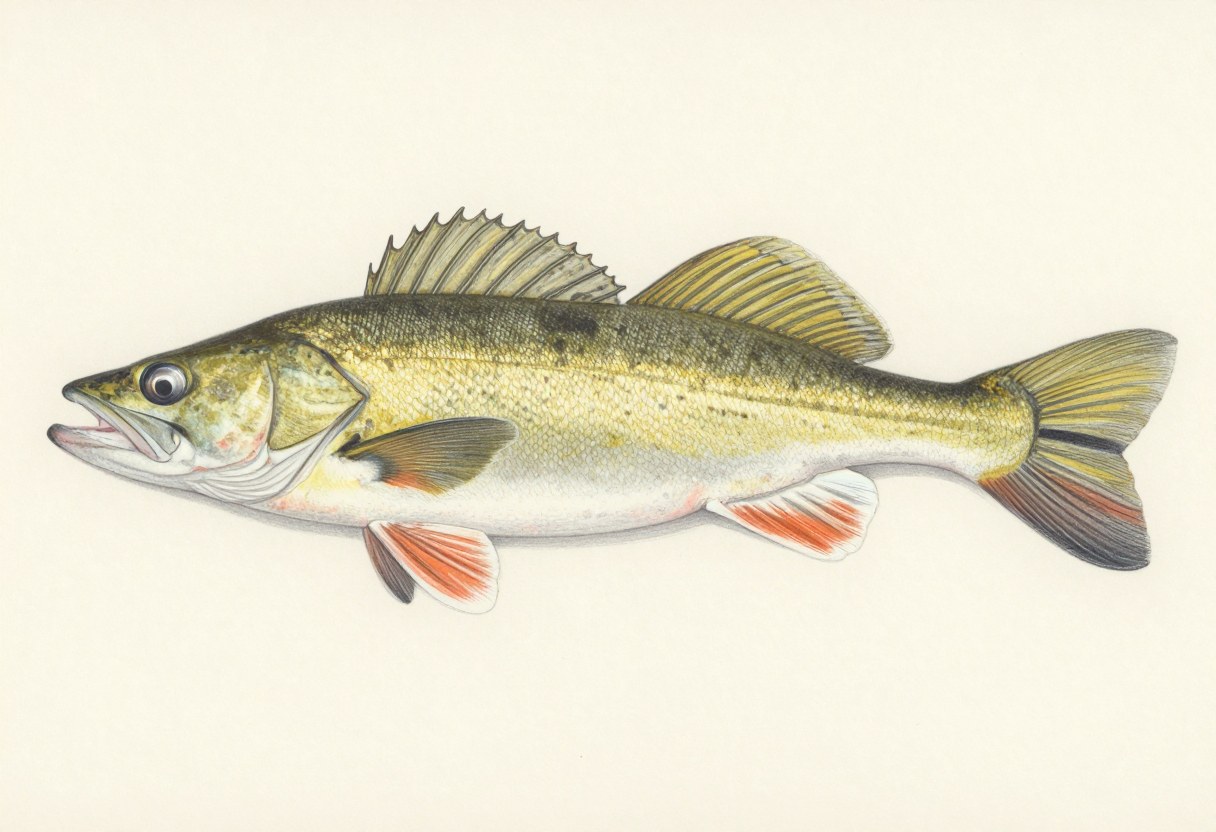
- The eyes are large and glassy, reflecting light.
- The lower lobe of the tail has a white tip.
- A dark blotch sits at the rear base of the spiny dorsal fin.
- The body is olive-gold with brassy mottling, and sharp canine teeth line the jaws.
Often confused with
- Sauger: rows of black spots on the spiny dorsal fin, dark saddle bars on the back, and no white tail tip.
- Yellow Perch: a shorter, deeper body with dark vertical bars and no canine teeth.
Best baits and lures
- Jigs tipped with minnows or nightcrawlers
- Nightcrawler harnesses
- Live minnows
- Crankbaits
- Blade baits
Techniques
- Jig along drop-offs, points, and rocky edges
- Troll crankbaits or crawler harnesses over flats
- Fish at dusk and after dark when fish move shallow
- Fish spring runs below dams and in rivers
Fishing notes
A walleye's eyes are adapted to see in dim light, so they feed most actively at dawn, dusk, and after dark, and during overcast or choppy weather. In bright daylight they often sit deeper or in shade.
Because they hug the bottom, a jig tipped with a minnow or nightcrawler, bounced along the bottom, is the standard approach.
Many waters have slot limits that protect fish of certain lengths. Check the current regulations for your water.
Related guides
Size limits, bag limits, legal baits, and seasons vary by state and waterbody and change over time. Check your state's current regulations — our state resources directory links straight to each state's official fishing rules and license portal.