
Largemouth Bass
Micropterus salmoides
America's most popular game fish: an ambush predator of weedy lakes and ponds, with a mouth big enough to swallow prey nearly half its own length.
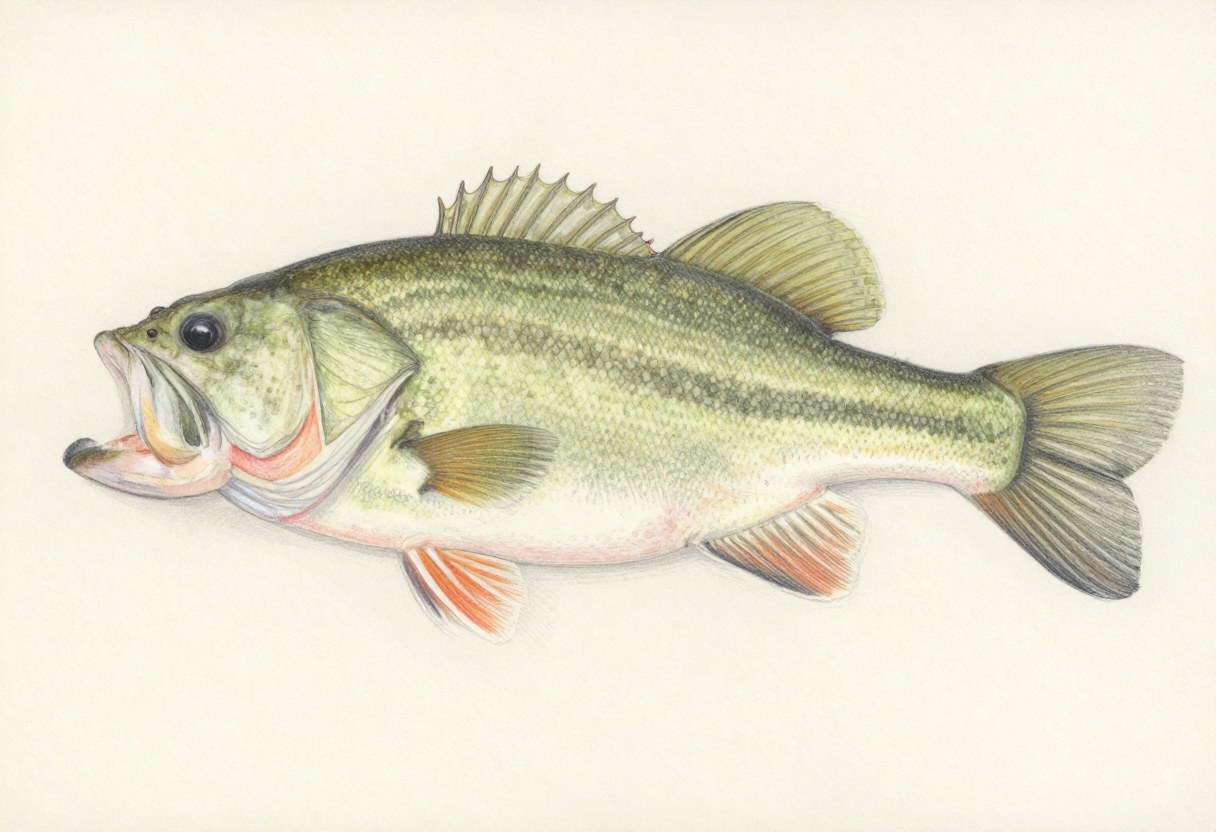
- Type
- Bass
- Water
- Warm water
- Habitat
- Lakes, Ponds, Reservoirs, Rivers
- Typical size
- 1 to 5 lb; over 8 lb is a trophy in most waters
- Range
- Throughout the contiguous US and into southern Canada and northern Mexico. Native to the eastern and central US and widely introduced elsewhere.
- Best seasons
- Spring (pre-spawn and spawn) and fall; early morning and evening in summer
How to identify it
- The upper jaw extends back past the rear edge of the eye, even on small fish.
- A dark, fairly continuous horizontal stripe runs along each side.
- The spiny front dorsal fin is nearly separated from the soft rear dorsal by a deep notch.
- The body is green to olive on top with a pale belly, and the mouth is very large.
Often confused with
- Smallmouth Bass: the upper jaw ends under the eye, the sides show vertical bars rather than a horizontal stripe, and the eye is reddish.
- Spotted Bass: the jaw ends at about the rear of the eye, there are rows of dark spots along the lower sides, and a small patch of teeth on the tongue gives it a rough feel.
Best baits and lures
- Plastic worms and creature baits
- Jigs
- Spinnerbaits
- Crankbaits
- Topwater frogs and poppers
- Live minnows and nightcrawlers
Techniques
- Texas-rig a plastic worm and work it slowly through cover
- Flip or pitch jigs into thick weeds and around docks
- Fish topwater lures at dawn and dusk
- Run crankbaits along drop-offs and weed edges
Fishing notes
Largemouth bass live around cover: weed beds, lily pads, fallen trees, docks, and the edges of drop-offs. They ambush prey rather than chase it down, so a lure that passes close to cover gets far more strikes than one that doesn't.
Fish are most active in water of roughly 65 to 80 degrees. In spring they move shallow to feed and spawn, and in the heat of summer they often retreat to deeper water or shade during the day and feed shallow at dawn, dusk, and night.
Many states set size or slot limits for black bass, sometimes with different rules for each species, so check the current regulations for your water before you keep a fish. Because bass are so popular, releasing larger fish carefully helps keep a fishery strong.
Related guides
Size limits, bag limits, legal baits, and seasons vary by state and waterbody and change over time. Check your state's current regulations — our state resources directory links straight to each state's official fishing rules and license portal.