
Catch and Release Best Practices
How to handle and release fish so they actually survive, not just swim away.
Published August 19, 2026
Why "It Swam Away" Isn't the Same as "It Survived"
A released fish that swims off strongly can still die hours or days later from stress, injury, or exhaustion that wasn't visible at the moment of release. Delayed mortality from poor catch-and-release handling is a real, well-documented phenomenon — meaning good intentions alone don't guarantee a released fish actually survives. This guide covers the handling practices that meaningfully improve a released fish's real survival odds, not just its ability to swim out of sight.
1. Minimizing Fight Time
- Use appropriately sized tackle for the species you're targeting — tackle that's too light extends the fight unnecessarily, exhausting the fish well beyond what's needed to land it.
- Land the fish as quickly as is reasonably possible, since extended fight time builds lactic acid and physiological stress that meaningfully affects post-release survival, especially in warmer water where fish are already more stressed.
- Avoid playing a fish to complete exhaustion "for the photo" or out of excitement — a fish that's fully exhausted before release has measurably worse survival odds than one landed efficiently.
2. Handling: Wet Hands, Minimal Air Exposure
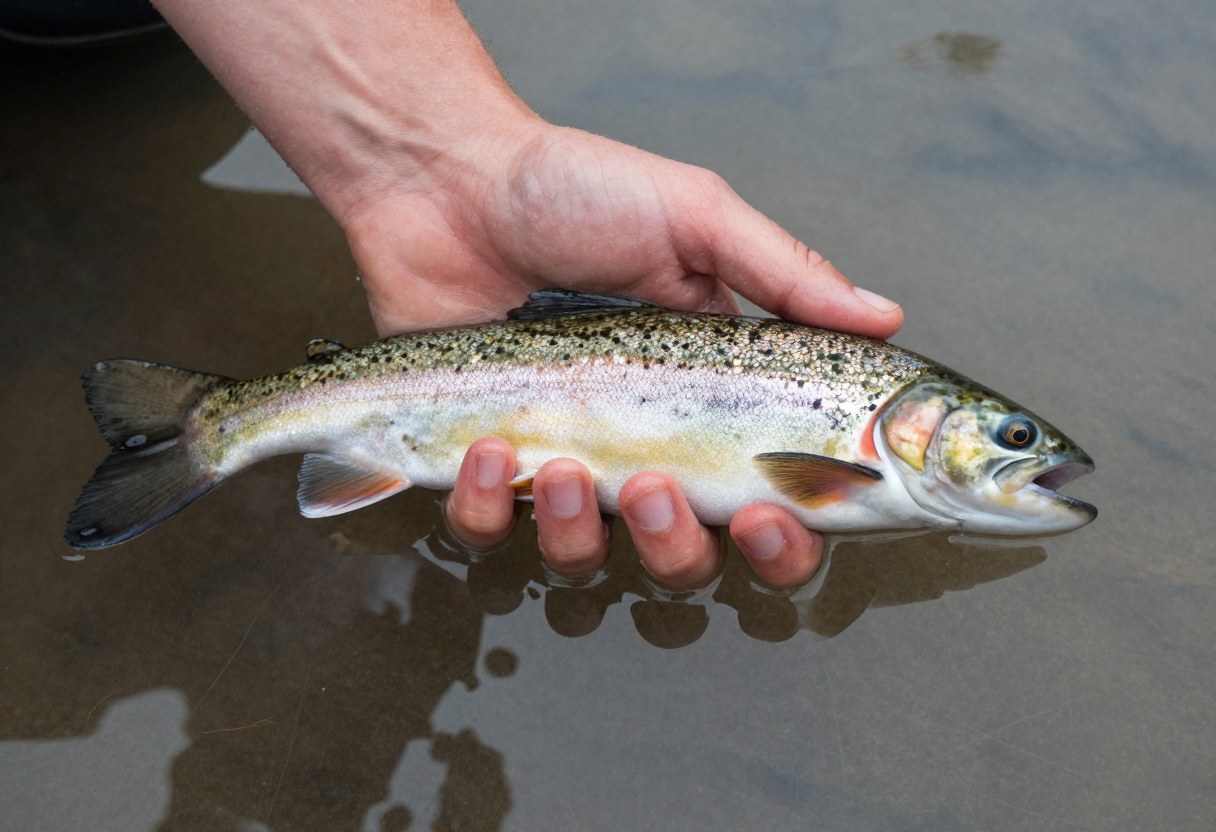
- Wet your hands before touching a fish. Fish have a protective slime coat that guards against infection and disease — dry hands remove this coating, and even brief dry-hand contact can create a meaningful vulnerability for the fish afterward.
- Minimize air exposure time. A fish out of water is functionally suffocating — the general guideline many fisheries biologists recommend is keeping air exposure to well under 30 seconds when possible, or ideally keeping the fish partially in the water throughout handling.
- Avoid the "hero shot hold-up-for-a-long-photo" habit. If a photo matters to you, have the camera ready before lifting the fish, take it quickly, and get the fish back in the water — planning the photo in advance meaningfully reduces air exposure time versus fumbling with a camera while holding the fish.
- Support the fish horizontally, not vertically by the jaw, especially for larger fish — vertical holds by the jaw alone can cause internal damage from the fish's own body weight, particularly in bigger specimens.
Don't Skip This: Wet hands and minimal air exposure are the two handling habits with the most research behind their impact on post-release survival, and they cost nothing and take no extra equipment — they're genuinely the highest-value changes a beginner can make to their catch-and-release practice.
3. Hook Removal
- Use needle-nose pliers or forceps for efficient, quick hook removal, minimizing handling time compared to fumbling with fingers alone.
- For a deeply hooked fish (especially common with bait fishing), cutting the line close to the hook rather than aggressively digging for the hook is often the better choice — many hooks, especially non-stainless options, corrode and dissolve over time, while forceful removal attempts can cause more damage than leaving the hook in place.
- Barbless hooks (or pinching down barbs on standard hooks) make hook removal significantly faster and less damaging, and are required in some catch-and-release-focused fisheries specifically for this reason.
- Circle hooks, particularly for bait fishing, tend to hook fish in the corner of the jaw rather than deeper in the throat/gut, meaningfully reducing deep-hooking injury compared to traditional J-hooks.
4. Using a Net Properly
- Rubber or knotless mesh nets are meaningfully better for fish than knotted mesh, which can damage fins, scales, and the protective slime coat.
- Land the fish in the net efficiently, avoiding an extended chase-and-scoop process that adds unnecessary stress and fight time.
- Keep the fish in the water in the net while removing the hook and preparing for release/photo, rather than lifting the net (and fish) fully out of water before you're ready.
5. Reviving a Tired Fish Before Release
- In still water: Hold the fish gently upright in the water, moving it in a gentle figure-eight or forward motion to push water over the gills, until it shows strong, voluntary swimming motion on its own.
- In current: Hold the fish facing upstream, letting moving water flow naturally over the gills, which often revives a tired fish faster than still water.
- Release only once the fish swims away under its own power with clear strength — releasing a fish that immediately rolls over or struggles to maintain upright orientation, without giving it more revival time, meaningfully lowers its survival odds.
- Never throw or drop a fish back into the water — a controlled, gentle release, ideally with the fish already showing strong swimming motion, is meaningfully better than tossing an exhausted fish and hoping.
6. Water Temperature and Seasonal Considerations
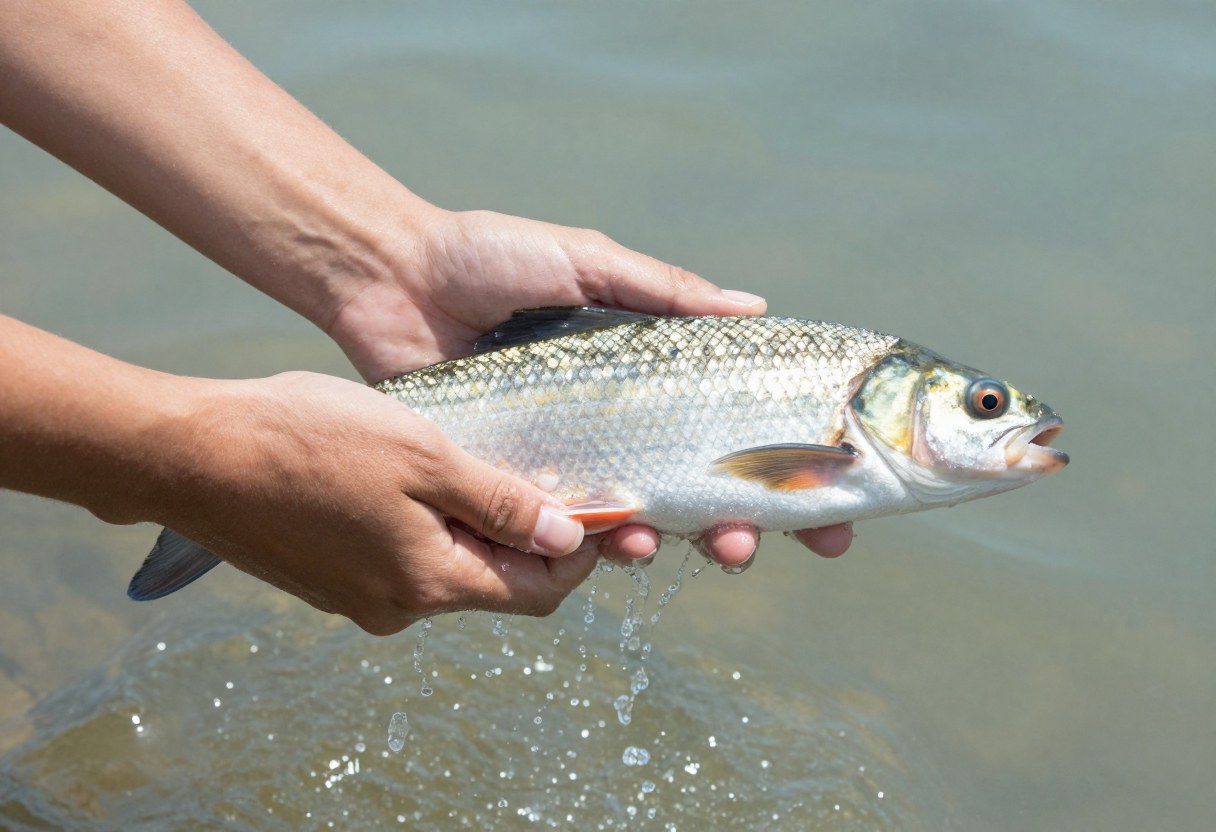
- Warmer water holds less dissolved oxygen, meaning fish are under more baseline physiological stress in summer conditions — extra care with fight time and air exposure matters more in warm water than cool water.
- Many fisheries have voluntary or mandatory "hoot owl" restrictions during extreme summer heat, limiting fishing to cooler morning/evening hours specifically because midday heat stress meaningfully increases catch-and-release mortality — check for any current advisories in your area during hot weather.
- Cold water slows fish metabolism and reaction time, which can mean longer fights relative to the fish's actual exhaustion level — judgment on when a fish is genuinely ready for release matters more than a fixed time guideline across all conditions.
7. Species-Specific Notes
- Deep-water fish (many saltwater species) can suffer barotrauma — internal gas expansion from rapid depth change that can prevent a fish from swimming back down even after release. A venting tool or descending device, where legal and appropriate for the species, can meaningfully improve survival for fish showing barotrauma symptoms (bulging eyes, protruding stomach).
- Trout and other cold-water species are often more sensitive to warm water stress than many warm-water species, making the summer heat precautions in Section 6 especially relevant for trout fishing specifically.
- Some species tolerate handling notably better than others — check species-specific guidance for particularly sensitive fish in your region if you fish for them regularly.
8. Common Catch-and-Release Mistakes
- Extended fight time from undersized tackle, exhausting fish well beyond what efficient landing would require.
- Dry-hand handling, stripping the fish's protective slime coat unnecessarily.
- Extended air exposure for photos, especially fumbling with a camera while holding the fish out of water.
- Vertical jaw-holds on larger fish, risking internal injury from unsupported body weight.
- Releasing a fish before it shows strong, independent swimming ability, assuming it will be fine without proper revival.
- Aggressive hook removal on deeply hooked fish, causing more damage than cutting the line and leaving the hook to corrode naturally.
- Ignoring water temperature and seasonal stress factors, applying the same handling approach regardless of how much baseline stress the fish is already under.
Quick Decision Checklist
- I'm using appropriately sized tackle to minimize unnecessary fight time
- I wet my hands before touching any fish I plan to release
- I've planned photos in advance to minimize air exposure time, or am skipping photos on fish that need immediate release
- I'm using a rubber or knotless mesh net, and keeping the fish in water as much as possible during handling
- I use pliers/forceps for quick hook removal, or cut the line for deeply hooked fish rather than digging for the hook
- I revive a tired fish fully (holding it upright with water flow over the gills) before release, not releasing prematurely
- I'm accounting for water temperature and adjusting care/timing during warm-water conditions
Glossary
- Slime Coat: A fish's protective mucous layer, guarding against infection and disease, easily stripped by dry-hand contact.
- Barotrauma: Internal gas expansion injury in fish brought up quickly from deep water, which can prevent normal swimming/diving even after release without intervention.
- Circle Hook: A hook design that tends to catch in the corner of a fish's jaw rather than deeper in the throat, reducing deep-hooking injury compared to traditional J-hooks.
- Delayed Mortality: Fish death occurring hours or days after an apparently successful release, caused by handling stress or injury not visible at the time of release.
Final Takeaway
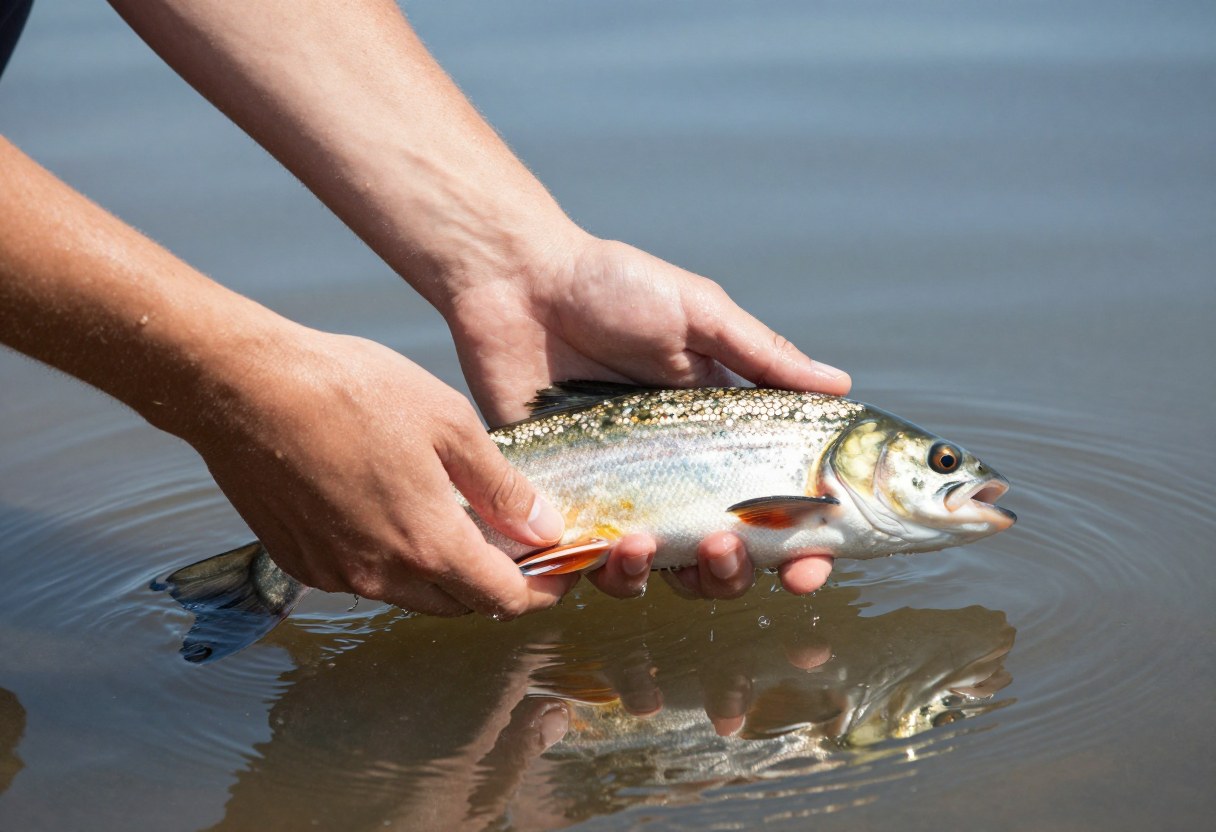
A fish swimming away after release isn't proof of survival — real catch-and-release success depends on minimizing fight time, handling with wet hands and minimal air exposure, removing hooks efficiently (or cutting the line for deep hooks), and fully reviving a tired fish before letting it go. None of these practices require special equipment beyond what most anglers already carry, just consistent attention to habits that measurably improve a released fish's actual odds.
Catch-and-release best practices can vary somewhat by species and local conditions — check for any species-specific or regional guidance (such as seasonal heat advisories) that may apply to your specific fishery.