Beginner's Guide to Fly Fishing
The basics of fly fishing — gear, casting, and where to start — for anglers making the jump from spin tackle.
Published August 11, 2026 · Updated August 12, 2026
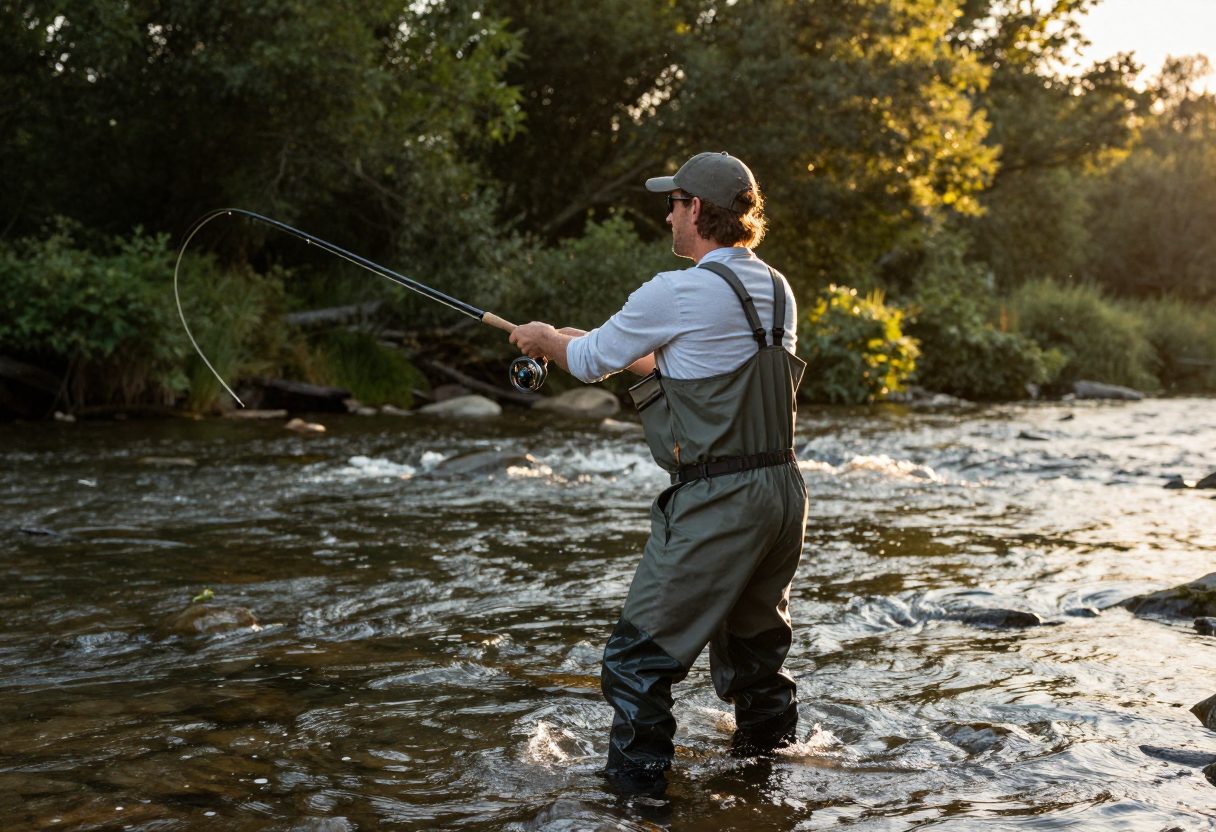
If you've spun-fished before, the biggest mental shift is this: in spin fishing, the weight of the lure or sinker carries the line out. In fly fishing, the weight of the line itself carries the nearly weightless fly out. That single difference is why the gear, the cast, and even how you read water all work differently. Once that clicks, everything else in this guide will make a lot more sense.
This guide covers what you actually need to get started, not the exhaustive gear catalog — the goal is to get you on the water competently, not to overwhelm you before your first cast.
1. How Fly Fishing Differs From Spin Fishing
| Aspect | Spin Fishing | Fly Fishing |
|---|---|---|
| What carries the line out | Weight of the lure/sinker | Weight of the fly line itself |
| Typical lure/fly weight | Often noticeably heavy | Nearly weightless (fur, feather, thread) |
| Casting motion | Flick of the wrist, load the rod tip | Full-arm rhythmic back-and-forth loading of the line |
| Primary skill learned first | Casting accuracy/distance | Casting and line control together |
| What you're usually imitating | Baitfish, general prey shape | Specific insects, insect life stages, or small baitfish |
| Typical target species (beginner-friendly) | Widely applicable | Trout, panfish, bass — technique varies more by species |
Neither is "harder" in an absolute sense — fly fishing has a steeper initial learning curve for casting, but many anglers find the process more engaging once the fundamentals click.
2. Core Gear You Actually Need
The Rod
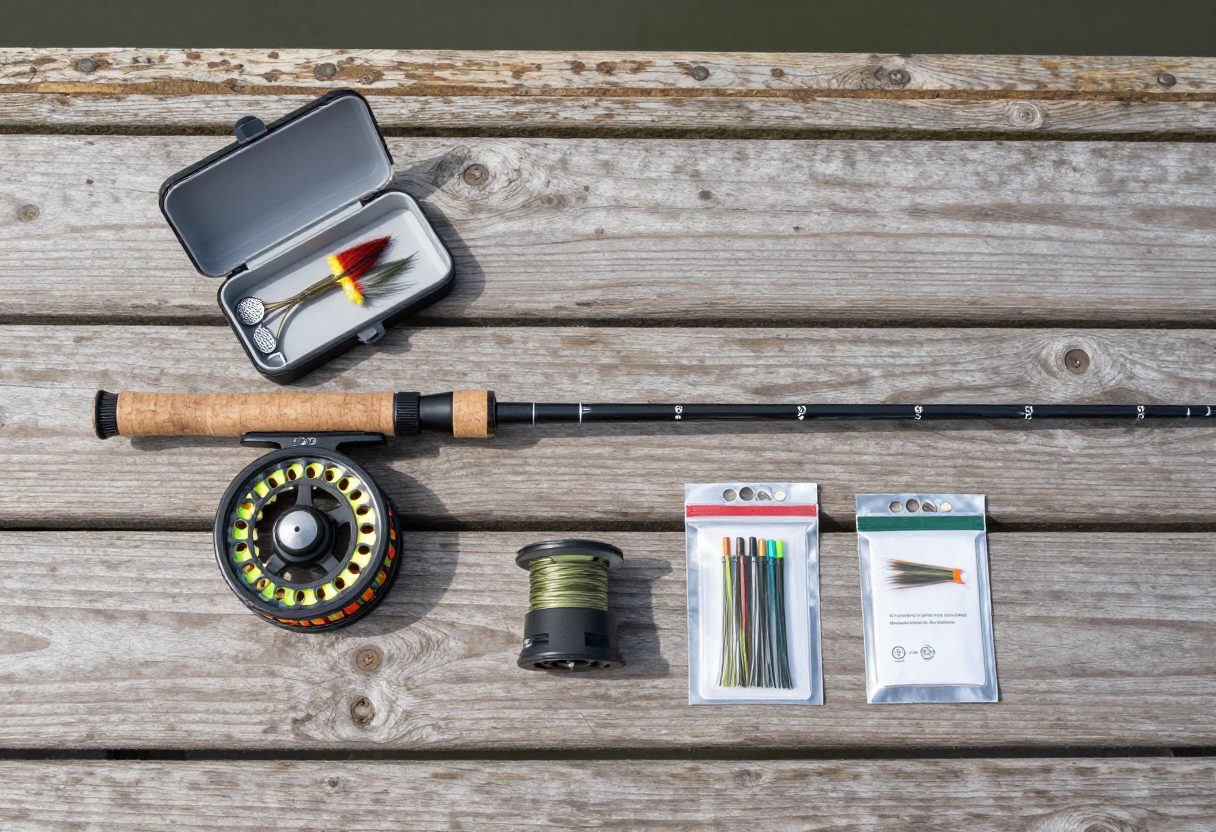
Fly rods are sized by weight (not lure weight like spin rods, but line weight), written as "3-weight," "5-weight," etc. Higher numbers handle bigger fish and windier conditions but are less delicate for small fish and calm water.
- Best all-around beginner choice: a 5-weight, 9-foot rod. It's the most versatile size — capable of trout, panfish, and smaller bass, and it's the size most fly fishing instruction and rental gear defaults to.
- Rod "action" (fast, medium, slow) describes how much the rod flexes. Medium-fast action is the easiest for beginners to feel load and timing with; true fast-action rods are less forgiving of casting mistakes.
Not sure which rod and reel combo fits your target species and budget? Our fishing rod & reel finder walks through it step by step.
The Reel
Unlike spin fishing, the reel plays a much smaller role in casting — it mostly stores line and provides drag when a fish runs.
- A basic, reliable reel with a smooth adjustable drag is enough. You don't need to spend heavily here for freshwater trout/panfish; the rod and line matter far more to your casting.
The Fly Line — The Most Important (and Least Intuitive) Piece
This is the part beginners from spin fishing most often get wrong, because there's no spin-fishing equivalent to compare it to.
- Fly line is thick, tapered, and weighted — it's what you're actually casting. Match it to your rod's weight rating (a 5-weight rod uses 5-weight line).
- Weight-forward (WF) floating line is the standard beginner choice — it's easier to cast than "double taper" line and handles most freshwater situations.
- Backing sits behind the fly line on the reel spool, providing extra length if a fish makes a long run.
- Leader is a clear, tapered length of monofilament or fluorocarbon tied to the end of the fly line — this is what actually connects to the fly, since fly line itself is too thick and visible to tie on directly.
- Tippet is thin, level line added to the end of the leader as it wears down or when you need a finer, less visible connection for spooky fish.
Don't Skip This: Buying a rod and reel but skipping a properly matched, quality fly line is the single most common beginner mistake — a mismatched or cheap line makes casting dramatically harder no matter how good the rod is. If you're going to spend a bit more anywhere, spend it here.
Flies
Flies broadly fall into a few categories:
- Dry flies — float on the surface, imitating adult insects. Visually exciting because you see the strike.
- Nymphs — sink, imitating immature insect life stages underwater. Often the most consistently productive for trout since fish feed subsurface most of the time.
- Streamers — imitate baitfish or larger prey, fished with more active retrieval; closest in feel to spin-fishing with a lure.
- Terrestrials — imitate land insects (grasshoppers, ants, beetles) that fall into the water, effective in summer.
Beginner starter fly selection: a handful of general-pattern nymphs (like a Pheasant Tail or Hare's Ear), a couple of versatile dry flies (like an Elk Hair Caddis or Adams), and one or two small streamers (like a Woolly Bugger) covers a large share of beginner situations across trout water.
Other Essential Gear
- Waders and wading boots (if wading rivers/streams) — or simple waterproof boots for bank fishing
- Polarized sunglasses — critical for cutting glare to see fish and structure underwater, not just sun comfort
- Nippers (small clippers for trimming line) and forceps/hemostats (for removing hooks safely)
- Fly box to organize and protect flies
- Vest, sling pack, or hip pack to carry gear while wading
- Floatant (for dry flies, to help them stay on the surface) and strike indicator (a small floating marker used with nymphs to detect subtle takes)
3. Understanding the Cast
The fly cast is built around loading and unloading energy stored in the bending rod and the moving line — not muscling the lure forward like a spin cast.
The Basic Overhead Cast, Step by Step
- Start with line out — roughly 20–30 feet of line extended on the water or grass in front of you; fly casting doesn't work well trying to cast from a reel with no line out.
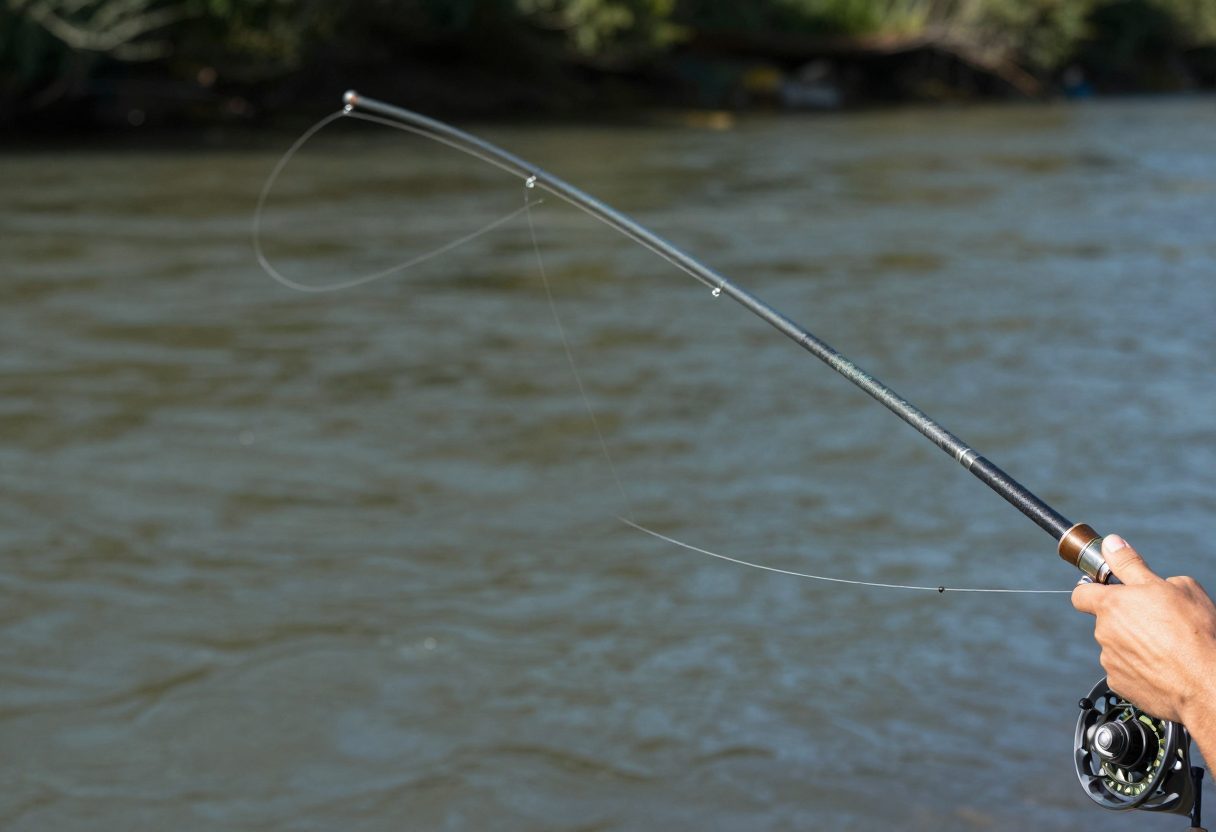
- The backcast: Smoothly accelerate the rod up and back, stopping abruptly around the 1-o'clock position (imagining a clock face beside you). The abrupt stop is what "loads" the rod and sends the line unrolling behind you.
- Pause to let the line fully extend behind you before starting forward — this is the single most common beginner timing mistake. Starting forward too early ("no pause") collapses the cast.
- The forward cast: Accelerate smoothly forward and stop abruptly around 10-o'clock, letting the line unroll forward and the fly land gently.
- Follow through and let the line settle, then begin retrieving or mending as needed.
The Most Common Beginner Casting Mistakes
- No pause on the backcast — rushing the forward stroke before the line straightens behind you, which collapses the loop and kills distance/accuracy.
- Too much wrist, not enough smooth arm motion — over-flicking the wrist (a spin-fishing habit) creates a sloppy, uncontrolled loop instead of a tight, efficient one.
- Casting with too much force — fly casting relies on timing and rod load, not power; muscling the cast usually makes it worse, not better.
- Looking at the fly instead of the line loop — watching your backcast loop unroll helps you time the forward stroke correctly.
Getting Started Practicing
- Practice on a lawn or park before your first time on water — grass doesn't punish timing mistakes the way water does, and you can watch your loop shape clearly.
- A lesson or guided half-day trip for your first time out is genuinely one of the highest-value investments a beginner can make; fly casting is a physical/timing skill that's much faster to learn with feedback than from video alone.
- Many fly shops offer free or low-cost casting clinics — worth checking before assuming private lessons are the only option.
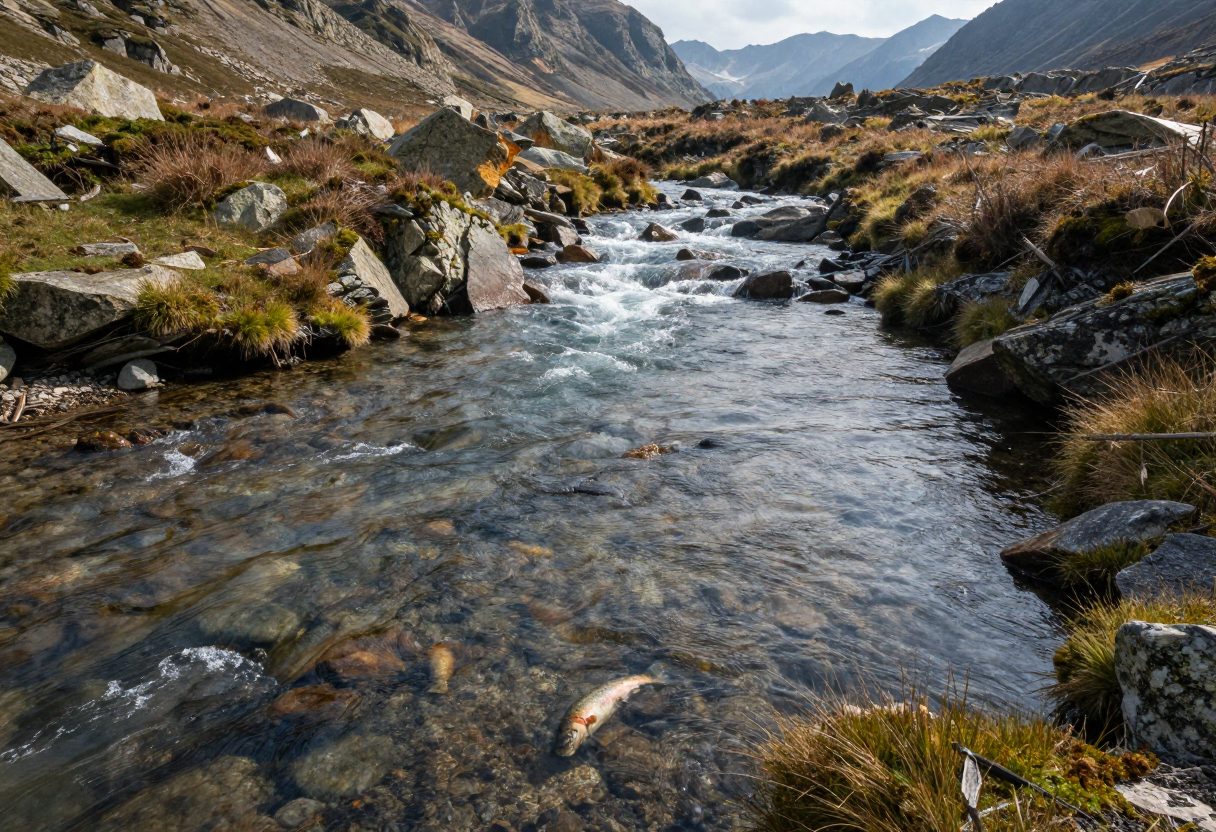
4. Reading Water and Finding Fish
Fly fishing rewards understanding where fish are holding, often more than exact fly pattern choice, especially for beginners.
- Fish face upstream in moving water, waiting for food to drift to them — this affects where you cast and how you approach without spooking them.
- Look for current seams — the boundary between fast and slow water — where fish can hold in slower water while food drifts by in the faster current next to them.
- Structure matters: undercut banks, submerged rocks, logs, and deeper pools all provide cover and food concentration.
- Riffles (shallow, choppy water) often hold more oxygen and insect activity, making them productive, especially for smaller/more numerous fish.
- Approach quietly and from downstream when possible — trout in particular are sensitive to vibration and shadows, and a clumsy approach spooks fish before a single cast is made.
5. Where to Start: Beginner-Friendly Species and Locations
You don't need pristine wilderness trout streams to learn — in fact, starting somewhere more forgiving is often smarter.
| Species | Why It's Beginner-Friendly |
|---|---|
| Bluegill/panfish | Aggressive, abundant, forgiving of imperfect presentation — arguably the best true beginner target |
| Bass (largemouth/smallmouth) | Take streamers and poppers well, less finicky than trout about exact fly match |
| Stocked trout | Widely available near urban areas, generally less spooky than wild trout in pressured water |
| Wild trout | The classic fly fishing target, but more technically demanding — better as a "graduate to" goal than a first outing |
Practical starting locations:
- A local pond or lake stocked with panfish or bass — low pressure, easy access, forgiving casting conditions (no current to manage).
- A stocked trout stream near a population center — many states run put-and-take stocking programs specifically to give anglers accessible fish.
- Guided trips on well-known trout water — costs more but compresses the learning curve significantly by pairing you with someone reading water and coaching cast timing in real time.
6. Licensing and Regulations
- A fishing license is required in virtually all U.S. states and most other countries for freshwater fishing, fly fishing included — check your state or region's specific requirements and any additional trout/salmon stamps required.
- Catch-and-release regulations, barbless hook requirements, and specific fly-only or artificial-lure-only water designations are common on trout streams — check regulations for your specific body of water before fishing it, as they vary significantly by location and even by season.
- Some waters have special regulations protecting spawning fish during specific times of year — fishing during a closure, even accidentally, is a real risk if you don't check ahead.
7. Basic Fish Handling and Catch-and-Release Practices
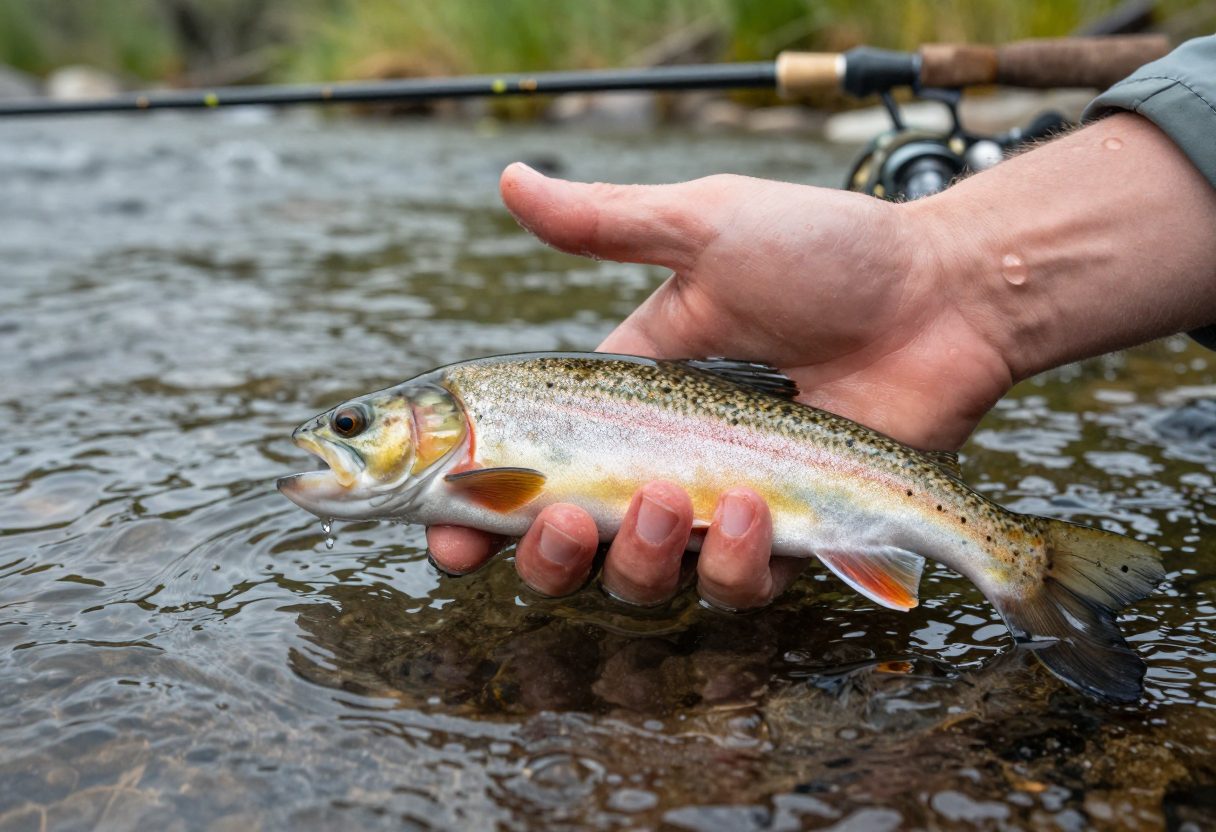
Many beginner fly anglers practice catch-and-release, especially on wild trout water — doing it well matters for fish survival.
- Keep fish in the water as much as possible, especially if not keeping it — extended air exposure significantly reduces survival odds.
- Wet your hands before handling to avoid removing the fish's protective slime coat.
- Use barbless hooks or pinch barbs down — makes hook removal faster and less damaging.
- Avoid squeezing the fish or holding it by the gills.
- Revive before release — hold the fish gently in the current facing upstream until it swims off on its own, rather than releasing an exhausted fish immediately.
8. First Trip Checklist
A condensed packing list for your first outing:
- Rod and reel with matched, spooled fly line
- Leader and spare tippet
- A small selection of flies (a few nymphs, dries, and a streamer)
- Nippers and forceps/hemostats
- Polarized sunglasses
- Waders/wading boots or waterproof footwear
- Fishing license for your state/region
- Sunscreen and a hat
- Small first aid basics (hooks happen)
- Water and snacks
9. A Realistic First-Season Progression
- Session 1–2: Practice casting on grass, no water involved. Focus purely on the pause and timing of the backcast/forward cast.
- Session 3–4: Fish calm, easy water (pond or lake) targeting panfish or bass. Low pressure, forgiving of casting mistakes.
- Session 5+: Move to moving water (stream/river) and start incorporating reading water, mending line, and more deliberate fly selection.
- Ongoing: Consider a guided trip or local fly-fishing club/outfitter clinic — these accelerate the learning curve more than almost anything else, especially for reading water and refining cast timing.
Final Takeaway
The jump from spin fishing to fly fishing is really a shift from "weighted lure carries the line" to "the line itself is the weight" — and once that reframes your understanding of the cast, most of the rest follows logically. Start with forgiving fish (panfish, bass, or stocked trout), invest in a properly matched rod/line/leader setup over spending on flies, and prioritize a lesson or two early on. The learning curve is real but short-lived; most beginners feel a meaningful jump in competence within their first handful of outings.
Always check current license requirements and water-specific fishing regulations before heading out — these vary by state, water body, and season, and can change from year to year.