
Elk
Cervus canadensis
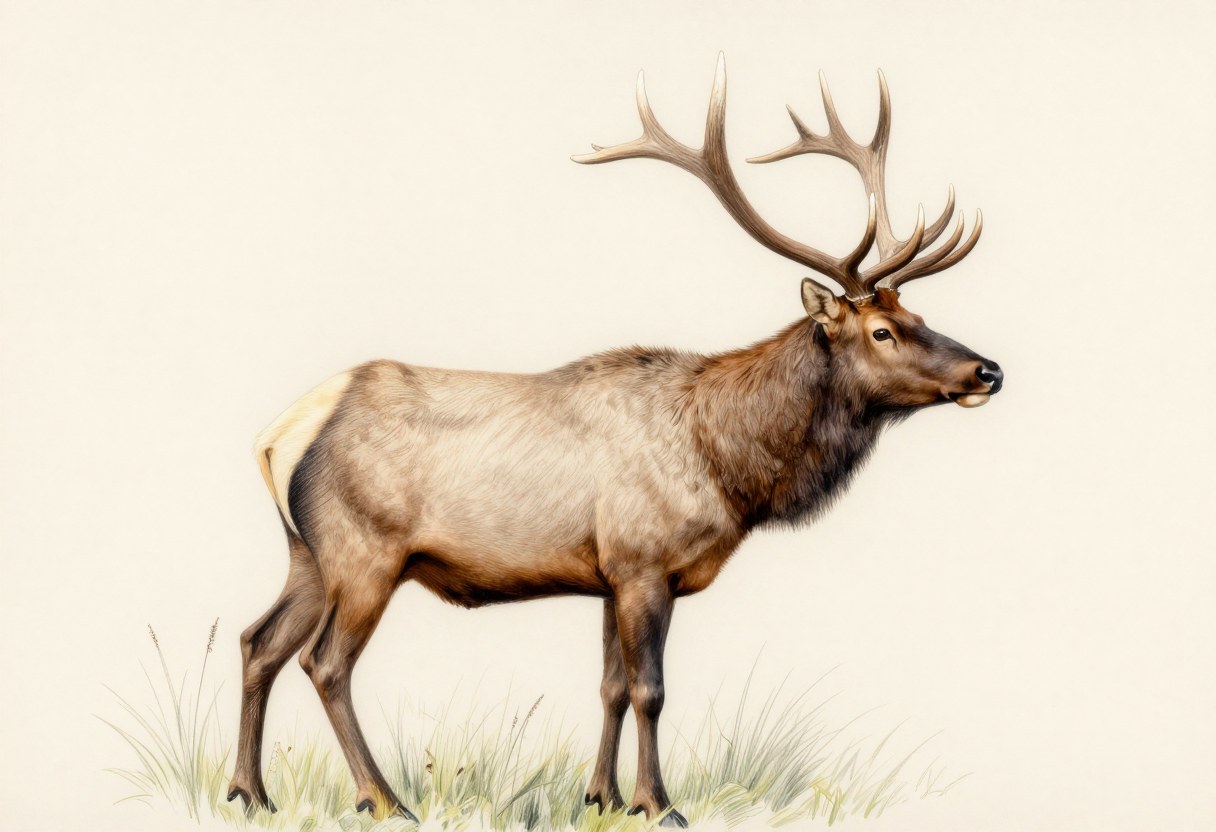
A large, tan deer with a dark mane and a pale rump patch, famous for its bugling during the fall rut and for its sweeping antlers.
- Type
- Deer Family
- Habitat
- Mountains, Forests, Prairie & plains
- Typical size
- Bulls about 600–800 lb or more; cows about 450–550 lb; about 4.5–5 ft tall at the shoulder
- Range
- The Rocky Mountains and Pacific Northwest, with growing herds in places such as the Great Lakes and the Appalachians
- Seasons
- Archery seasons often fall in September during the rut, followed by rifle seasons in October and November. Many areas use limited tags or draws
How to identify it
- A tan body, dark brown neck and mane, and dark legs.
- A large cream-colored rump patch with a short tail.
- Bulls grow large antlers that sweep back over the body, with long tines pointing forward.
- During the rut, bulls give a loud, high-pitched whistling call called a bugle.
Tracks and sign
- Tracks are large, rounded, and cloven, over 4 inches long.
- Wallows: muddy depressions where bulls urinate and roll, which smell strong.
- Rubs and shredded bark high on trees, and tree trunks stripped of bark in winter.
- Large clusters of pellets or loose droppings in summer.
Often confused with
What it eats
- Grasses and forbs in spring and summer
- Shrubs and twigs in winter
- Bark, in hard winters
How it's hunted
- Calling bulls with bugles and cow calls during the September rut
- Spot-and-stalk after glassing open slopes
- Ambush near water and wallows
- Packing out meat, which is heavy and takes planning
Safety: Bulls in the rut can be aggressive, and cows with calves are protective. Elk are big, and a downed animal takes serious work to field-dress and pack out. Bears also come to elk kills in some areas. Chronic wasting disease occurs in elk, so follow your state's rules.
Field notes
Elk hunting is a physical, planned affair. The animals are large, the terrain is often rugged, and the meat is heavy. Careful preparation matters as much as shooting skill.
In September, bulls bugle and respond to calls, which gives archery hunters a chance to work close to animals. Later in the fall, herds move to winter range.
Related guides
Seasons, tag and license requirements, legal methods, and bag limits vary by state and unit and change every year. Many big-game species require a drawn or purchased tag, and some animals are protected or regulated differently in different places. Check your state's current regulations — our state resources directory links straight to each state's official hunting rules and license portal.