Understanding Hunting Licenses and Regulations
How hunting licenses, tags, and season rules work in the US, and where to look up the requirements for your state.
Published August 11, 2026
Why This System Feels Confusing at First
Hunting regulation in the US isn't one system — it's 50 separate state systems, each with its own agency, terminology, and rules, layered on top of some shared federal frameworks for migratory species. A beginner moving between states, or just trying to understand their own state's rulebook for the first time, often finds the vocabulary itself to be the first barrier. This guide breaks down what each term actually means, how the pieces fit together, and — most importantly — how to find the current, authoritative rules for wherever you're hunting, since regulations change yearly and this guide can't substitute for checking the source.
1. Who Regulates What: The Federal-State Split
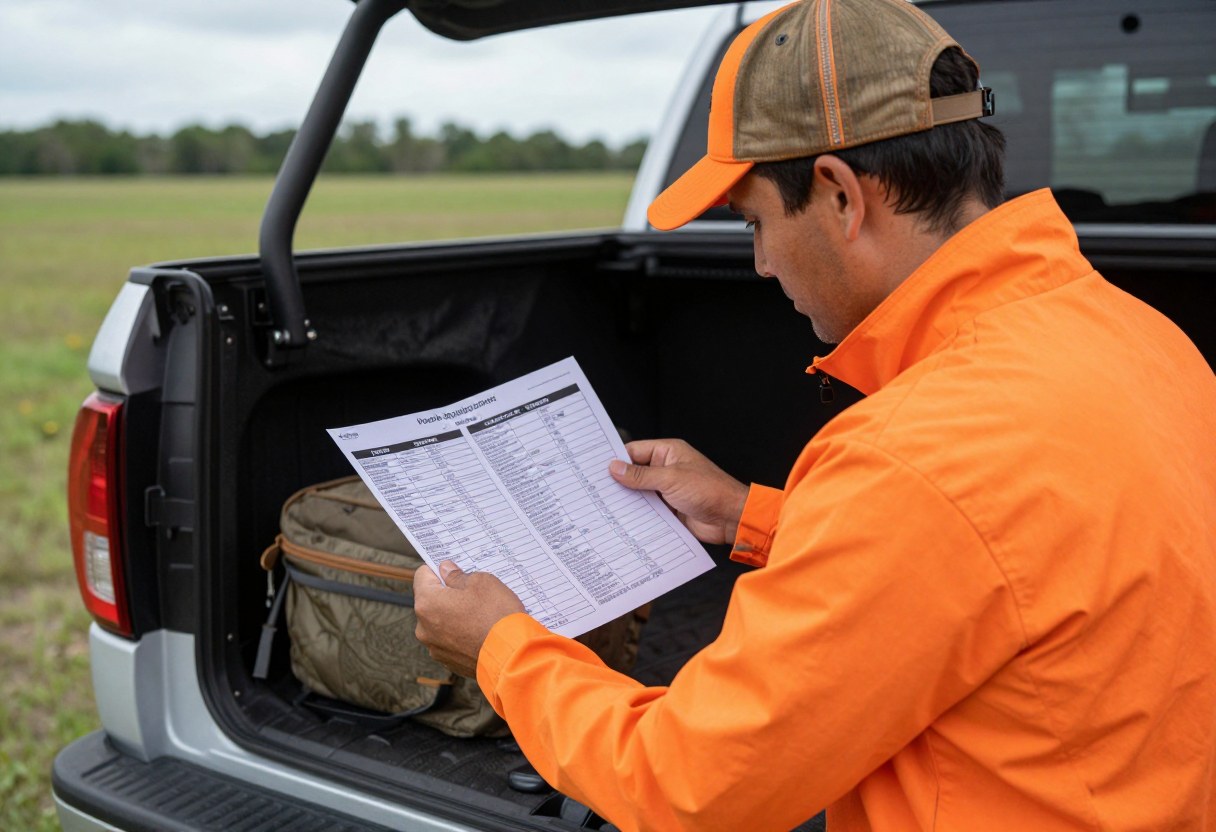
- States hold primary authority over most hunting regulation — seasons, licenses, bag limits, and species-specific rules for resident game (deer, elk, upland birds, small game, etc.) are set by each state's wildlife agency.
- The federal government regulates migratory species (primarily waterfowl and some other migratory birds) through the U.S. Fish and Wildlife Service, working within international treaty frameworks. This is why waterfowl hunting requires an additional federal stamp on top of state requirements (see Section 5).
- Public land management agencies (U.S. Forest Service, Bureau of Land Management, National Park Service, state land agencies) add another layer — hunting may be permitted, restricted, or prohibited depending on the specific public land unit, separate from state wildlife regulations.
- Tribal lands often operate under separate regulatory authority (tribal governments, sometimes in coordination with state or federal agencies), with their own licensing and season structures.
Practical takeaway: for the vast majority of beginner hunters targeting deer, turkey, or upland game, your state wildlife agency is the primary authority to check. Waterfowl hunters have an added federal layer. Public land hunters should verify the specific land unit's rules in addition to state regulations.
2. Core Vocabulary
| Term | What It Means |
|---|---|
| Hunting license | The base legal authorization to hunt in a state, generally required regardless of species |
| Tag | A species-specific permit (often physically or digitally attached to a harvested animal) authorizing the take of one animal of that species/category |
| Permit | Often used interchangeably with "tag," though some states distinguish permits (broader authorization) from tags (the physical/digital proof attached per animal) |
| Season | The specific date range during which a species may legally be hunted, often subdivided by weapon type |
| Bag limit | The maximum number of a species that may be legally taken, often broken into daily and possession limits |
| Zone/Unit/District | A geographic subdivision within a state, each potentially having its own season dates, bag limits, and regulations |
| Draw/Lottery tag | A limited-quantity tag allocated via random drawing rather than being available to any license holder, common for species or areas with limited populations or high demand |
| Over-the-counter (OTC) tag | A tag available for purchase without a lottery, generally for more abundant species or less restricted areas |
| Bonus/Preference point | A system in many states' draw processes that increases your odds of drawing a limited tag in future years based on past unsuccessful applications |
3. The Hunter Education Requirement
Most states require hunter education certification before issuing a first hunting license, regardless of the hunter's age (though some states have age-based exemptions or grandfather clauses for older hunters who were hunting before the requirement existed).
- Courses cover firearm/archery safety, ethics, basic wildlife identification, and often state-specific regulation overviews.
- Many states offer both in-person courses and online courses (sometimes requiring an in-person field day component even for online coursework).
- Certification is typically valid for life and often recognized across state lines through a reciprocity system, meaning a hunter education card from one state generally satisfies the requirement in most others — though it's worth confirming for your specific situation.
- Complete this well before you plan to buy a license or hunt — course availability (especially in-person sessions) can be limited, and this shouldn't be a last-minute step.
4. Licenses: The Base Requirement
A hunting license is generally the base-level authorization required before any species-specific tags can be purchased.
Residency Status
- Resident licenses are typically less expensive and sometimes offer easier access to limited draw tags, reflecting a state's prioritization of its own residents.
- Non-resident licenses cost more — sometimes significantly more — and may have separate, more limited tag allocations for certain species, particularly in high-demand states for species like elk.
- Residency requirements vary by state (length of residence, driver's license address, tax filing status, etc.) — don't assume based on where you grew up or previously lived; confirm current residency rules if your status is ambiguous.
License Types
- Annual licenses, valid for a defined license year (which may not align with the calendar year — check your state's specific cycle).
- Multi-year or lifetime licenses, offered by some states, often at a cost premium but avoiding annual renewal.
- Combination licenses, bundling hunting and fishing privileges at a discount compared to buying separately, common in many states.
- Apprentice or mentor licenses, allowing a new hunter to hunt under supervision before completing hunter education, offered by some states as an entry pathway.
- Youth licenses, typically discounted and sometimes with different requirements than adult licenses.
5. Tags, Stamps, and Additional Permits
Beyond the base license, most hunting requires additional species-specific authorization.
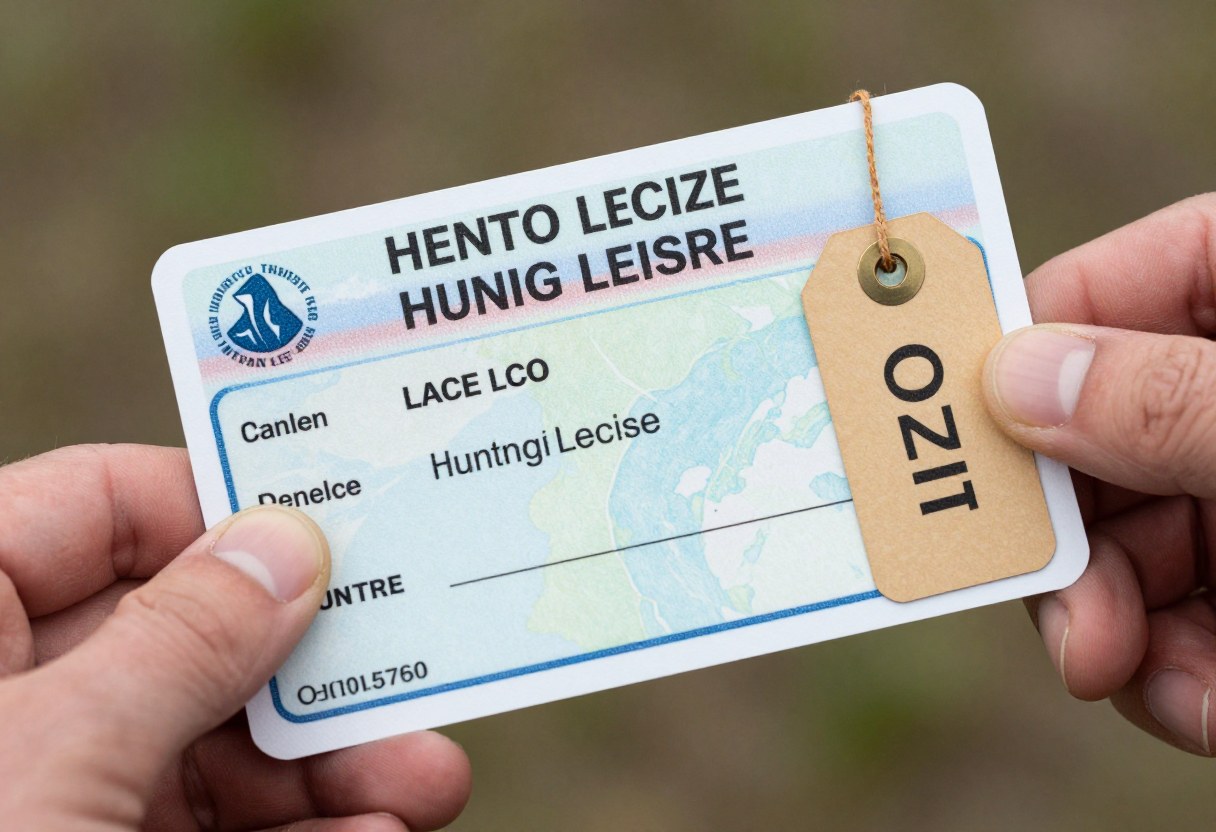
Tags
- Tags authorize the take of a specific species, and sometimes a specific sex/age class (e.g., "either-sex" vs. "antlerless-only" deer tags) or a specific zone.
- OTC tags can typically be purchased directly, often online or at a licensed vendor, without a lottery process.
- Draw/lottery tags require an application, usually months before the season, with results announced ahead of the season start. Popular units or species (trophy elk zones, limited-entry moose or bighorn sheep tags) can have long odds and multi-year point-accumulation strategies.
- Multiple tags per species may be available in some states/seasons (e.g., an archery tag and a separate firearm tag for the same species), while others limit a hunter to one tag per species per year regardless of weapon type.
Federal and Special Stamps
- Federal Duck Stamp: Required in addition to a state license and any state waterfowl permit for hunting migratory waterfowl in the US; revenue from stamp sales funds wetland conservation.
- State-specific stamps or validations, such as habitat stamps, upland game stamps, or trapping stamps, layered on top of the base license for certain activities or species in many states.
HIP Certification
- Harvest Information Program (HIP) certification is required in every state for migratory bird hunting (including waterfowl, doves, and other migratory game birds), separate from the license and stamp requirements. It's typically a free, quick registration used to gather harvest survey data, but it's a distinct step often missed by hunters new to migratory bird hunting.
6. Seasons and Weapon-Specific Rules
Most big-game seasons are subdivided by weapon type, each with its own date range:
- Archery season: Typically the earliest season for many species, using bow or crossbow (crossbow eligibility during archery season varies significantly by state — some restrict it to disability permit holders, others allow it broadly).
- Muzzleloader season: A distinct season, sometimes falling between archery and general firearm seasons, restricted to muzzleloading firearms meeting state-specific technical requirements (ignition type, minimum caliber, etc.).
- General firearm season: Typically the most heavily hunted season, open to centerfire rifles/shotguns meeting state requirements.
- Special/youth seasons: Some states offer separate early or late seasons reserved for youth hunters, sometimes with adult mentors, as an added opportunity and a way to introduce younger hunters with less competition/pressure.
Zone-based season variation: many states manage seasons differently by zone or unit — a season open in one part of the state may be closed or on a different date range in another, based on local deer/game population management goals.
7. Bag Limits and Reporting Requirements
- Bag limits cap how many of a species can be legally taken, often split into a daily bag limit (per day) and a possession limit (total allowed to have in possession at once, relevant on multi-day trips).
- Antler point restrictions or antlerless-only designations are common deer management tools, requiring hunters to identify legal animals correctly before taking a shot — misidentifying an animal as legal when it isn't is a real risk beginners should take seriously.
- Mandatory harvest reporting is required in many states, sometimes within a specific timeframe (24–48 hours is common) after a harvest, often done online or via phone. This is a genuinely easy step to forget after the excitement of a successful hunt, but it's legally required in many jurisdictions and carries penalties if skipped.
- Physical tagging requirements — many states require immediately validating/notching a physical tag and attaching it to the harvested animal before it's moved, in addition to any electronic reporting.
8. Public Land, Private Land, and Access Rules
- Public land hunting (national forests, BLM land, state wildlife management areas) is generally open to any licensed hunter meeting the relevant tag requirements, but individual land units can have additional rules — check the managing agency's specific regulations, not just the state wildlife agency's, for public land hunts.
- Private land hunting requires landowner permission. Trespassing laws vary by state in terms of what constitutes adequate notice (posted signage requirements differ), but assuming access without clear permission is a serious legal risk regardless of local custom.
- Some states have "Hunter Access" or "Walk-In" programs, where private landowners enroll land for public hunting access in exchange for incentives — a valuable and sometimes underused resource for hunters without their own land connections.
- Road and vehicle access restrictions on public land (some areas prohibit vehicle use off established roads, or restrict access seasonally) are worth checking separately from hunting-specific regulations.
9. Where to Find Authoritative, Current Information
Regulations change annually, and this guide is a framework for understanding the system — not a substitute for checking current rules. Always verify with primary sources:
- Your state's wildlife/game agency website is the single most authoritative source — search "[state name] department of fish and wildlife" or "[state name] department of natural resources" (naming conventions vary by state).
- State-published hunting regulation digests/handbooks, usually released annually (often free as a PDF, and sometimes distributed physically at license vendors) — these are the actual rulebook, not a summary.
- State agency mobile apps, increasingly common, which sometimes include GPS-based public land boundary mapping alongside regulation lookup.
- U.S. Fish and Wildlife Service for federal migratory bird framework information and Duck Stamp purchasing.
- Local sporting goods/license vendor staff, who often have practical, current knowledge of local rule nuances, though they shouldn't be treated as a substitute for checking the official regulation digest yourself.
- State agency customer service lines, useful for genuinely ambiguous situations (unclear zone boundaries, residency questions) where written regulations don't fully resolve your specific case.
Don't Skip This: Check your state's current regulations every single season, even if you've hunted the same area for years. Zone boundaries shift, season dates move, and bag limits adjust based on population management decisions — assuming last year's rules still apply is a common and entirely avoidable source of accidental violations.
10. Common Beginner Mistakes
- Assuming rules from one state apply in another. Even neighboring states can have meaningfully different season structures, tag systems, and requirements.
- Missing a draw/lottery application deadline. These are often set months before the season and don't reopen — mark deadlines well in advance if you're pursuing a limited-draw species or unit.
- Forgetting HIP certification for migratory bird hunting. It's a fast, often-free step that's easy to overlook since it's separate from license/tag purchasing.
- Not reporting a harvest within the required timeframe. This is a legal requirement in many states, not an optional courtesy.
- Assuming public land access is unrestricted. Specific units can have added rules beyond general state regulations.
- Hunting on private land without clearly established permission. Verbal assumptions or outdated permission from a previous season aren't a substitute for current, clear authorization.
- Not checking zone-specific rules, assuming a single statewide season/bag limit applies when the state actually manages by subdivided units.
Quick Decision Checklist
- I've completed hunter education (or confirmed an exemption applies to me)
- I've purchased the correct license type for my residency status
- I've identified and purchased the correct tag(s) for my target species, zone, and weapon type
- I've applied for any draw/lottery tags well ahead of the deadline, if applicable
- I've secured any required federal stamps (Duck Stamp) and HIP certification for migratory bird hunting
- I know my zone/unit's specific season dates and bag limits, not just the general statewide rules
- I understand my state's mandatory harvest reporting requirements and timeframe
- I've confirmed access permission (public land unit rules, or clear private landowner permission)
- I've checked this season's current regulations, not assumed last year's rules carried over
Glossary
- Tag: A species-specific permit authorizing the take of one animal, often required in addition to a base hunting license.
- Draw/Lottery Tag: A limited-quantity tag allocated through a random drawing process due to limited species population or high demand.
- Bonus/Preference Point: A mechanism in many states' draw systems that improves future odds of drawing a limited tag based on past unsuccessful applications.
- Bag Limit: The maximum number of a species legally allowed to be taken, often split into daily and possession limits.
- HIP Certification: Harvest Information Program registration, required nationally for migratory bird hunting, used for harvest survey data collection.
- Federal Duck Stamp: A federally required stamp for waterfowl hunting, with proceeds funding wetland conservation.
- Zone/Unit: A geographic subdivision within a state's hunting regulations, which can have its own season dates, bag limits, and specific rules distinct from the rest of the state.
Hunting regulations are set and updated annually by individual state wildlife agencies and are subject to change. This guide provides a general framework for understanding how the US licensing and regulation system works — always verify current season dates, tag requirements, bag limits, and zone-specific rules directly with your state's wildlife agency before hunting.