
Moose
Alces alces
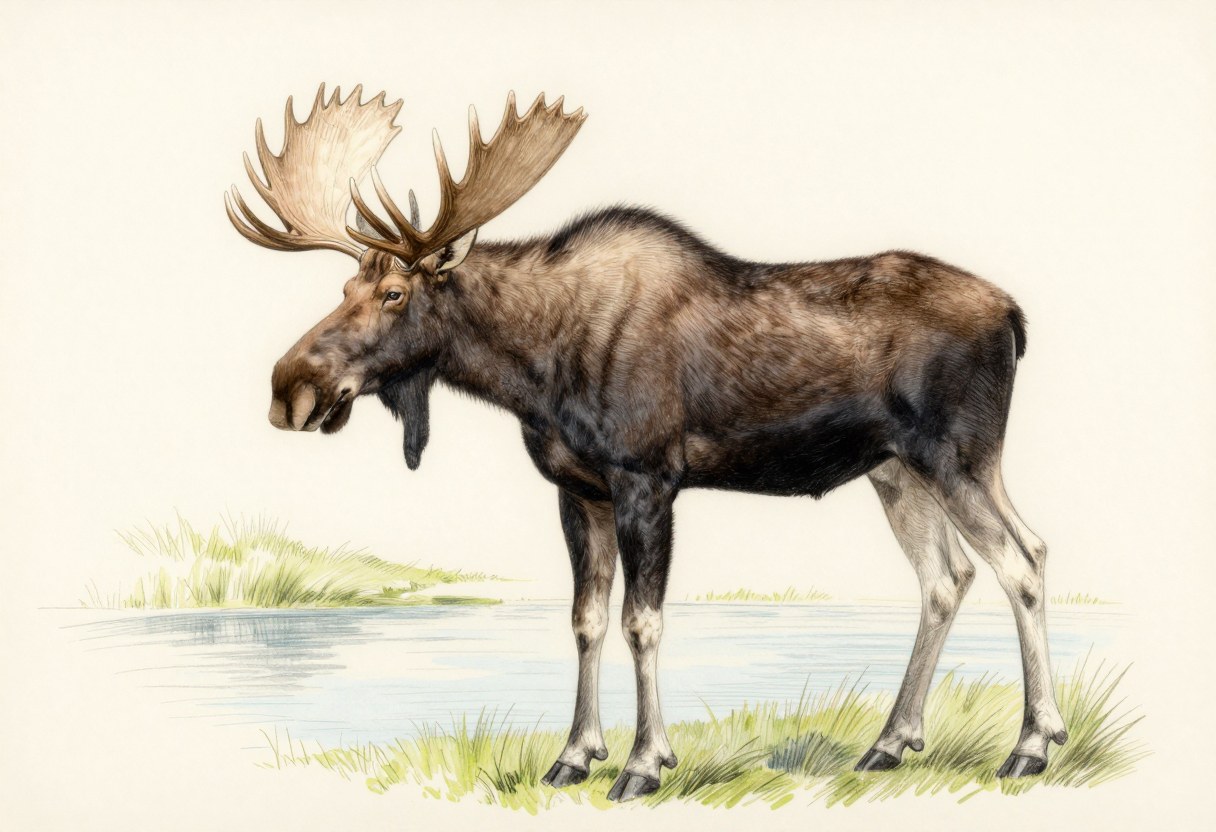
The largest member of the deer family, a tall, dark animal with a drooping snout and, in bulls, huge flat antlers.
- Type
- Deer Family
- Habitat
- Forests, Wetlands
- Typical size
- Bulls about 800–1,500 lb; cows about 600–1,000 lb; up to about 6 ft tall at the shoulder
- Range
- Northern New England, the Great Lakes states, the northern and middle Rockies, Alaska, and Canada
- Seasons
- Tags are limited and usually awarded by lottery, with seasons in the fall
How to identify it
- Very tall, with dark brown fur, a shoulder hump, and long pale legs.
- A long, drooping snout and a flap of skin under the throat called a dewlap, or bell.
- Bulls have broad, flat, palm-shaped antlers with points along the edge, which they shed every winter.
- Cows have no antlers.
Tracks and sign
- Tracks are large and cloven, up to about 6 inches long.
- Browse lines on willows and young trees, with twigs snipped at the same height.
- Large oval pellets in winter and loose pats in summer.
- Trails to ponds and wetlands.
Often confused with
- Elk: tan with a dark mane, a cream rump patch, and antlers with long tines rising from a main beam.
What it eats
- Willows, birch, and other twigs and buds
- Aquatic plants in summer
- Bark and conifer needles in winter
How it's hunted
- Calling bulls during the rut with grunts and cow calls
- Glassing from high points and water edges
- Hunting from rivers or lake edges where legal
Safety: Moose can be dangerous, especially cows with calves and bulls in the rut. Do not approach closely. They are also a major cause of vehicle collisions where they live. Chronic wasting disease can affect moose in some areas.
Field notes
Moose hunts are rare and often once in a lifetime, since tags are awarded by lottery. The animals are huge, so field-dressing and getting meat out of wet country is a major project.
A bull can be called in during the rut, but the same behavior that brings it in close also makes it dangerous.
Related guides
Seasons, tag and license requirements, legal methods, and bag limits vary by state and unit and change every year. Many big-game species require a drawn or purchased tag, and some animals are protected or regulated differently in different places. Check your state's current regulations — our state resources directory links straight to each state's official hunting rules and license portal.