
Mule Deer
Odocoileus hemionus
A big-eared deer of the West, found from sagebrush country to high mountains, and known for its bounding gait and evenly forking antlers.
- Type
- Deer Family
- Habitat
- Mountains, Brush & desert, Forests
- Typical size
- Bucks about 150–300 lb; does about 100–200 lb; about 3 ft tall at the shoulder
- Range
- Western United States and the western Great Plains, including the Rocky Mountains, the Great Basin, the Southwest, and the Pacific coast, where the black-tailed form lives
- Seasons
- Many states issue limited tags for mule deer, often by draw, with seasons in the fall
How to identify it
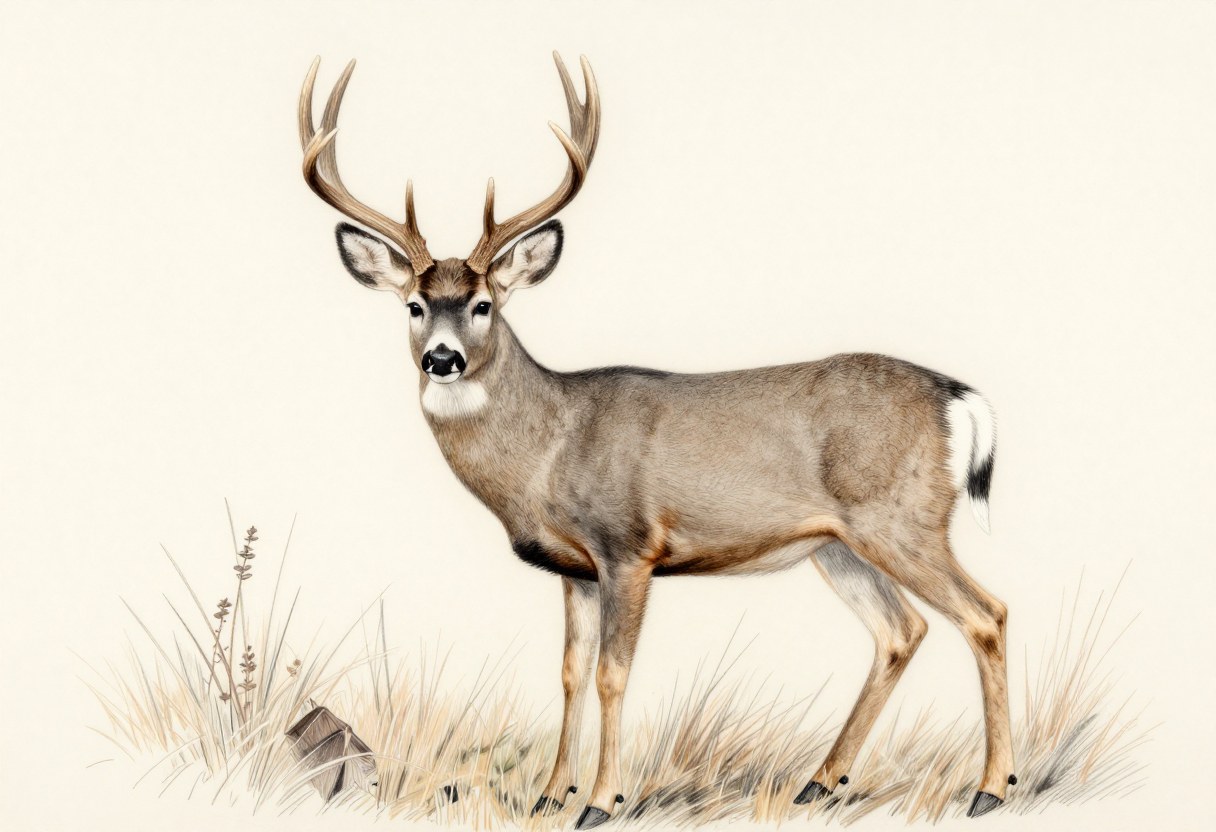
- Very large, mule-like ears.
- Antlers fork evenly into two branches, and each branch often forks again, instead of one main beam with tines.
- A white rump patch and a narrow tail with a black tip, like a rope.
- When alarmed, they bounce away stiff-legged, with all four feet hitting the ground at once.
Tracks and sign
- Tracks are similar to a whitetail's, but often a little larger and more rounded.
- Beds scraped out on slopes with a view below.
- Rubs on sagebrush and young trees, and trails along ridges and drainages.
Often confused with
- White-tailed deer: smaller ears, a large white-flagged tail brown on top, and antlers with a single main beam.
What it eats
- Sagebrush, bitterbrush, and mountain mahogany
- Grasses and forbs in spring and summer
- Acorns and other mast where available
How it's hunted
- Glassing open slopes and ridges, then stalking into range
- Ambush hunting near water and travel routes
- Hunting high basins in early season and lower ground after snow
Safety: Mule deer country is often steep and remote, so physical conditioning, water, and a plan for packing meat out matter. Chronic wasting disease occurs in mule deer in many states, so follow your state's testing and carcass-movement rules.
Field notes
Mule deer spend much of the year on open slopes, where good optics let a hunter find them at long distance. Hunts often involve a lot of glassing from one ridge to look at another.
Because mule deer often live where wide-open views make stalks difficult, wind and terrain are the hunter's best tools.
Related guides
Seasons, tag and license requirements, legal methods, and bag limits vary by state and unit and change every year. Many big-game species require a drawn or purchased tag, and some animals are protected or regulated differently in different places. Check your state's current regulations — our state resources directory links straight to each state's official hunting rules and license portal.