
Quaking Aspen
Populus tremuloides
A pale-barked northern and mountain tree whose round leaves tremble in the wind and turn bright gold in fall.
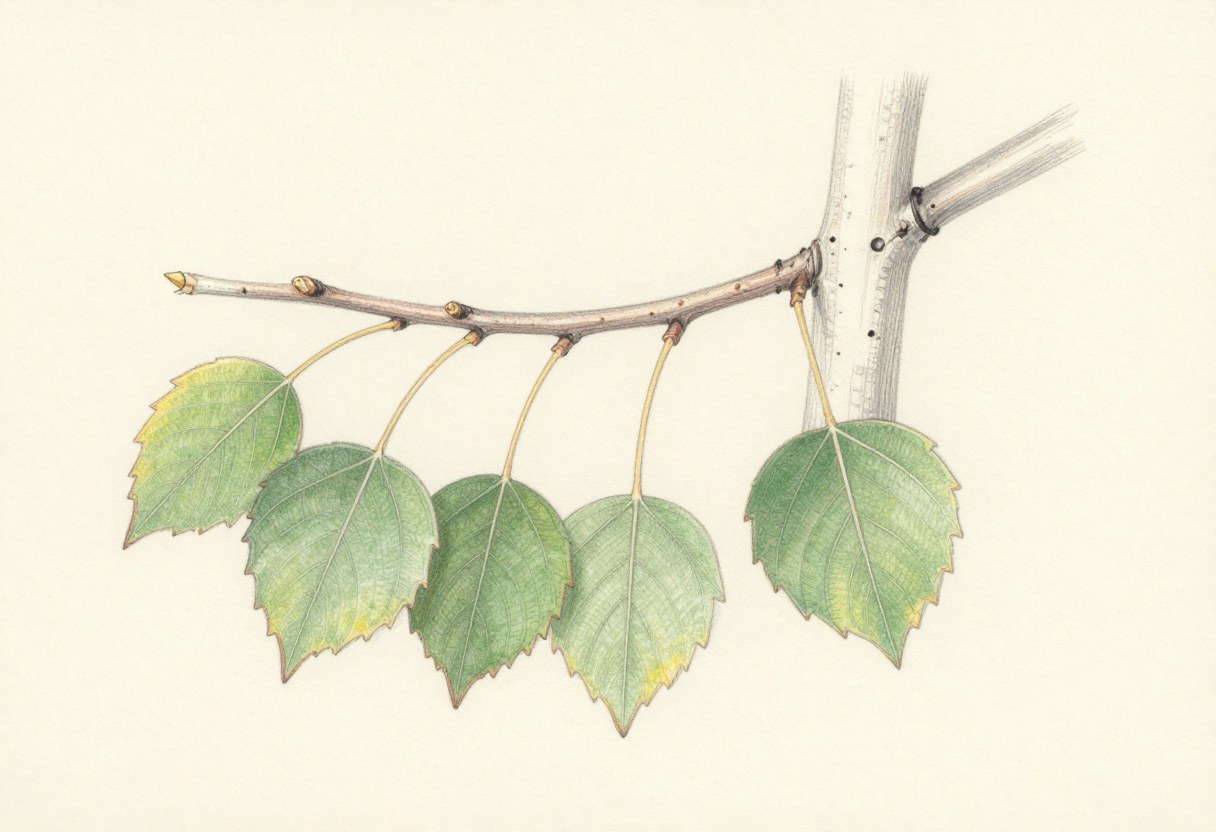
- Type
- Hardwoods
- Leaves
- Unlobed leaves
- Region
- Northeast, Midwest & Plains, Rockies & West
- Typical size
- 40–70 ft tall, with a slender trunk 6–18 in across
- Range
- Northern states, the Great Lakes, and the Rocky Mountains, from Canada south through the mountains
- Look for it
- Fall, when whole mountainsides turn gold
How to identify it
- Leaves are nearly round with a small point and fine teeth, on long, flat stalks.
- Bark is smooth and greenish-white, with dark knots and scars.
- Trees often grow in groves of genetically identical trunks.
- Leaves tremble in even a light breeze.
Often confused with
- Paper birch: has white, peeling bark and doubly toothed, oval leaves.
- Eastern cottonwood: larger, triangular leaves and furrowed bark.
Why it matters outdoors
- Elk, deer, and moose browse aspen, and beavers use the wood and bark.
- Aspen buds and catkins are a key winter food for ruffed grouse.
- Poor firewood, since it burns fast with little heat.
Field notes
Aspen groves are some of the richest wildlife habitat in the northern and mountain states. They grow back quickly after fire or logging, and the young forest feeds and shelters game.
Ruffed grouse hunters look for young aspen stands, where grouse feed on buds in winter.
Related guides
This guide helps you recognize trees and avoid harmful plants. It does not teach foraging, and nothing here is advice to eat or use a wild plant. Identification from a drawing can be wrong, so check with a regional field guide or a local expert, such as your state forestry or extension service.