
Paper Birch
Betula papyrifera
A northern tree with bright white, peeling bark that has long been used as tinder.
- Type
- Hardwoods
- Leaves
- Unlobed leaves
- Region
- Northeast, Midwest & Plains, Rockies & West
- Typical size
- 50–70 ft tall, with a trunk 1–2 ft across
- Range
- Northern states from Maine to the Great Lakes and the northern Rockies, and across Canada
- Look for it
- Fall, when leaves turn yellow, and winter, when the white bark stands out
How to identify it
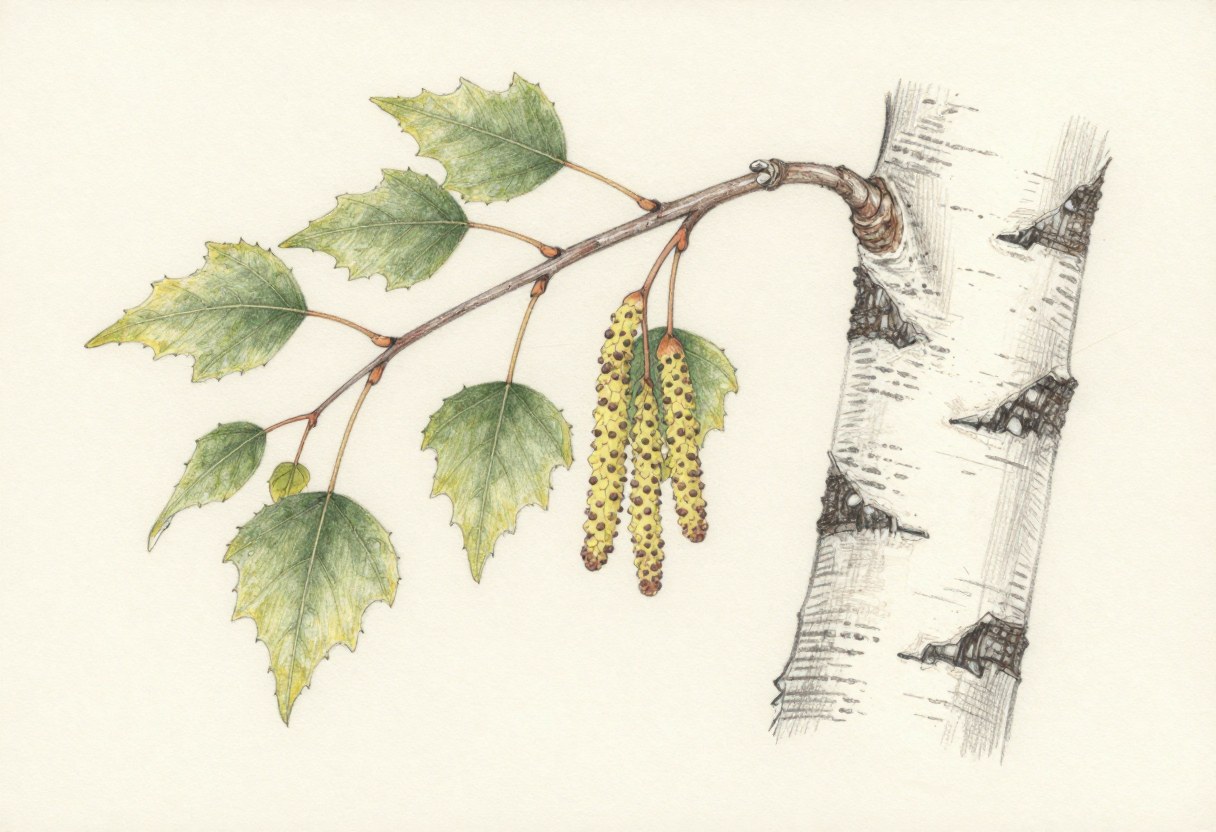
- Bark is white and peels in thin, papery sheets, with dark horizontal marks.
- Leaves are oval with a pointed tip and doubly toothed edges.
- Seeds are carried in small, hanging catkins.
- Twigs are slender and often reddish-brown.
Often confused with
- Quaking aspen: has smooth, greenish-white bark that does not peel.
Why it matters outdoors
- Birch bark burns even when damp, and loose, fallen bark is a classic fire-starting tinder.
- Moose and deer browse young birch.
- Leave living trees alone: peeling bark from a living birch can harm or kill it.
Field notes
Birch bark contains oils that make it flammable even when wet, which is why it has long been prized as fire-starting tinder. Take only bark that has already fallen or is hanging loose from a dead tree.
Peeling bark from living trees leaves them open to disease, so follow Leave No Trace.
Related guides
This guide helps you recognize trees and avoid harmful plants. It does not teach foraging, and nothing here is advice to eat or use a wild plant. Identification from a drawing can be wrong, so check with a regional field guide or a local expert, such as your state forestry or extension service.