
Eastern Cottonwood
Populus deltoides
A fast-growing riverside tree with triangular leaves that flutter in the slightest breeze and cottony seeds in late spring.
- Type
- Hardwoods
- Leaves
- Unlobed leaves
- Region
- Midwest & Plains, Southeast, Northeast
- Typical size
- 70–100 ft tall, with a trunk 3–5 ft across
- Range
- Eastern and central United States, along rivers, and across the Great Plains
- Look for it
- Late spring, when cottony seeds drift, and fall, when leaves turn yellow
How to identify it
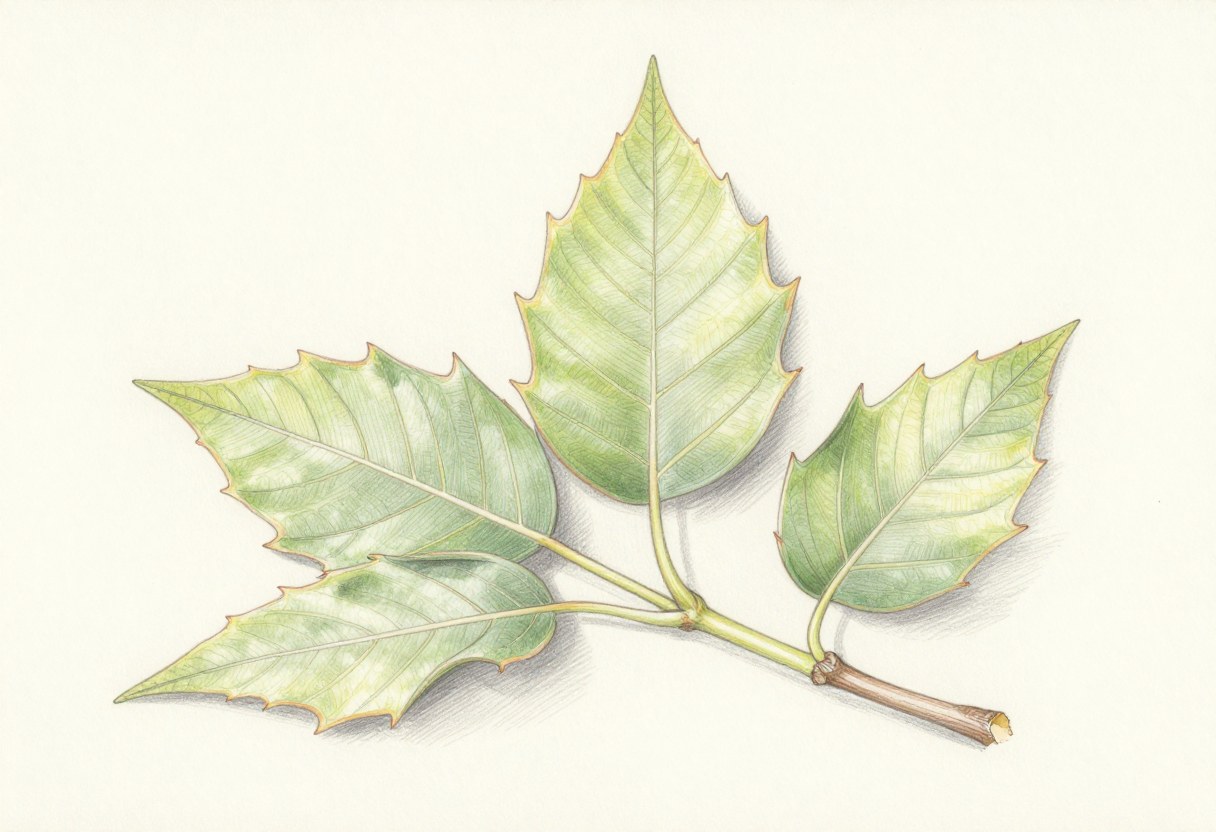
- Leaves are triangular with coarse teeth and a flattened leaf stalk, so they rattle and shimmer.
- Bark is pale and smooth when young, and deeply furrowed gray on older trees.
- Seeds float on cotton-like fluff.
- Grows along rivers and streams.
Often confused with
- Quaking aspen: has rounder, smaller leaves and smooth pale bark.
Why it matters outdoors
- Deer browse young shoots, and bald eagles and herons use tall cottonwoods as perches.
- Poor firewood: it burns slowly, smokes, and gives little heat.
- Large riverside cottonwoods mark water and wildlife travel corridors on the Plains.
Field notes
Cottonwoods mark water across dry country. A line of them across a prairie often follows a creek or river.
The flattened leaf stalks make the leaves flutter, so you can hear a cottonwood before you see it.
Related guides
This guide helps you recognize trees and avoid harmful plants. It does not teach foraging, and nothing here is advice to eat or use a wild plant. Identification from a drawing can be wrong, so check with a regional field guide or a local expert, such as your state forestry or extension service.