Deer Hunting 101: A Beginner's Guide
Scouting, stand placement, and the fundamentals of a first deer season, from someone starting with nothing.
Published August 11, 2026 · Updated August 14, 2026
Deer hunting can feel like it requires a lifetime of inherited knowledge to get started — but every experienced deer hunter began with the same blank slate. This guide assumes you're starting with nothing: no land, no gear, no mentor, and no idea where to begin. It walks through the pieces in the order you'll actually need them — legal groundwork, gear, scouting, stand placement, the hunt itself, and what happens after a successful shot.
1. Legal Groundwork Before Anything Else
This has to come first, because it shapes everything downstream — what weapon you can use, when you can hunt, and where.
- Hunter education course. Nearly every state requires this for first-time license buyers, regardless of age. It covers firearm/archery safety fundamentals this guide doesn't replace. Complete it before buying gear.
- Hunting license and deer tag(s). Requirements and costs vary significantly by state and by residency status. Some states also require additional stamps or permits for specific seasons or weapon types.
- Know your seasons. Most states split deer season into archery, muzzleloader, and general firearm seasons, each with different date ranges, and sometimes different legal weapons or antler restrictions.
- Know your zone/unit regulations. Many states manage deer hunting by specific zones or management units, each with its own rules, tag allocations, and sometimes lottery draw systems for limited tags.
- Understand antler restrictions and bag limits, if applicable in your area — some regions restrict harvest to bucks with a minimum point count, or limit the number of antlerless deer (does) you can take.
- Confirm where you're legally allowed to hunt. Public land (state wildlife management areas, national forests) is open to hunters meeting license requirements, but often has its own specific rules. Private land requires landowner permission, which should be secured well before season, ideally in writing or with a clear verbal agreement.
Don't Skip This: Rules vary enormously by state, and sometimes by county or zone within a state. Check your state wildlife agency's official regulations every year before season — even small changes (a shifted season date, a new zone boundary) can turn a legal hunt into a costly citation if missed.
2. Finding a Place to Hunt With No Land of Your Own
This is one of the biggest early hurdles for a true beginner, and it has more solutions than people expect.
- Public land. State wildlife management areas, national forests, and other public hunting grounds are open to any licensed hunter. Research pressure levels — heavily-used public land near cities sees more hunters and warier deer, while more remote public tracts often see less pressure.
- Ask around. Many landowners, especially in rural and agricultural areas, are open to granting hunting permission, particularly if deer are causing crop damage. A respectful, direct ask (in person or via a well-written letter) works more often than beginners expect.
- Hunting apps and mapping tools. Several publicly available apps show public land boundaries, ownership parcels, and in some cases deer harvest data by area, which can help identify promising public-land options.
- Local hunting clubs or leases. Some areas have club-based access to private land through membership fees, which spreads cost across multiple hunters.
- A mentor. If you know anyone who hunts, even casually, ask if you can tag along for a season before hunting solo. There's no substitute for someone showing you a stand setup, a scouting walk, or a field-dressing process in person.
3. Core Gear for a First Season
You don't need everything on this list before your first day, but this covers the essentials.
Weapon
- Rifle, shotgun (slug), muzzleloader, or bow/crossbow, depending on season and personal preference. For a true first-time hunter with no strong preference, a rifle in a common deer caliber (see our rifle-selection guide for detail) during general firearm season is often the most approachable starting point, since it forgives more range/shot-placement error than archery equipment. If archery interests you instead, our bow hunting guide covers the compound-vs-crossbow decision.
- Practice ammunition and time at the range well before season — confirming zero and building confidence with the weapon matters more than any other single gear item.
Clothing
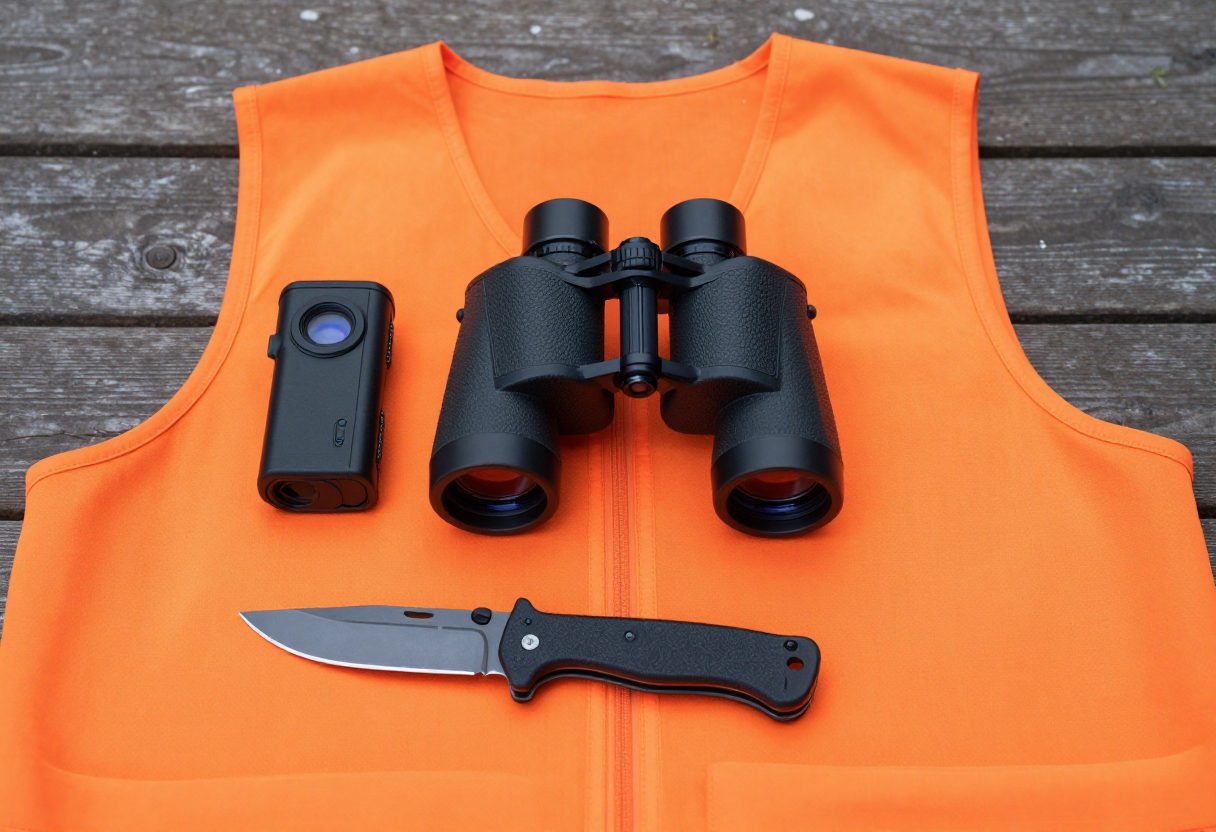
- Blaze orange, required by most states during firearm season for visibility/safety — check your state's specific requirement (amount and placement vary).
- Weather-appropriate layers, since stand hunting involves long periods of stillness in cold conditions; you'll feel colder sitting still than moving.
- Quiet, non-rustling outer layers, especially for bow hunters working at closer range.
- Scent-conscious clothing storage (stored away from household scents, sometimes in scent-reducing bags) — more relevant for close-range bow hunting than longer-range rifle hunting, but a reasonable habit either way.
Optics and Field Gear
- Binoculars, useful for scouting and confirming a legal/target animal before a shot.
- Rangefinder, especially important for archery hunters given the shorter effective range and steeper arrow drop.
- A daypack for water, snacks, a first aid kit, and field-dressing tools.
- A knife suitable for field dressing (a fixed-blade or quality folding knife with a gut hook is a common choice) plus latex/rubber gloves.
- A game cart, drag rope, or plan for moving a harvested deer, since a field-dressed deer is still substantial weight to move.
- A method to mark blood trails, if tracking a hit deer (marking tape or flagging is common).
Stand/Blind Gear (if hunting from a stand)
- A safety harness (full-body fall-arrest system) if using an elevated stand — treestand falls are one of the most common serious hunting injuries, and a harness used correctly every time is non-negotiable, not optional.
- A climbing stand, hang-on stand with sticks, ladder stand, or ground blind, chosen based on terrain and personal preference (see Section 5).
4. Scouting: Learning to Read the Land
Scouting is the process of understanding where deer are moving, feeding, and bedding on a piece of land — and it's arguably the single most important skill separating consistently successful hunters from those who get lucky occasionally.
What You're Looking For
- Trails — worn paths through vegetation showing regular deer movement, especially ones connecting feeding and bedding areas.
- Bedding areas — thicker cover, often on slight rises or in areas offering some wind protection, where deer rest during the day.
- Feeding areas — agricultural fields, mast-producing trees (oaks dropping acorns are a classic example), or areas with dense browse (young shoots, shrubs) depending on season and region.
- Water sources — creeks, ponds, or other reliable water, especially important in drier regions or seasons.
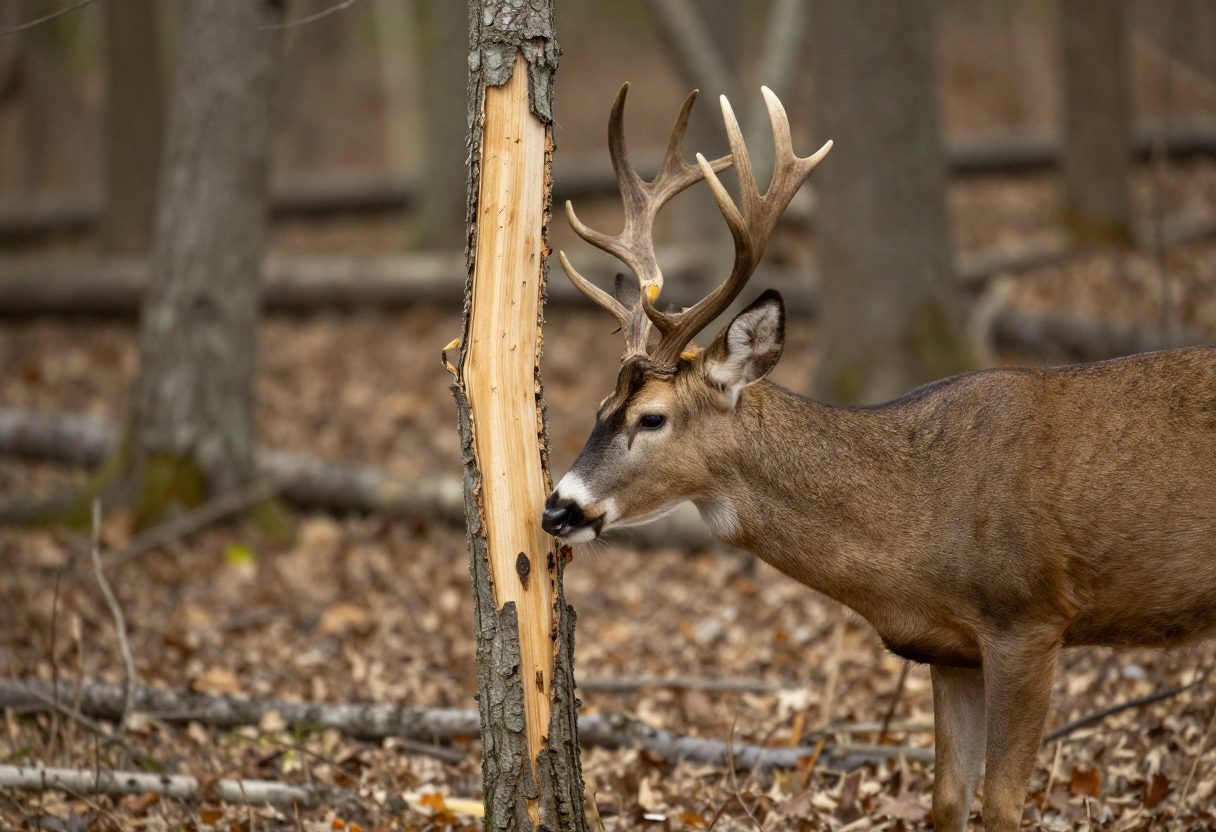
- Rubs — bark scraped off small trees/saplings by bucks rubbing their antlers, indicating buck presence and sometimes a travel pattern.
- Scrapes — patches of bare ground pawed clear by bucks, often beneath an overhanging branch, used as scent-marking communication sites, especially active during the pre-rut and rut.
- Tracks and droppings, giving a general sense of deer presence, relative size, and how recently the area was used.
Scouting Methods
- Boots-on-the-ground scouting, ideally well before season to avoid over-pressuring the area right before you plan to hunt it. Walking a property to physically find trails, rubs, scrapes, and bedding/feeding areas remains the most reliable method.
- Trail cameras, placed on trails, near scrapes, or overlooking feeding areas to passively gather data on deer presence, timing, and buck quality without your physical presence pressuring the area as much.
- Aerial/topographic mapping, using satellite imagery and topo maps (many free or low-cost apps provide this) to identify likely bedding cover, funnels (pinch points where terrain naturally concentrates deer movement, like a ridge saddle or a gap between two thick cover blocks), and access routes that don't spook deer on the way in.
- Post-season scouting, after the season ends but before spring green-up, is an underused technique — sign from the previous season (well-worn trails, old rubs/scrapes, shed antlers) is easier to spot without leaf cover, and there's no pressure risk since the season is already over.
Don't Skip This: Minimize your scouting pressure close to when you actually plan to hunt an area. Repeated human presence, especially with scent left behind, can push deer into more nocturnal patterns or away from an area entirely. Scout thoroughly well ahead of season, then keep in-season scouting visits efficient and infrequent.
5. Stand and Blind Placement
Where you set up matters as much as any other single decision in deer hunting.
Reading Terrain for Funnels
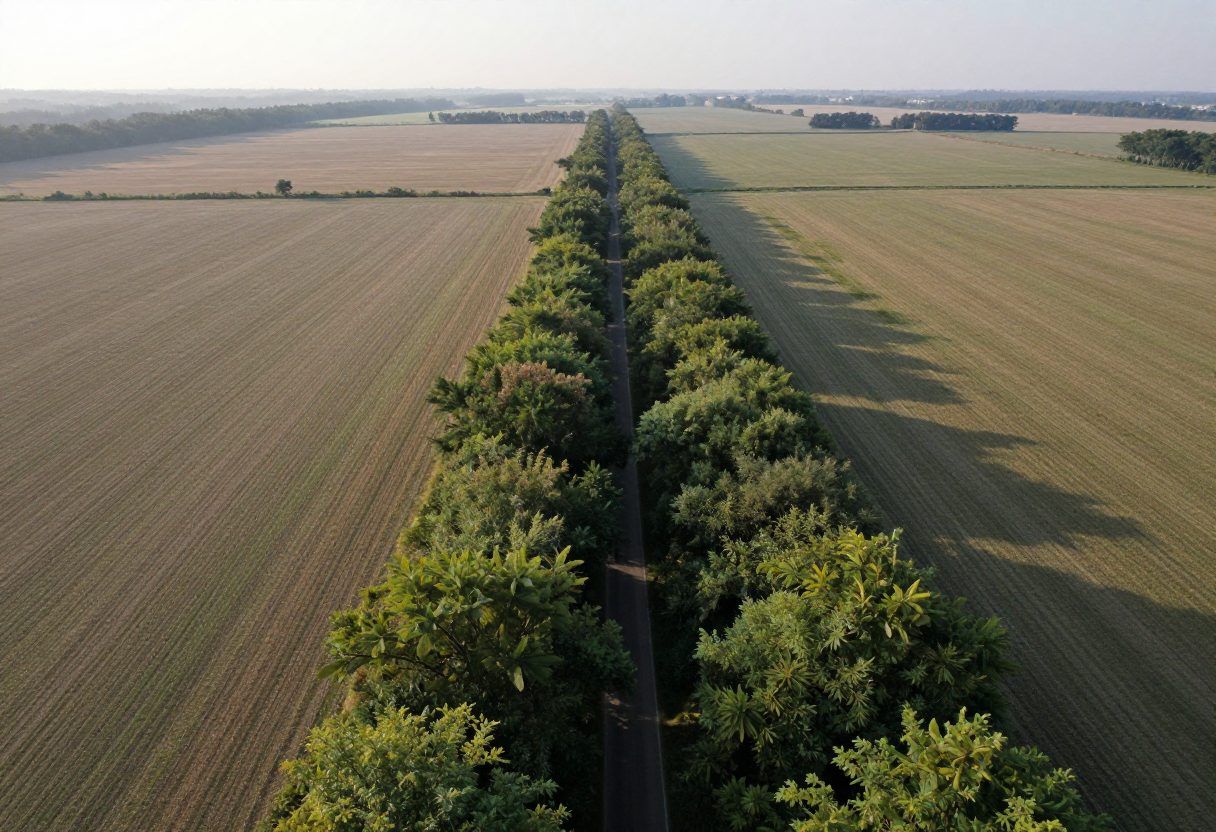
Deer, like most animals, tend to follow the path of least resistance. Look for terrain features that concentrate movement into a predictable, narrower area:
- Saddles — low points along a ridge line that deer use to cross rather than expending energy going over the peak.
- Fence or field gaps, where deer squeeze through rather than jumping in the open.
- Points of timber jutting into open fields, offering a covered approach to feeding areas.
- Narrow strips of cover connecting two larger blocks of habitat.
- Creek crossings, where a natural ford point concentrates movement compared to the rest of the creek's length.
Wind Direction Is the Deciding Factor
A deer's sense of smell is its primary defense mechanism, far more reliable to it than sight or hearing. Stand placement should be planned around prevailing and forecasted wind direction so your scent blows away from where you expect deer to approach from, not toward them. A perfectly scouted stand location in the wrong wind can be worse than not hunting at all, since a spooked deer often avoids the area for days afterward.
- Check wind forecasts before each sit and have more than one stand location prepared for different wind directions, if possible.
- Consider scent-reducing practices (scent-free soap/detergent, scent-elimination spray) as a supplement to good wind strategy, not a replacement for it.
Choosing Stand Type
| Stand Type | Pros | Cons |
|---|---|---|
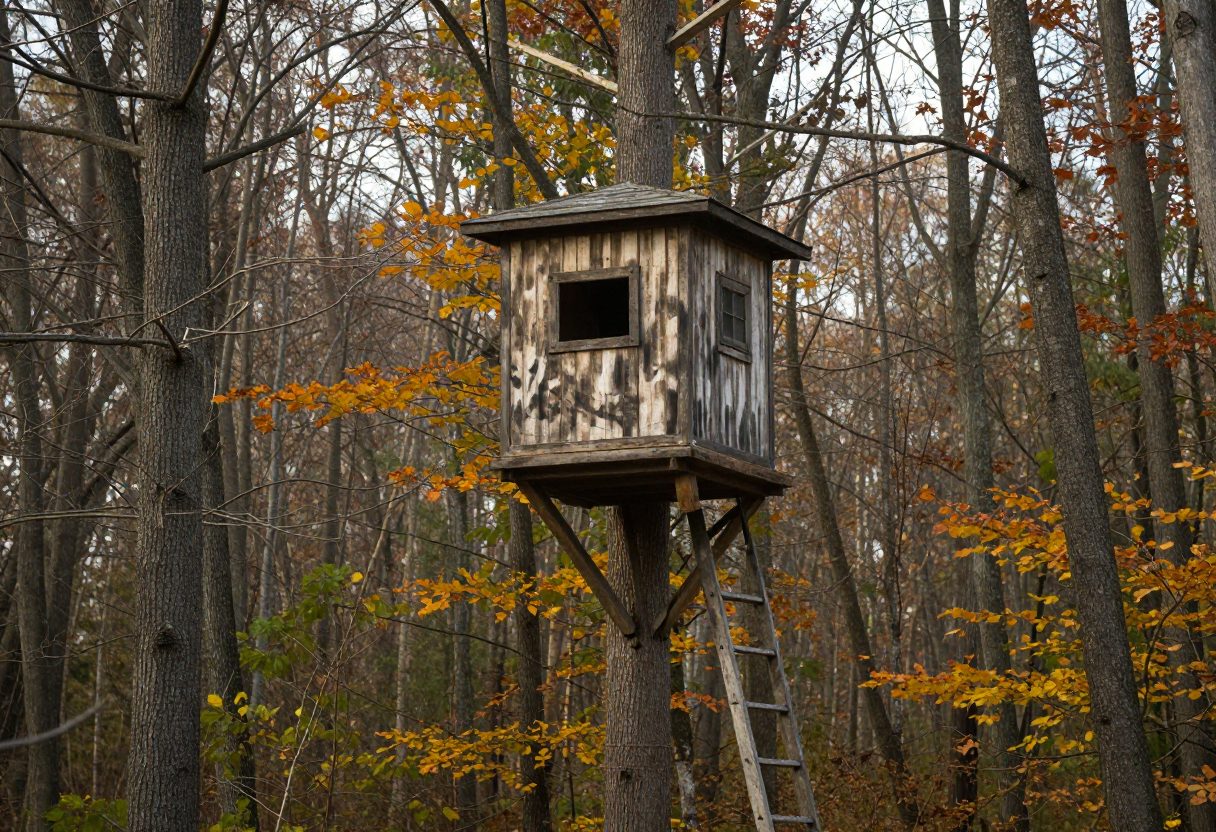
| Ladder stand | Stable, comfortable, easy in/out | Heavy, hard to move once set up, more visible |
| Hang-on stand + climbing sticks | Lighter, more portable, less visible than a ladder stand | More effort to set up/take down, requires comfort with height and harness use |
| Climbing stand | Highly mobile, can be moved same-day | Requires a straight, branch-free tree trunk; more physically demanding |
| Ground blind | No height/fall risk, good for mobility-limited hunters, works where no suitable trees exist | Requires more careful placement/brushing-in to avoid detection at eye level |
Height and Placement Basics
- 15–20 feet is a common elevated stand height range, balancing scent dispersal and a downward shooting angle against practicality and safety.
- Position with the sun in mind where possible, avoiding a setup that puts direct morning or evening sun in your eyes during prime movement times.
- Clear shooting lanes ahead of season (well before your hunt, to minimize disturbance close to when you'll actually hunt), but avoid over-clearing in a way that makes the stand more visible to deer.
- Plan your entry and exit route to avoid walking through bedding areas or crossing likely travel routes, which can leave scent and pressure exactly where you don't want it.
6. Understanding Deer Behavior Through the Season
Deer behavior shifts meaningfully across a season, and adjusting your approach accordingly improves your odds significantly over a static, one-size-fits-all strategy.
- Early season: Deer are often still in relatively predictable summer patterns, feeding heavily and using consistent trails between bedding and food sources. Evening sits near feeding areas are often productive.
- Pre-rut: Bucks begin increasing daytime movement as breeding season approaches, checking scrapes and becoming somewhat less predictable as they range further.
- Rut (the breeding period): Widely considered the most productive time to hunt mature bucks, since increased movement in search of does reduces some of their usual caution. Timing varies by region and can shift year to year, so checking regional rut-timing data or asking local, experienced hunters is worthwhile.
- Post-rut: Deer, especially bucks, are often worn down and refocus heavily on feeding to recover, making feeding-area setups productive again.
- Late season: Often the most weather-driven period — cold snaps can trigger predictable feeding pushes, especially in areas with harsh winters, as deer prioritize calorie intake.
7. Shot Placement and Ethics
Whether hunting with a rifle or bow, an ethical, humane harvest depends on taking only shots you're confident will be quickly lethal.
- Broadside or slightly quartering-away shots targeting the heart/lung (vital) area are the standard ethical presentation to wait for, for both rifle and archery hunters.
- Know your maximum confident range based on practice, not theoretical best-case shooting, and be willing to pass on a shot beyond it.
- Avoid frontal or steep quartering-toward shots, especially with archery equipment, where the odds of a clean pass through vitals drop significantly.
- Wait for a clear, unobstructed shot — brush, branches, or partial cover between you and the vitals can deflect a shot in ways that wound rather than cleanly harvest.
- Stay calm and take your time even when adrenaline (sometimes called "buck fever" among hunters) makes that hard — a rushed shot is far more likely to be poorly placed than a patient one.
8. After the Shot: Tracking and Field Dressing
Tracking
- Wait before pursuing, especially with archery equipment — giving a hit deer time (often 30 minutes to a few hours, depending on shot placement and blood sign) reduces the risk of pushing it and causing it to run further before expiring.
- Mark the last known blood sign and follow the trail methodically, using flagging tape to mark the trail as you go, which helps if you need to back up and reassess.
- Know when to ask for help. A limited or unclear blood trail, especially on a marginal hit, is a good reason to seek an experienced tracker or a trained blood-tracking dog if available in your area, rather than giving up too early or thrashing through the woods inefficiently.
Field Dressing
- Field dress (remove internal organs) as soon as practical after recovery to begin cooling the meat and reduce spoilage risk, particularly in warmer weather.
- A sharp, appropriately-sized knife and gloves make the process significantly cleaner and safer.
- Many hunting organizations and outfitters offer field-dressing tutorials or videos — this is a skill worth learning from a demonstration or a mentor before your first time doing it solo, if at all possible.
- Get the deer cooled and processed promptly, whether by a professional processor or doing it yourself, especially in warm early-season conditions where meat spoilage risk rises quickly.
9. Mistakes First-Time Deer Hunters Commonly Make
- Scouting too close to the hunt and over-pressuring the area. Save intensive scouting for well before season; keep in-season visits efficient.
- Ignoring wind direction in favor of a "good-looking" stand spot. The best-looking setup in the wrong wind will get you smelled before you get a shot.
- Overestimating shooting range/confidence, especially with archery equipment, and taking a marginal shot rather than passing.
- Skipping practice time before season, assuming range performance in ideal conditions will translate directly to a real hunting scenario under adrenaline and awkward angles.
- Not securing landowner permission clearly, or misunderstanding property boundaries — always confirm boundaries and permission explicitly, ideally with a map or written agreement.
- Underestimating how physically demanding recovery and dragging a deer out can be, especially solo — having a plan (game cart, extra help, or knowing your physical limits) matters more than beginners expect.
- Not checking regulations every single year. Zone boundaries, season dates, and specific rules can and do change.
10. A Realistic First-Season Timeline
- Several months before season: Complete hunter education if not already done, secure a license/tags, identify a hunting location (public or private), and begin scouting.
- 8–12 weeks before season: Begin or continue practicing with your weapon of choice; scout more thoroughly, identifying trails, bedding, feeding, and potential stand locations.
- 4–6 weeks before season: Set up stands/blinds and clear shooting lanes if needed, minimizing further disturbance to the area afterward; finalize practice and confirm zero/accuracy.
- 1–2 weeks before season: Final gear check, review regulations one more time, plan entry/exit routes for different wind directions.
- During season: Hunt strategically based on wind and deer behavior patterns for the time of season, rather than simply sitting the same stand regardless of conditions.
- After a successful harvest: Track, recover, field dress, and process promptly and respectfully — see our field dressing and processing guide for the full step-by-step.
Quick Decision Checklist
- I've completed hunter education and secured a valid license and tag(s)
- I understand my specific zone/unit's season dates, weapon restrictions, and bag limits
- I have a legal place to hunt, with permission clearly established if on private land
- I've practiced with my weapon and am confident in my effective range
- I've scouted the area for trails, bedding, feeding, and water, ideally well ahead of season
- I have a stand/blind plan for multiple wind directions
- I have a fall-arrest harness if hunting from an elevated stand, and I use it every time
- I know how to field dress a deer, or have a plan (mentor, video, processor) to handle it
- I have a plan for moving a harvested deer out of the woods
Glossary
- Rut: The deer breeding season, typically the period of highest buck movement and daytime activity.
- Scrape: A patch of ground pawed clear by a buck, often beneath an overhanging branch, used for scent communication.
- Rub: Bark scraped from a small tree by a buck's antlers, indicating presence and sometimes a travel route.
- Funnel/Pinch Point: A terrain feature that naturally concentrates animal movement into a narrower, more predictable path.
- Field Dressing: The process of removing a harvested animal's internal organs to begin cooling the meat and reduce spoilage.
- Blaze Orange: High-visibility orange clothing required by most states during firearm season for hunter safety.
- Bedding Area: Cover where deer rest during the day, typically in thicker vegetation offering concealment and some wind protection.
This guide covers general principles for common North American white-tailed and mule deer hunting. Always confirm current state and local regulations, as legal seasons, weapon restrictions, tagging requirements, and zone boundaries vary by location and change from year to year.