
Chain Pickerel
Esox niger
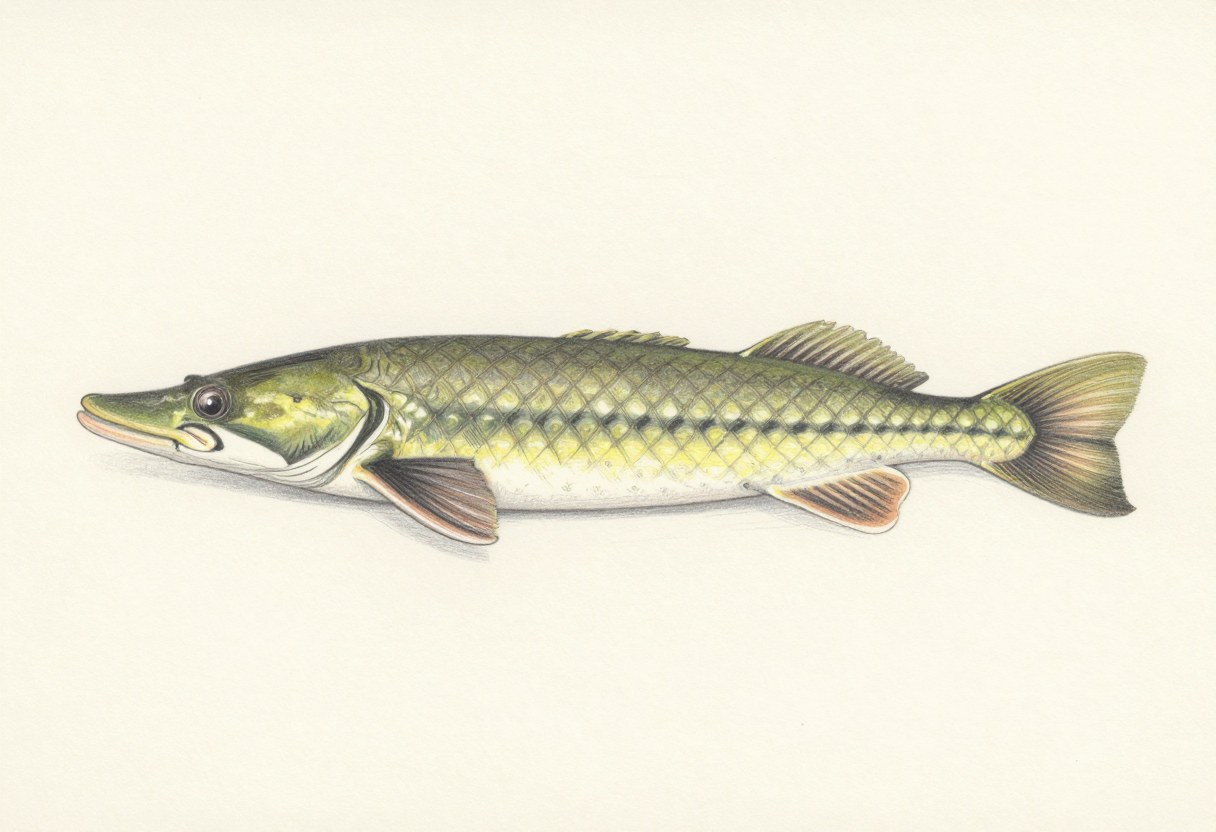
A smaller, toothy relative of the northern pike, recognized by the chain-link pattern on its sides, found in weedy, quiet water.
- Type
- Pike & Walleye
- Water
- Cool water
- Habitat
- Ponds, Lakes, Rivers, Streams
- Typical size
- 15 to 24 inches
- Range
- Native to the eastern US from Maine south to Florida and along the Gulf coast, and introduced in some other waters.
- Best seasons
- Fall through spring; cooler months and through the ice
How to identify it
- A dark chain-link or netlike pattern covers the green-yellow sides.
- A dark vertical bar sits below the eye.
- The cheeks and gill covers are fully scaled.
- The snout is a duckbill shape, and the dorsal fin sits far back.
Often confused with
- Northern Pike: light, bean-shaped spots on a green body, and a scaled cheek but only a half-scaled gill cover.
Best baits and lures
- Spinnerbaits
- Spoons
- Jerkbaits
- Live shiners
- Soft plastics
Techniques
- Cast along weed edges, lily pads, and fallen trees
- Use a wire or heavy fluorocarbon leader
- Fish tip-ups through the ice in northern waters
- Retrieve steadily and use pauses
Fishing notes
Chain pickerel lurk in and around weeds and fallen wood, striking prey from ambush much like a smaller pike. They tolerate colder water well and are active through winter.
Like pike, they have sharp teeth and a bony mouth, so use a leader and pliers. They are bony eating, so many anglers release them.
Check state rules, which sometimes include limits on pickerel.
Related guides
Size limits, bag limits, legal baits, and seasons vary by state and waterbody and change over time. Check your state's current regulations — our state resources directory links straight to each state's official fishing rules and license portal.