
Muskellunge
Esox masquinongy
Called the fish of ten thousand casts: a giant, elusive predator of northern lakes and rivers, usually released by dedicated anglers.
- Type
- Pike & Walleye
- Water
- Cool water
- Habitat
- Lakes, Rivers, Reservoirs
- Typical size
- 30 to 45 inches; larger fish are rare
- Range
- Native to the Great Lakes region, the St. Lawrence and upper Mississippi basins, and parts of the Ohio and Tennessee River systems, and stocked in other waters.
- Best seasons
- Fall is the prime season; summer and spring can also be productive
How to identify it
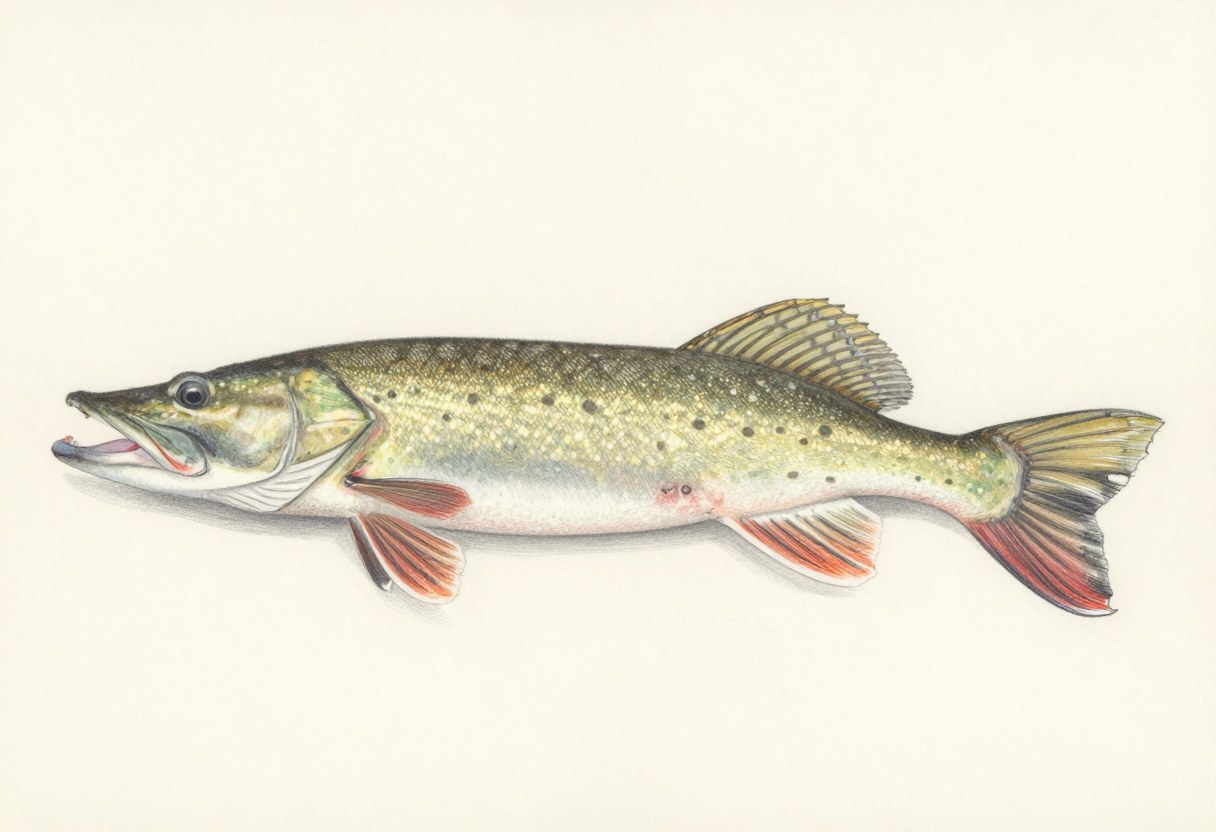
- The body is green to brown, with dark vertical bars or spots on a lighter background; some fish are plain.
- Only the upper half of both the cheek and the gill cover is scaled.
- There are six to nine sensory pores on each side of the lower jaw.
- The tail lobes have pointed tips, and the dorsal fin sits far back.
Often confused with
- Northern Pike: light, bean-shaped spots on a darker body, a fully scaled cheek, and rounded tail lobes.
- Tiger Muskellunge: a sterile hybrid of muskellunge and northern pike, with bold dark vertical bars on a lighter body.
Best baits and lures
- Large bucktail spinners
- Jerkbaits
- Large topwater lures
- Large swimbaits
- Large live suckers
Techniques
- Cast large lures along weed edges and rock structure
- Finish every retrieve with a figure-eight at the boat
- Use heavy tackle with a strong leader
- Fish consistently in prime water; patience is the key
Fishing notes
Muskies are low-density predators that don't bite often, which gives them their legendary reputation. Anglers cast large lures for hours, hoping for a single follow or strike.
Because a muskie takes years to grow and is easily stressed, careful handling matters: use a large net, support the body horizontally, and release fish quickly.
Most states have a high minimum length for muskellunge, and some waters are catch-and-release only. Check the regulations for your water.
Related guides
Size limits, bag limits, legal baits, and seasons vary by state and waterbody and change over time. Check your state's current regulations — our state resources directory links straight to each state's official fishing rules and license portal.