
Ice Fishing for Beginners
Ice safety, essential gear, and the basics of jigging through the hardwater season.
Published August 19, 2026
Why Ice Safety Comes Before Everything Else in This Guide
Ice fishing is a genuinely rewarding way to extend the fishing season into winter, but it's built on a foundation that has to come first: the ice itself has to be safe, and "safe" isn't a fixed thickness number you check once — it varies by location on the same body of water, changes throughout the season, and requires ongoing judgment rather than a single rule applied blindly. This guide starts with ice safety for exactly that reason, then covers the gear and basic technique that make for a productive, enjoyable day once you're confident the ice underneath you is sound.
1. Ice Safety: The Non-Negotiable Foundation
- Ice thickness guidelines are commonly cited (roughly 4 inches for foot travel, more for a snowmobile/ATV, considerably more for a vehicle), but these are general guidelines, not guarantees — ice strength depends on more than thickness alone.
- Clear, solid "black ice" is generally stronger than white, opaque, or "snow ice" of the same thickness — snow ice forms differently and has meaningfully less structural strength per inch than clear ice.
- Ice thickness varies significantly across the same body of water, especially near inlets/outlets, moving water, structure, aeration systems, or areas with varying depth — a spot that's solid 50 feet away isn't a guarantee for your current location.
- Check ice thickness regularly as you move, using a spud bar or ice chisel to test as you go, rather than checking once near shore and assuming consistency across the entire area you plan to fish.
- Never go out on ice alone if avoidable, and if you do, tell someone your specific plan and expected return time — the same safety principle that applies to hiking applies directly here.
Don't Skip This: Ice thickness is not uniform across a lake, and a single safe reading near shore doesn't guarantee safety everywhere you might walk. Check regularly as you move, especially near any moving water, structure, or areas that look or sound different from the surrounding ice — this is the single most important habit in this entire guide.
2. Essential Ice Safety Gear
- Ice cleats/traction devices for boots, since ice (especially clear, wet, or windswept ice) is genuinely slippery in a way that's easy to underestimate.
- Ice picks (worn around the neck, easily accessible), specifically designed to help you self-rescue by gripping and pulling yourself back onto solid ice if you fall through — a genuinely critical piece of safety gear, not an optional extra.
- A properly fitted flotation/ice fishing suit, providing both cold-weather insulation and buoyancy assistance in the event of a fall through the ice — increasingly considered a serious safety upgrade over standard winter clothing alone.
- A rope or throw line, useful both for self-rescue assistance and for helping a companion if needed, without requiring a would-be rescuer to approach unstable ice directly.
- A cell phone in a waterproof case, kept accessible (not buried in a pack) for emergency communication.
3. Core Gear for a First Ice Fishing Trip
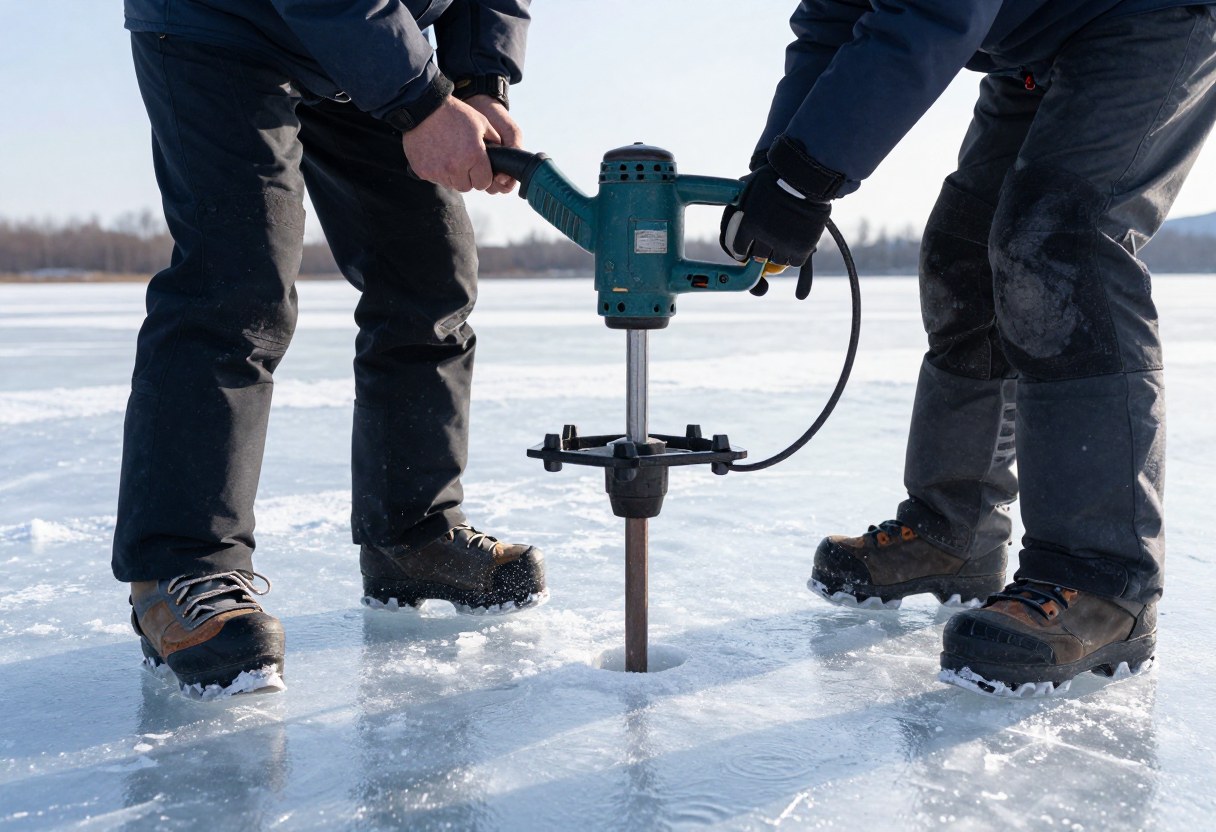
- An ice auger (manual, gas-powered, or electric/battery-powered) for drilling fishing holes — manual augers are the lowest-cost entry point and genuinely reasonable for a beginner testing interest, while powered augers meaningfully speed up drilling multiple holes.
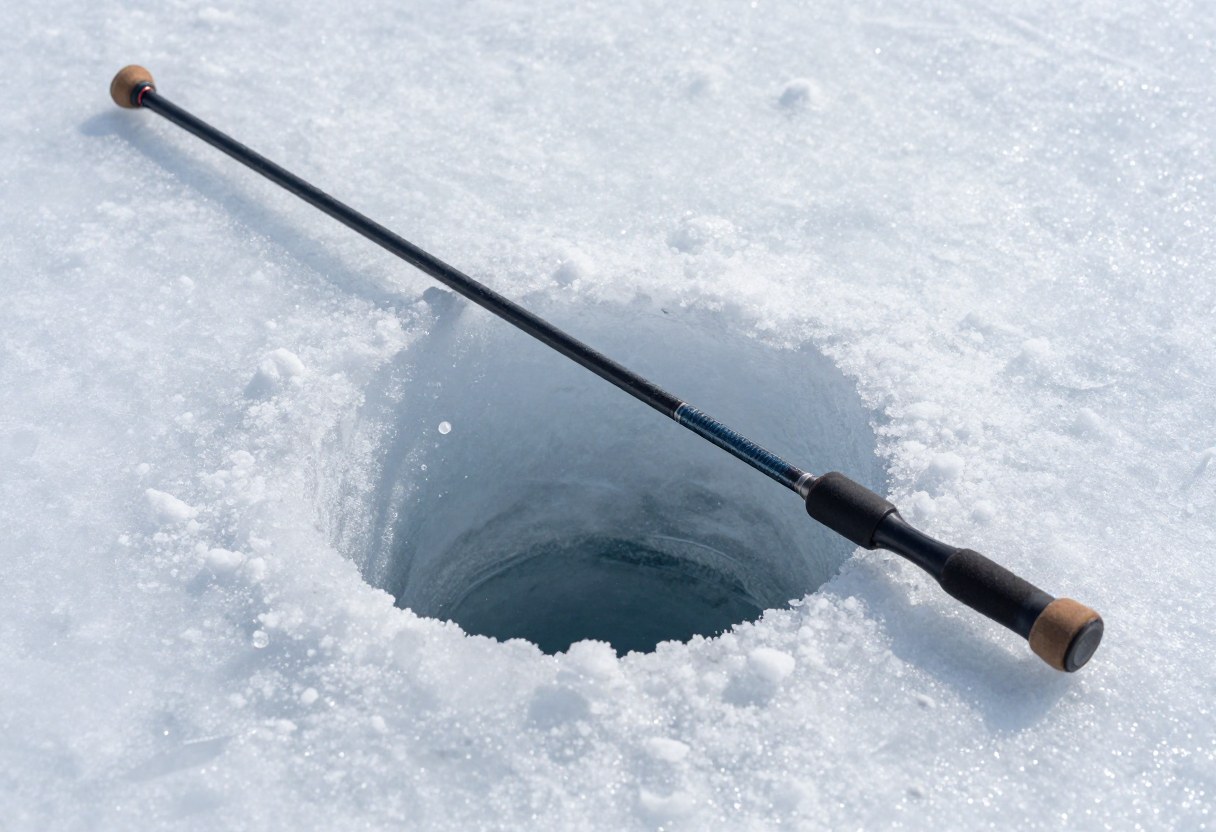
- A short ice fishing jigging rod, typically 24–36 inches, paired with a small spinning reel — the short length is specifically suited to fishing a hole at close range rather than casting distance.
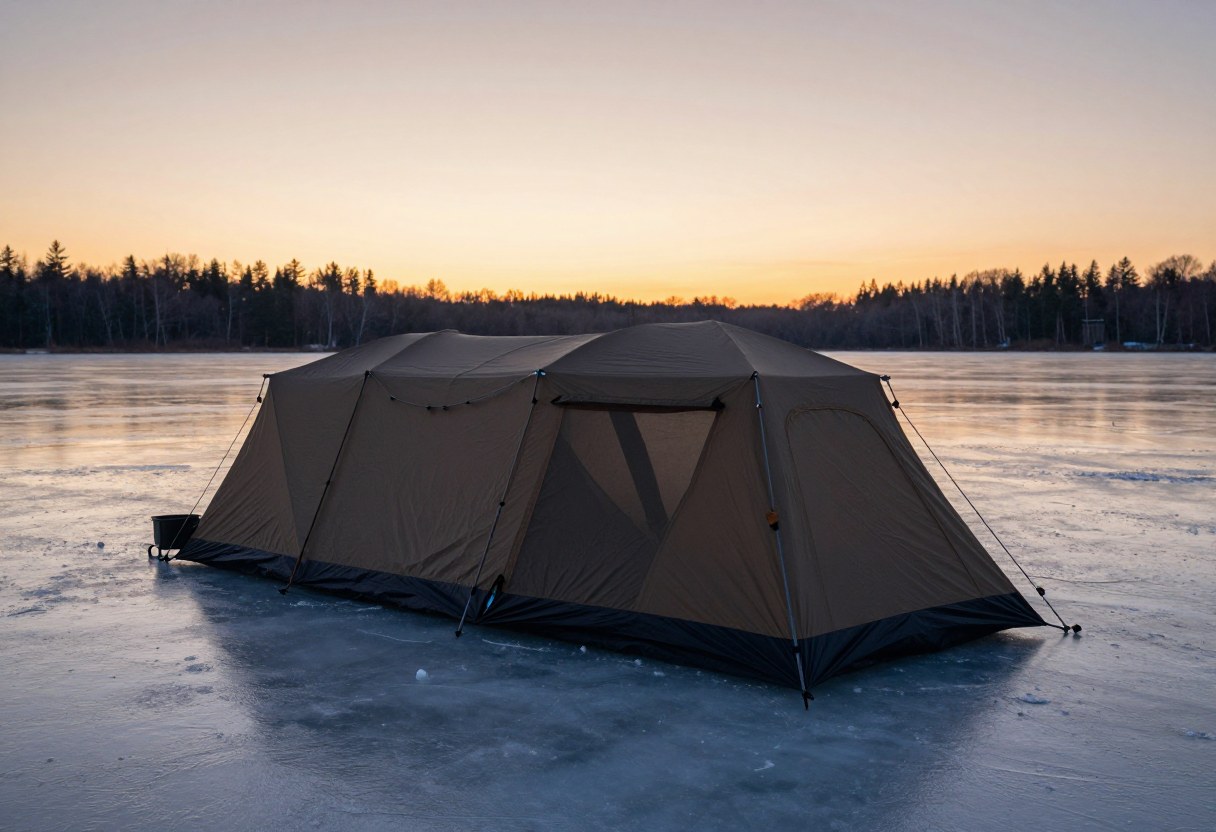
- An ice fishing shelter (shanty), either a portable pop-up style or a more permanent structure, providing wind/cold protection — not strictly required for a first trip in mild conditions, but a meaningful comfort and safety upgrade as conditions get colder.
- A skimmer/scoop for clearing slush and ice fragments from a drilled hole, keeping it fishable.
- A sled or ice fishing gear bag on runners for transporting gear across the ice, especially useful as gear accumulates beyond what's comfortably carried by hand.
4. Dressing for Ice Fishing
- Layering principles apply directly (see a dedicated cold-weather layering guide for full detail) — base, mid, and shell layers, avoiding cotton, remain the foundation even for the more stationary nature of ice fishing.
- Ice fishing often involves extended stationary sitting in genuinely cold, sometimes windy conditions, which argues for erring toward heavier insulation than you might choose for a more active winter activity like hiking.
- Insulated, waterproof boots rated for genuinely cold conditions are worth the investment specifically for ice fishing, where feet are stationary on cold ice for extended periods rather than generating warmth through movement.
- Hand and foot warmers (chemical or battery-powered) are a popular, low-cost comfort addition for extended stationary ice fishing sessions.
5. Basic Jigging Technique
- Jigging is the core ice fishing technique — lowering a small jig or bait to a specific depth and imparting small, rhythmic vertical movements to attract fish, rather than the horizontal retrieves used in open-water fishing.
- Start near the bottom and work upward if unsure of fish depth, since fish location can vary by species, time of day, and specific lake conditions.
- Vary jigging cadence and aggressiveness — some days call for subtle, minimal movement, others reward more aggressive jigging; adjusting based on results (or lack of results) over the first 15–20 minutes at a spot is a reasonable approach.
- A fish finder/flasher unit, while not strictly required for a first trip, meaningfully helps beginners understand fish depth and activity in real time, accelerating the learning process compared to fishing blind.
- Watch your line and rod tip closely for subtle bites, which can be much less obvious than open-water strikes — ice fishing bites are often light taps rather than aggressive hits.
6. Choosing Where to Drill
- Structure matters under ice just as it does in open water — points, drop-offs, weed edges (where still present under ice), and other structure that concentrated fish in fall often continues to hold fish through the ice season.
- Fish location can shift meaningfully through the winter season as oxygen levels and fish metabolism change, particularly in shallower lakes prone to winterkill conditions — don't assume early-season hotspots remain productive all winter without adjustment.
- Drilling multiple holes and moving between them if a spot isn't producing is a normal, effective part of ice fishing, rather than committing to one hole for an entire session regardless of results.
- Local knowledge (bait shops, other anglers, online local fishing reports) is genuinely valuable for a beginner's first few trips on unfamiliar ice, helping identify historically productive areas and current conditions faster than trial and error alone.
7. Common Ice Fishing Beginner Mistakes
- Checking ice thickness once and assuming it's consistent across the whole area, missing meaningful variation near moving water or structure.
- Skipping ice picks or a flotation suit, treating serious safety gear as optional rather than foundational.
- Underdressing for extended stationary cold exposure, applying active-hiking-level layering to a much more sedentary activity.
- Jigging too aggressively or too subtly without adjusting based on results, rather than experimenting with cadence when a spot isn't producing.
- Committing to one hole for an entire session despite no activity, rather than drilling additional holes and moving.
- Going out alone without telling anyone, removing the safety redundancy that matters as much on ice as on any remote trail.
Quick Decision Checklist
- I've checked current, specific ice thickness and conditions for my destination, not relied on general guidelines alone
- I'm checking ice thickness regularly as I move across the area, not just once near shore
- I have ice picks and am considering a flotation suit as genuine safety gear, not optional extras
- I've told someone my specific plan and expected return time
- I have appropriate cold-weather layering suited to extended stationary sitting, not just active-movement layering
- I have basic jigging gear (short rod, small reel, jigs appropriate to my target species) and a plan to adjust cadence based on results
- I'm prepared to drill multiple holes and move if a spot isn't producing
Glossary
- Black Ice: Clear, solid ice, generally stronger per inch of thickness than white/opaque "snow ice."
- Spud Bar: A long metal bar used to manually test ice thickness and strength by striking the surface ahead of where you're walking.
- Jigging: The core ice fishing technique of imparting small vertical movements to a bait or lure lowered through a hole, rather than a horizontal retrieve.
- Ice Picks: Safety devices worn around the neck, designed to help grip and pull oneself back onto solid ice after falling through.
- Flasher/Fish Finder: A sonar device used in ice fishing to show real-time fish depth and activity beneath a drilled hole.
Final Takeaway
Ice fishing rewards patience and preparation more than technical skill — the real foundation is disciplined, ongoing ice safety checking (not a single thickness reading trusted for an entire outing), genuine safety gear (ice picks, appropriate flotation, told-someone-your-plan), and cold-weather layering suited to extended stationary sitting rather than active movement. Once that foundation is solid, basic jigging technique and a willingness to drill multiple holes and adjust based on results will get a beginner catching fish through the ice.
Ice conditions vary significantly by location, season, and specific body of water, and can change rapidly — always verify current, local ice conditions immediately before a trip rather than relying on general guidelines or past visits.