
White-tailed Deer
Odocoileus virginianus
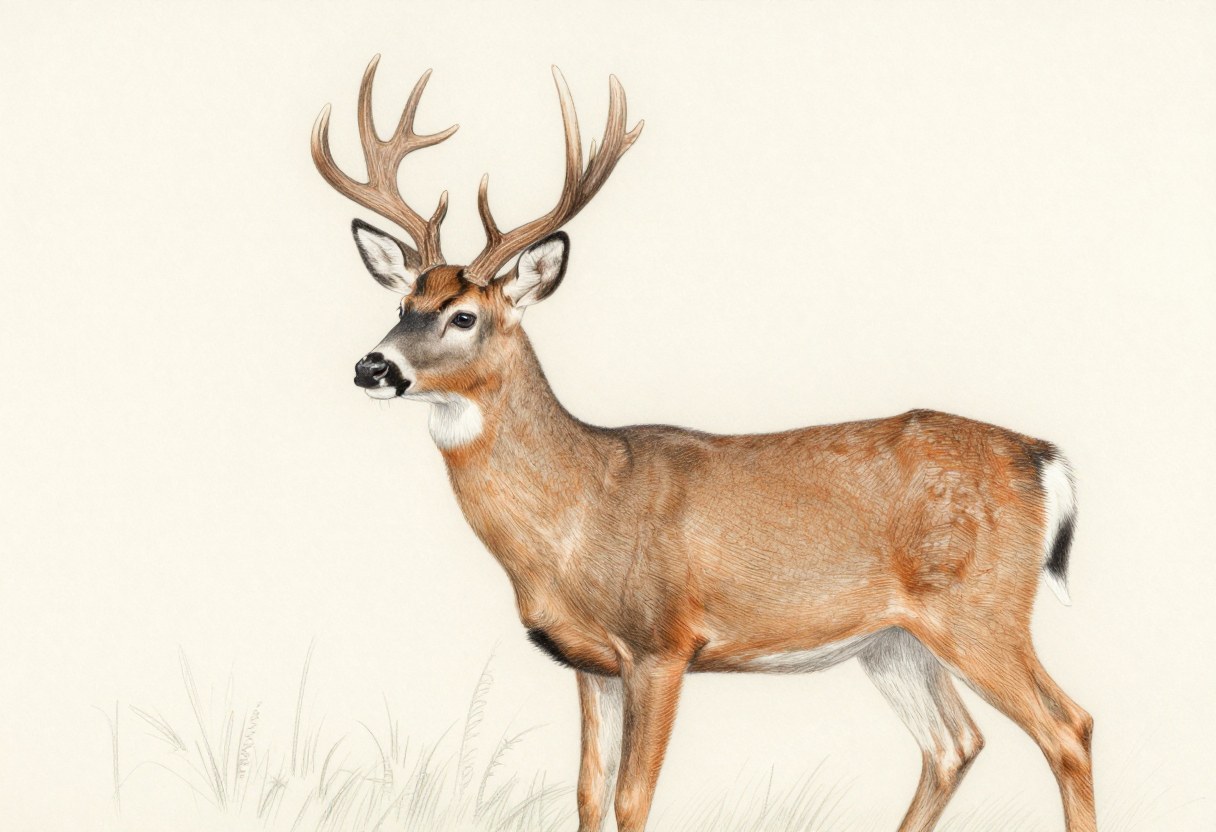
The most widely hunted big-game animal in North America, a reddish-brown deer that raises a white tail like a flag when it is alarmed.
- Type
- Deer Family
- Habitat
- Forests, Farmland, Brush & desert
- Typical size
- Bucks about 150–300 lb; does about 90–200 lb; about 3 ft tall at the shoulder
- Range
- Found in nearly every state except parts of the far West and Southwest, and north into Canada
- Seasons
- Archery, muzzleloader, and firearm seasons run from early fall into winter, timed around the rut, which peaks in late autumn in most areas
How to identify it
- The tail is brown on top and bright white underneath. Deer raise it like a flag when they run.
- Reddish-brown coat in summer, gray-brown in winter, with a white throat patch and a white ring around each eye.
- Bucks grow antlers with one main beam on each side curving forward, and several single tines rising from it.
- Ears are medium-sized, smaller than a mule deer's.
Tracks and sign
- Tracks are heart-shaped, with two pointed toes, about 2–3 inches long.
- Rubs: scraped and torn bark on saplings where bucks polish their antlers.
- Scrapes: pawed bare patches of ground under an overhanging branch, often marked by bucks.
- Beds: oval patches of flattened grass or leaves, often on slightly raised ground.
Often confused with
- Mule deer: has much larger ears, a narrow black-tipped tail, a white rump patch, and antlers that fork evenly.
What it eats
- Acorns and other nuts, known as mast
- Twigs, buds, and leaves, known as browse
- Farm crops such as corn, soybeans, and alfalfa
- Grasses, forbs, and fruit
How it's hunted
- Stand and blind hunting over trails, food plots, and funnels
- Still-hunting and spot-and-stalk in good cover
- Using rattling and grunt calls during the rut
- Drives in some regions
Safety: Deer are most active on roads at dawn and dusk, especially during the rut, so watch for them on the drive. Chronic wasting disease occurs in deer in many states, so follow your state's testing and carcass-movement rules.
Field notes
Whitetails live almost everywhere, from deep forest to farm country and suburban edges, and they adapt quickly to people and to hunting pressure. That makes learning their habits more important than any gear.
Wind, scent, and where deer travel between bedding and feeding areas matter more than anything else. A deer that smells you will usually leave before you ever see it.
Related guides
Seasons, tag and license requirements, legal methods, and bag limits vary by state and unit and change every year. Many big-game species require a drawn or purchased tag, and some animals are protected or regulated differently in different places. Check your state's current regulations — our state resources directory links straight to each state's official hunting rules and license portal.