
Scent Control and Wind Strategy for Hunters
Why wind direction matters more than any other factor in getting close to game undetected.
Published August 19, 2026
Why Wind Beats Every Other Scouting Factor
Deer and many other game species rely on their sense of smell as their primary early-warning system, far more than sight or hearing in most situations — which means a hunter can do everything else right (perfect stand location, ideal timing, quiet approach) and still get busted simply because the wind carried human scent toward the animal before it came into view or range. Understanding and consistently prioritizing wind direction is arguably the single highest-value hunting skill for getting genuinely close to wary game, more impactful than most gear purchases or technique refinements. This guide covers how scent works, how wind and thermal patterns move it, and how to build a hunting strategy around wind rather than treating it as an afterthought.
1. Why Scent Detection Is Such a Powerful Defense for Game
- A deer's sense of smell is dramatically more sensitive than a human's, capable of detecting human scent at genuinely surprising distances and concentrations under the right wind conditions.
- Animals that rely heavily on scent detection have survived generations of predation (human and otherwise) specifically because this defense works — this isn't a minor factor to work around, it's often the primary reason a well-executed approach still fails.
- Visual and auditory detection require a more active, close-range encounter, while scent can alert an animal well before you're aware of its presence at all — this asymmetry is exactly why wind strategy deserves priority over most other hunting considerations.
2. Basic Wind Direction Strategy
- Position yourself so the wind carries your scent away from where you expect game to approach from or be located, not toward it — this is the single foundational principle underlying everything else in this guide.
- Check wind direction before committing to a stand or setup location, using a reliable method (see Section 4), and be willing to change plans if the wind doesn't favor your intended location.
- Have multiple stand/setup locations scouted for different wind directions rather than one fixed spot you hunt regardless of conditions — this flexibility is what separates hunters who consistently work with the wind from those who compromise and hunt a favorite spot in unfavorable wind.
- A "perfect" stand location in the wrong wind is often worse than a mediocre location in the right wind — location quality and wind favorability need to be evaluated together, not location alone.
Don't Skip This: Hunting a favorite stand regardless of wind direction, rather than adapting to conditions, is one of the most common reasons experienced-seeming hunters still get busted by game. Having multiple wind-appropriate locations scouted in advance, and actually using the right one for the day's conditions, matters more than any single "best" spot.
3. Thermals: The Often-Overlooked Second Factor
- Thermal wind patterns, caused by temperature changes rather than general weather-driven wind, add a layer of complexity beyond simple compass-direction wind checking, particularly relevant in hilly or mountainous terrain.
- In the morning, as the sun warms the air, thermals generally rise (moving up a slope/hillside) as warmed air near the ground becomes less dense and moves upward.
- In the evening, as temperatures cool, thermals generally fall (moving down a slope/hillside) as cooling air becomes denser and sinks.
- This means a stand location that has favorable general wind direction can still fail due to thermal movement, particularly in the first and last hours of daylight when thermal effects are often strongest relative to general wind — accounting for both general wind and likely thermal movement, especially in terrain with meaningful elevation change, is a more complete strategy than checking compass-direction wind alone.
4. Checking Wind Direction in the Field
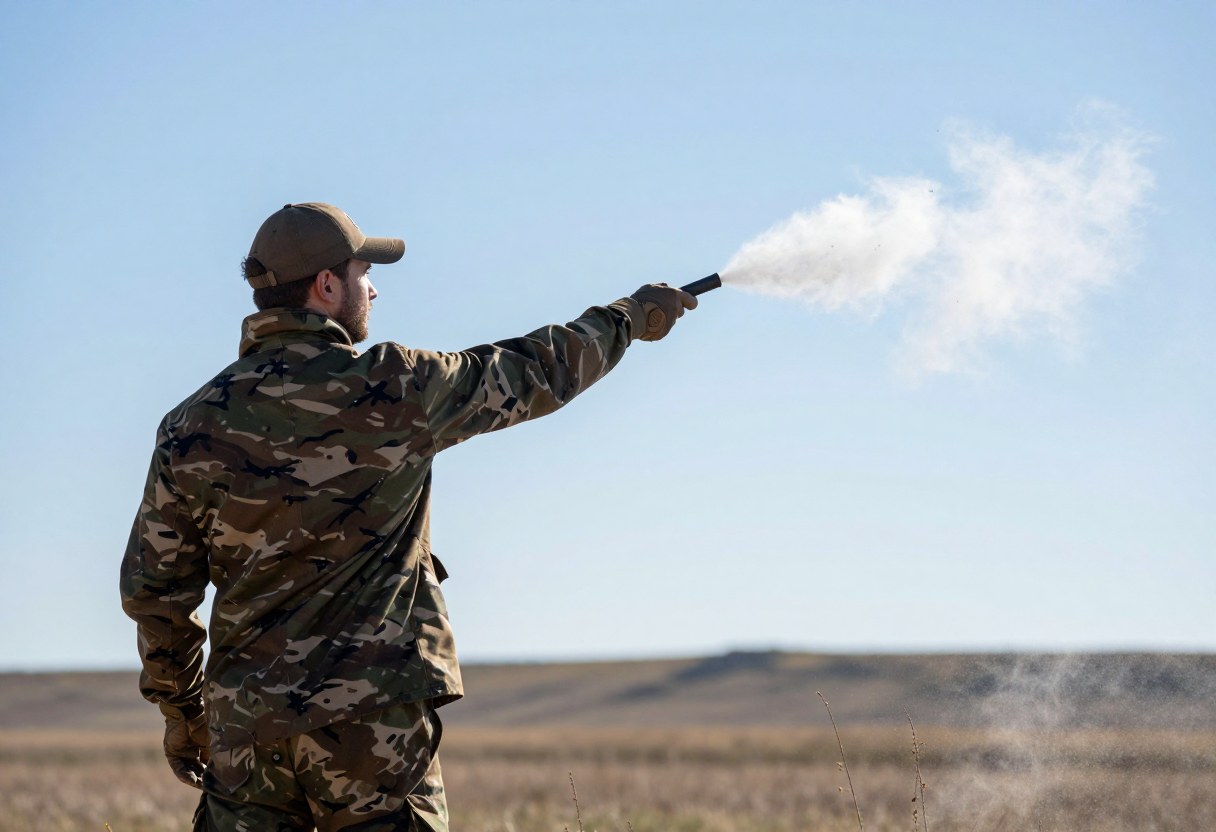
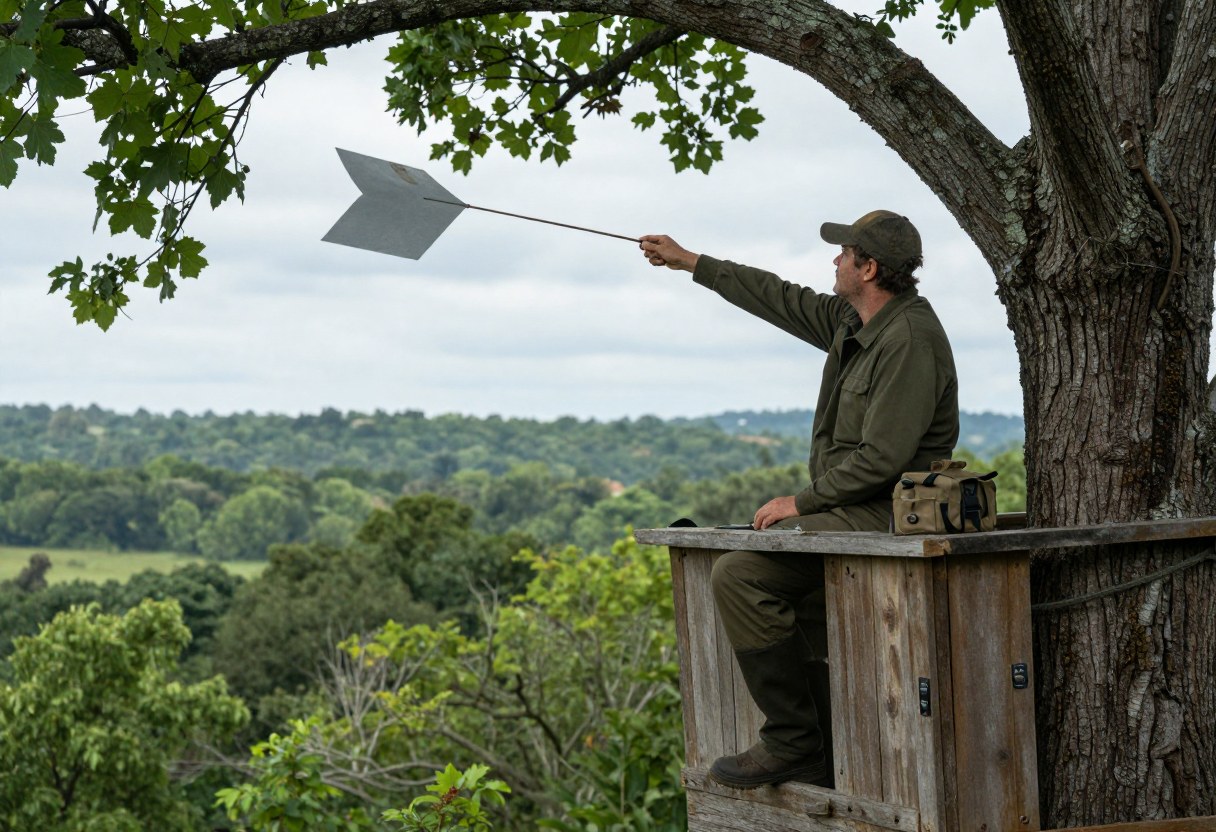
- Wind checker powder or puffers provide a simple, visual, immediate way to see actual wind direction and subtle shifts at your specific location, more reliable than relying on general weather forecasts alone.
- Milkweed seed or similar light natural material, released and observed, is a traditional, no-cost method for checking wind direction and subtle air movement.
- Check wind not just once before setting up, but periodically throughout a hunt — wind direction and thermal patterns can shift throughout a sit, and a setup that started favorable can become unfavorable as conditions change.
- General weather app wind forecasts provide a useful starting reference but don't capture local terrain effects (thermals, funneling through terrain features) that can meaningfully differ from a broader area forecast.
5. Scent Control Products and Practices
- Scent-reducing sprays, specialized soaps, and scent-control clothing aim to reduce the human scent a hunter produces, though it's worth understanding these products reduce rather than eliminate scent — they're a supplement to sound wind strategy, not a replacement for it.
- Washing hunting clothing in scent-free detergent and storing it in a scent-controlled container (away from household odors, gasoline, food smells) between uses is a widely practiced habit among serious hunters.
- Showering with scent-reducing soap and avoiding scented personal care products (shampoo, deodorant, cologne) before a hunt reduces the human scent a hunter carries into the field.
- Ozone generators and scent-elimination systems are used by some hunters as an additional scent-reduction step for gear and clothing, representing a more involved, higher-cost approach beyond basic scent-free washing and storage.
6. Access Route Planning
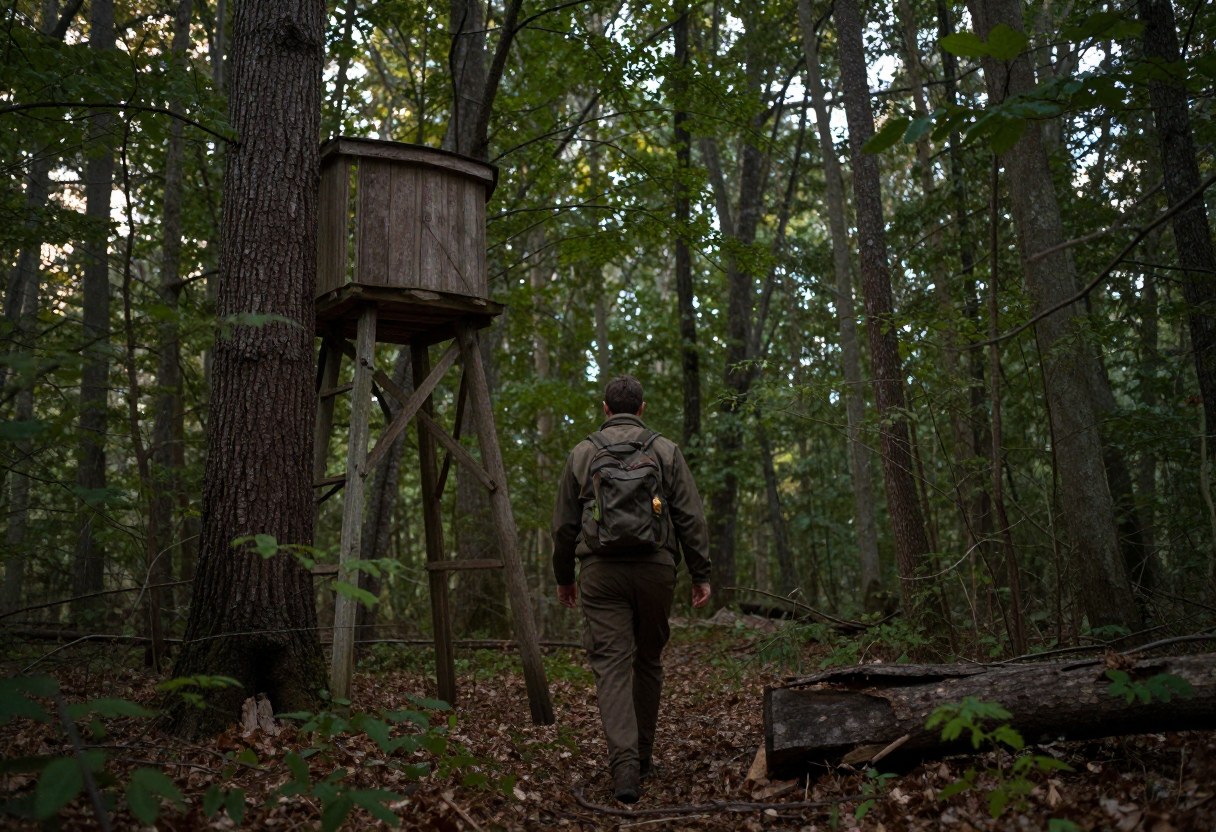
- How you approach and leave a stand or setup location matters as much as the setup itself — an approach route that crosses through an area where deer are likely bedding, or that carries scent across a likely travel corridor, can spook game before a hunt even properly begins.
- Plan access routes using wind direction just as deliberately as stand location — an otherwise ideal wind-favorable stand can be undermined by an access route that carries scent through the wrong area on the way in or out.
- Consider a longer but more scent-conscious access route over a shorter, more direct one that risks contaminating the area you're hunting — this tradeoff is worth making deliberately rather than defaulting to convenience.
7. Combining Wind Strategy With Other Scouting Factors
- Wind strategy works alongside, not instead of, other scouting fundamentals (feeding/bedding pattern knowledge, trail camera data, terrain reading) — it's the factor most likely to undermine otherwise excellent scouting if ignored, not a replacement for the rest of your scouting work.
- A well-scouted location hunted in the wrong wind will generally underperform a decently scouted location hunted in the right wind — this relative prioritization is worth internalizing when deciding where to actually hunt on a given day.
- Building genuine flexibility into a hunting plan — multiple scouted locations for different wind directions, rather than a single fixed plan — is what lets a hunter consistently apply sound wind strategy rather than compromising due to lack of alternatives.
8. Common Scent Control and Wind Strategy Mistakes
- Hunting a favorite stand regardless of wind direction, rather than maintaining multiple wind-appropriate location options.
- Checking wind only once at the start of a hunt, missing shifts (including thermal shifts) that occur throughout a sit.
- Ignoring thermal wind patterns, particularly in hilly terrain during the first and last hours of daylight when thermal effects are often strongest.
- Relying entirely on scent-control products without sound wind strategy, treating scent reduction as a substitute for positioning rather than a supplement to it.
- Using an access route that crosses likely bedding or travel areas, undermining an otherwise wind-favorable stand location.
- Not accounting for local terrain effects on wind, relying solely on a general area forecast that doesn't reflect actual conditions at a specific hunting location.
Quick Decision Checklist
- I have multiple scouted stand/setup locations appropriate to different wind directions, not just one fixed favorite spot
- I check wind direction (and consider likely thermal patterns) before committing to today's location
- I recheck wind periodically throughout a hunt, not just once at the start
- I'm using scent-reducing practices (scent-free washing, controlled storage, personal scent reduction) as a supplement to wind strategy, not a replacement
- I've planned my access route with wind and likely bedding/travel areas in mind, not just the shortest path
- I'm prioritizing wind-favorable hunting over a "perfect" location in unfavorable wind
Glossary
- Thermal: Wind movement caused by temperature change rather than general weather patterns — rising in the morning as air warms, falling in the evening as air cools, particularly relevant in terrain with elevation change.
- Scent-Control Clothing/Products: Gear and products designed to reduce (not eliminate) the human scent a hunter produces, intended as a supplement to sound wind positioning strategy.
- Access Route: The path taken to and from a hunting location, which affects scent exposure to the area being hunted independent of the stand location itself.
Final Takeaway
Wind direction is arguably the single highest-value factor in hunting success for scent-sensitive game — more impactful than most gear or technique refinements, since it directly determines whether an animal detects your presence before you ever have a shot opportunity. Build genuine flexibility into your hunting plan with multiple wind-appropriate locations, account for thermal wind patterns in addition to general wind direction, use scent-control practices as a supplement rather than a substitute for good positioning, and plan access routes as deliberately as stand locations. Consistently prioritizing wind over convenience or a favorite spot is what separates hunters who regularly get close to wary game from those who don't.
Wind and thermal patterns vary by specific terrain and local conditions — treat this guide's principles as a transferable framework to apply and refine based on your own hunting area's specific terrain and observed patterns.