
Field Guide / Shot Sizes & Chokes
Shot size, choke, slugs, and shot material decide what a shotgun can do. Search or filter by type and what you hunt, and use the diagrams to see how each choice changes the pattern.
Always follow your shotgun's manual for which shells and chokes it can safely use, especially steel and other nonlead shot. Pellet counts and patterns here are typical, and real results vary by gun, load, and choke. Nonlead shot rules for waterfowl and public land differ by area. Check your state's current regulations.
23 entries
 Shot Sizes
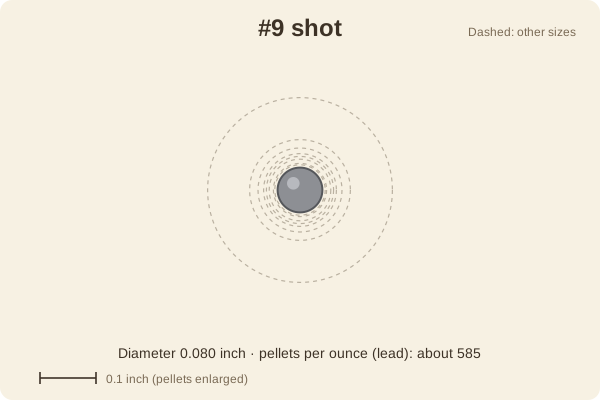
The smallest common shotgun pellet, used in light target loads where a dense pattern matters more than punch.
About .08 inch, around 585 pellets per ounce
 Shot Sizes
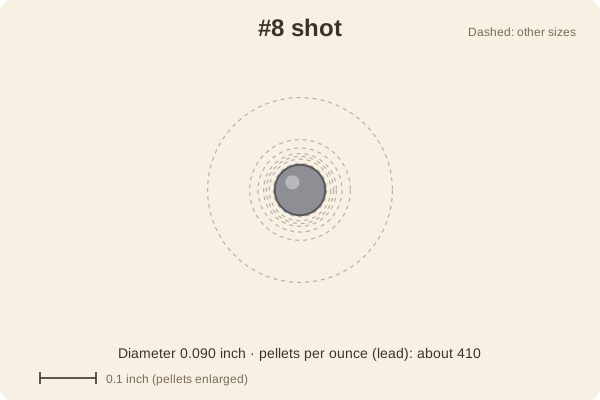
A standard light size for skeet, trap, and sporting clays, and a common choice for doves and quail.
About .09 inch, around 410 pellets per ounce
 Shot Sizes
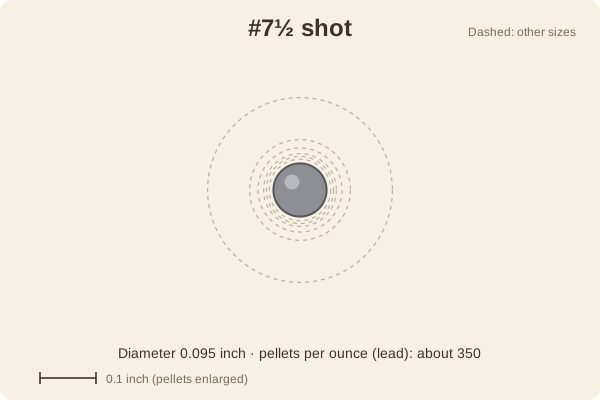
The all-around light size: the standard for trap and skeet, and a favorite for doves, quail, grouse, and rabbits.
About .095 inch, around 350 pellets per ounce
 Shot Sizes
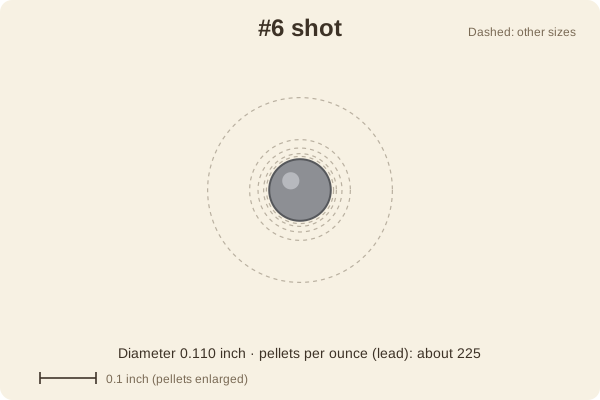
A mid-size pellet for pheasants, grouse, rabbits, and squirrels, with a good balance of pellet count and energy.
About .11 inch, around 225 pellets per ounce
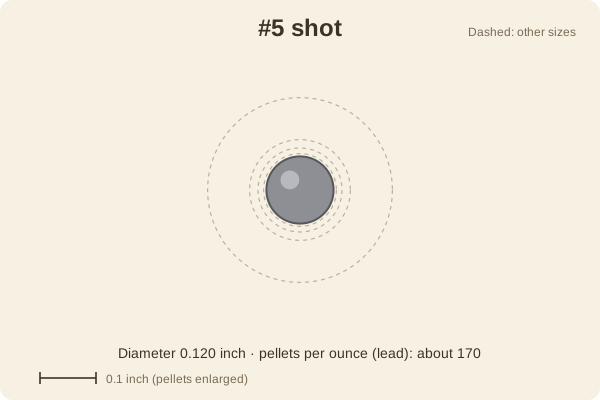 Shot Sizes
A popular size for turkeys and later-season pheasants, with more punch than the smaller sizes.
About .12 inch, around 170 pellets per ounce
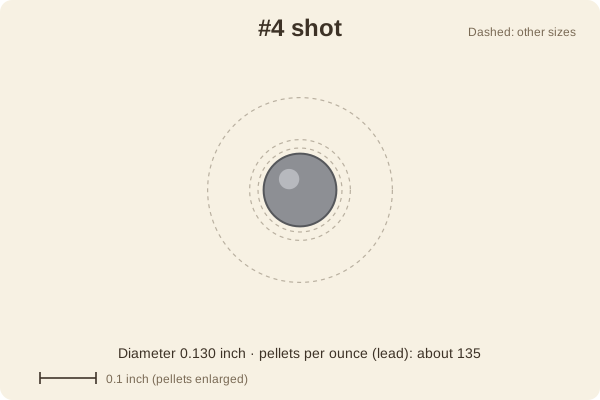 Shot Sizes
A strong all-around size for turkeys, late-season pheasants, and, in steel, ducks at moderate range.
About .13 inch, around 135 pellets per ounce
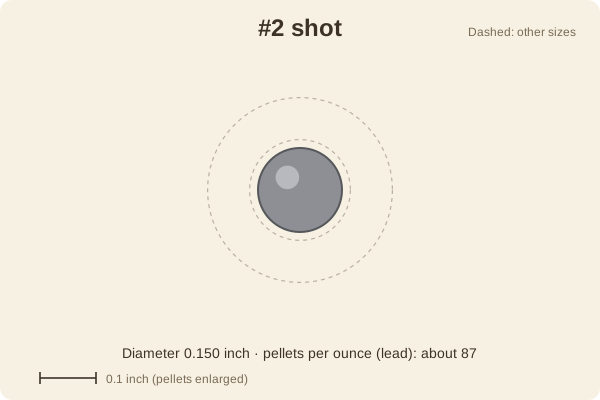 Shot Sizes
A larger pellet for ducks and geese, especially in steel, and for coyotes at close range.
About .15 inch, around 87 pellets per ounce
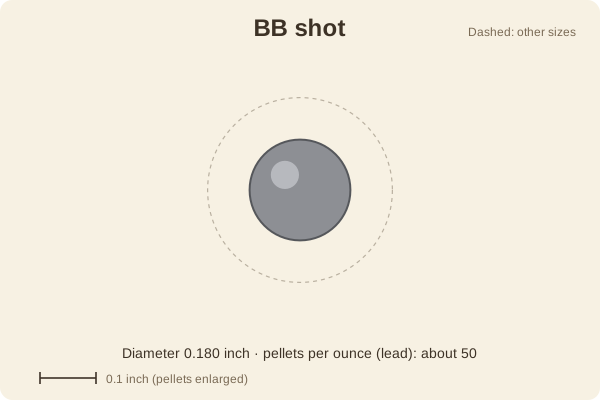 Shot Sizes
A big pellet for geese and large ducks at longer range, and for some predator and turkey loads with dense shot.
About .18 inch, around 50 pellets per ounce
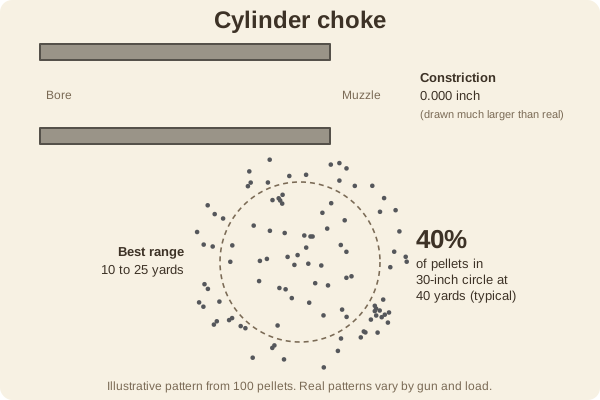 Chokes
No constriction at the muzzle, so the shot spreads fast. Used for close targets, buckshot, and rifled slugs.
No constriction, about 40% at 40 yards
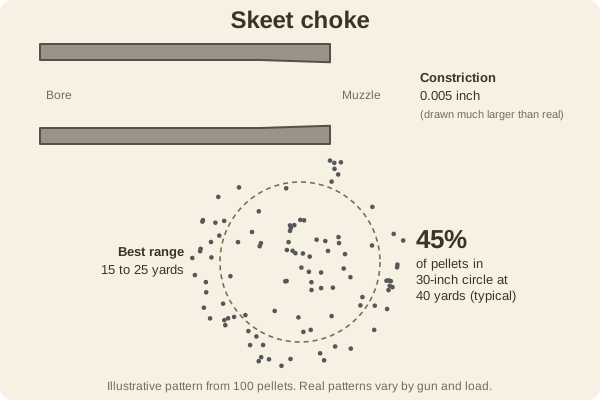 Chokes
A very light constriction made for skeet, giving a wide, even pattern at short range.
0.005 inch constriction, about 45% at 40 yards
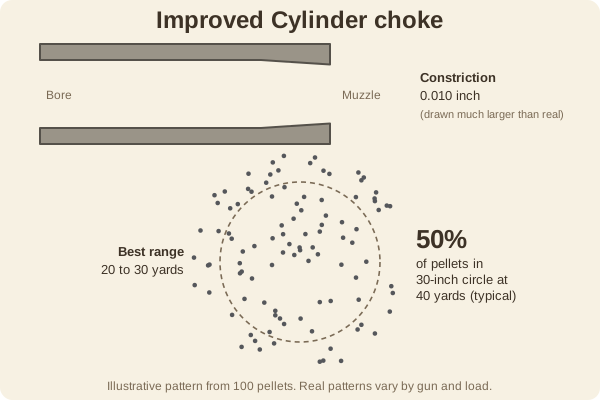 Chokes
A light constriction that works well for quail, doves, grouse, and rabbits at short to moderate range.
0.010 inch constriction, about 50% at 40 yards
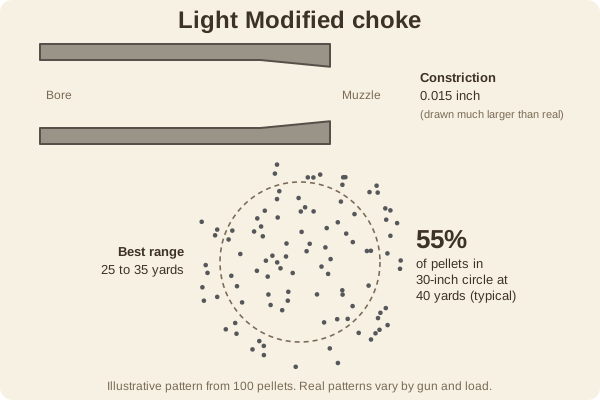 Chokes
A slightly tighter pattern than improved cylinder, a good middle ground for pheasants, doves, and sporting clays.
0.015 inch constriction, about 55% at 40 yards
 Chokes
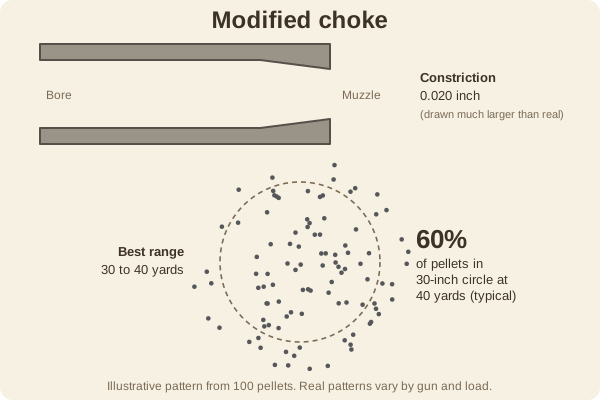
The classic all-purpose choke: tight enough for pheasants and ducks at moderate range, and a common limit for steel in guns and choke tubes rated for it.
0.020 inch constriction, about 60% at 40 yards
 Chokes
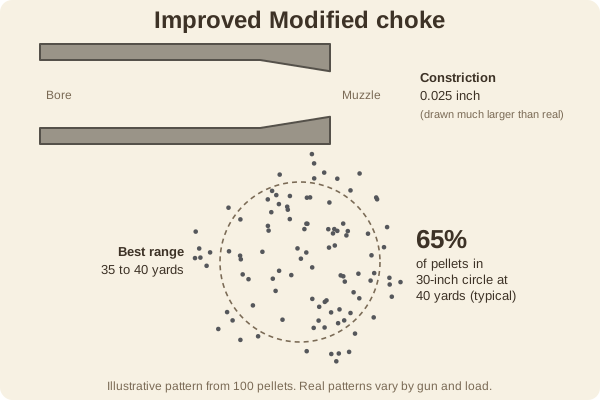
A tighter choke for long-range pheasants, ducks, and geese, and for turkeys with some loads.
0.025 inch constriction, about 65% at 40 yards
 Chokes
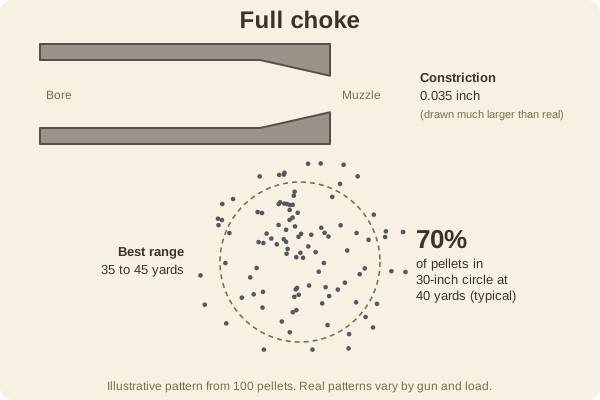
The tightest standard choke, designed to hold a dense pattern at longer range for turkeys, geese, and long-range birds.
0.035 inch constriction, about 70% at 40 yards
 Chokes
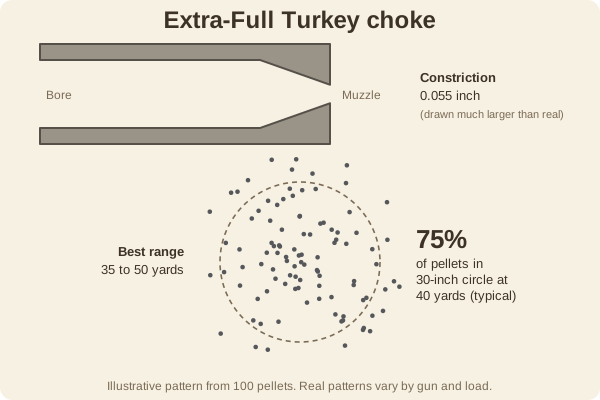
A very tight aftermarket choke tube made for turkey loads, giving dense patterns at 35 to 50 yards.
About 0.045 to 0.060 inch constriction, often 70 to 80%+ with turkey loads
 Slugs & Buckshot
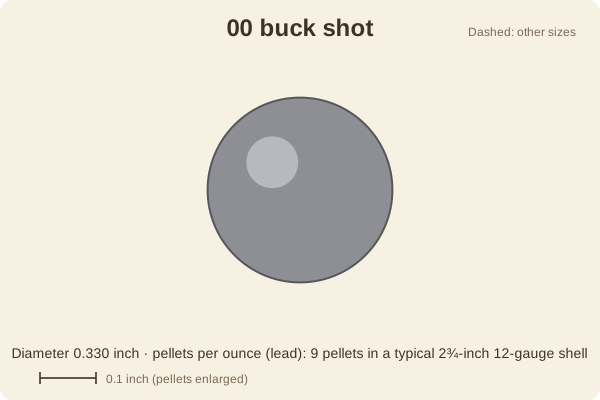
A large pellet load, with about nine big balls in a typical 12-gauge shell, used for deer and hogs at close range where buckshot is legal.
About .33 inch, 9 pellets in a typical 2¾-inch 12 gauge shell
 Slugs & Buckshot
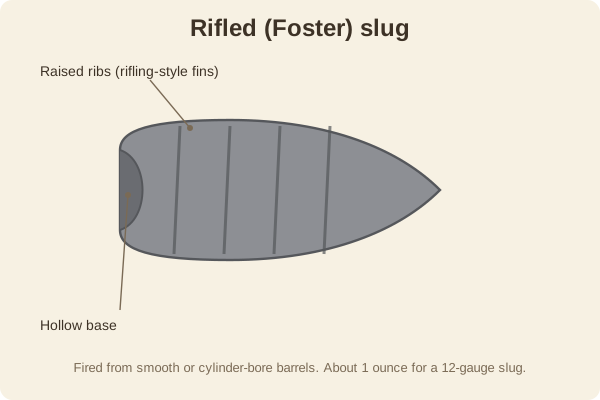
A single heavy lead slug with raised ribs, made for smooth or cylinder-bore shotguns, and an effective deer load out to about 75 to 100 yards.
One projectile, about 1 ounce in a 12 gauge
 Slugs & Buckshot
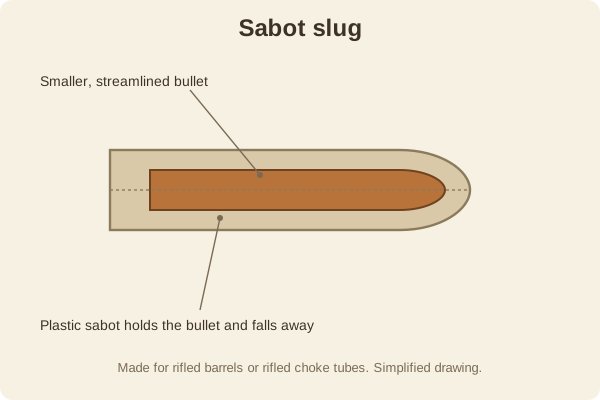
A sub-caliber bullet held in a plastic sleeve, fired from a rifled barrel or rifled choke tube for better accuracy at longer range.
Streamlined bullet in a sabot, for rifled barrels
 Shot Materials
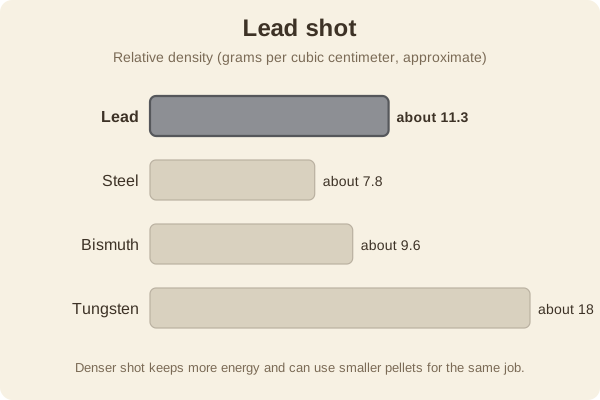
The traditional shot material: dense, soft, and effective, but restricted or banned for waterfowl and on some public lands.
Density about 11.3 g/cc, banned for waterfowl
 Shot Materials
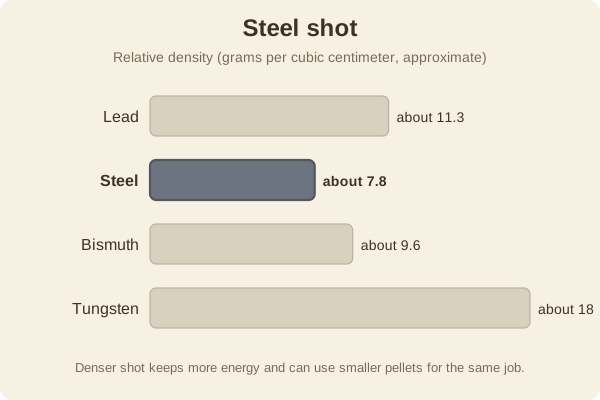
The standard nonlead shot for waterfowl: lighter than lead and hard, so hunters usually go up a size or two.
Density about 7.8 g/cc, the standard waterfowl shot
 Shot Materials
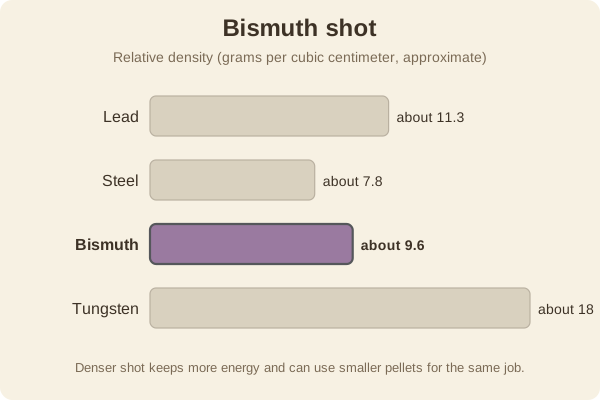
An approved nonlead shot that is denser than steel and softer, easier on barrels and good for waterfowl and upland birds.
Density about 9.6 g/cc, between steel and lead
 Shot Materials
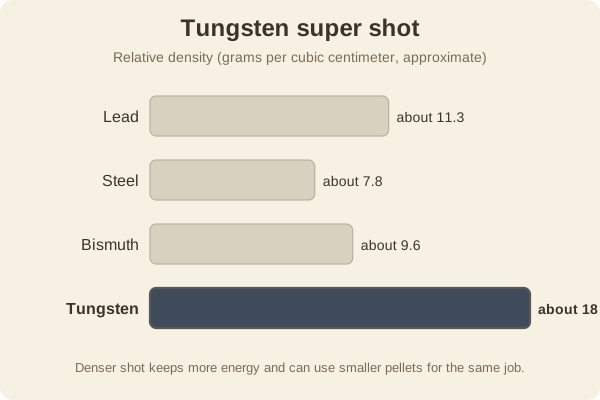
A very dense, premium nonlead shot that lets hunters use smaller pellets with more energy and denser patterns, at a high price.
Density up to about 18 g/cc, denser than lead