
Field Guide / Shot Sizes & Chokes
Sabot Slug
Also called: sabot, saboted slug
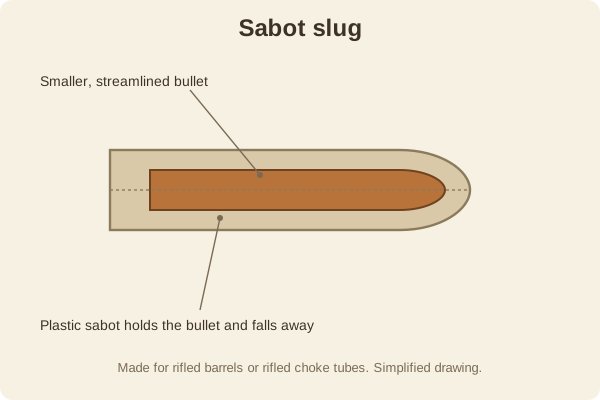
A sub-caliber bullet held in a plastic sleeve, fired from a rifled barrel or rifled choke tube for better accuracy at longer range.
- Type
- Slugs & Buckshot
- Projectile
- A sub-caliber bullet wrapped in a plastic sabot
- Barrel
- Rifled barrels or rifled choke tubes
- Typical range
- Up to about 100 to 150 yards or more
- Used for
- Deer & hogs
Safety: Fire sabot slugs only through barrels or choke tubes approved for them. Check your shotgun's manual.
What it is good for
- Deer and hogs in shotgun-only areas, with a rifled barrel.
- Longer shots than rifled slugs allow.
- Hunters who want rifle-like accuracy from a shotgun.
Where it falls short
- Needs a rifled barrel or rifled choke tube, and costs more.
- Does not do well in smooth barrels.
- Lots of recoil.
Tips
- Sight in with the exact load, and recheck if you change brands.
- Clean the barrel regularly, since sabot plastic can leave residue.
Works well with
- Rifled Slug: a simpler slug for smooth or cylinder-bore barrels.
Field notes
The sabot falls away after leaving the muzzle, leaving the bullet to fly on its own. Rifled barrels spin the bullet for stability.
Related guides
Pellet counts, patterns, and ranges are typical figures, not guarantees. Pattern your own shotgun with your own loads at the distances you hunt, and follow the shotgun manual for which shells and chokes are safe. Nonlead shot rules and legal shot types differ by state and area; our state resources directory links to each state's official regulations.