
Field Guide / Shot Sizes & Chokes
Lead Shot
Also called: lead, lead pellets
The traditional shot material: dense, soft, and effective, but restricted or banned for waterfowl and on some public lands.
- Type
- Shot Materials
- Density
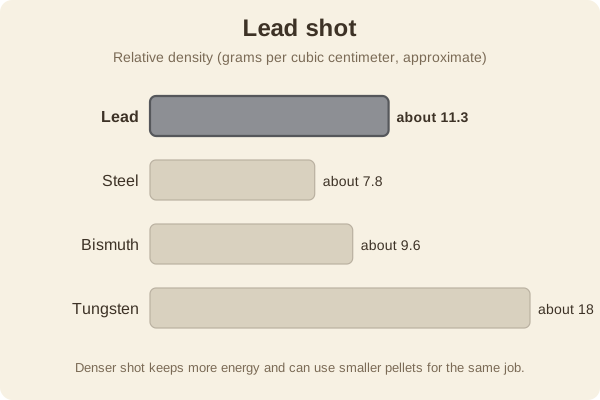
- About 11.3 grams per cubic centimeter
- Hardness
- Soft, so pellets deform
- Legal status
- Banned for waterfowl; limited on some public lands
- Used for
- Upland birds, Turkey, Small game, Clays
Safety: Many wildlife areas and national wildlife refuges require nonlead shot. Check the rules for where you hunt.
What it is good for
- Upland birds and small game where lead is legal.
- Turkeys in places where lead is allowed.
- Target shooting, where range rules allow.
Where it falls short
- Cannot be used for waterfowl hunting.
- Restricted on many public lands and wildlife areas.
- Lead can poison wildlife that eat spent shot or contaminated game.
Tips
- Check the lead rules for every area you hunt.
- Handle lead shot and shells carefully, and wash your hands.
Works well with
- Steel Shot: the common nonlead alternative.
- #6 Shot: a common lead size for pheasants and rabbits.
Field notes
Lead's high density helps pellets keep energy at range. It is soft, so it deforms on impact and is easy on barrels.
Related guides
Pellet counts, patterns, and ranges are typical figures, not guarantees. Pattern your own shotgun with your own loads at the distances you hunt, and follow the shotgun manual for which shells and chokes are safe. Nonlead shot rules and legal shot types differ by state and area; our state resources directory links to each state's official regulations.