
Field Guide / Shot Sizes & Chokes
Steel Shot
Also called: steel, nontoxic shot
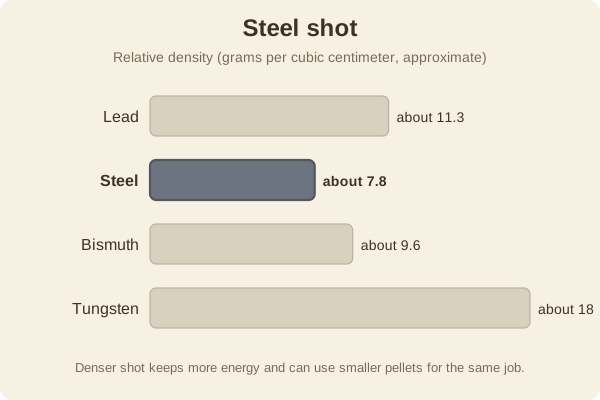
The standard nonlead shot for waterfowl: lighter than lead and hard, so hunters usually go up a size or two.
- Type
- Shot Materials
- Density
- About 7.8 grams per cubic centimeter
- Hardness
- Hard, so pellets do not deform
- Legal status
- Approved nonlead shot for waterfowl
- Used for
- Ducks & geese, Upland birds
Safety: Use steel shot only in choke tubes marked for steel and in guns rated for it. Tight chokes with steel can damage a barrel, so follow your shotgun's manual.
What it is good for
- Ducks and geese, where nonlead is required.
- Public lands that require nonlead shot.
- A low-cost nonlead option.
Where it falls short
- Lighter than lead, so it loses energy faster.
- Hard pellets can damage older or thin-walled barrels and tight chokes.
- Hunters usually need a larger pellet size.
Tips
- Go up one or two sizes from the lead size you would use.
- Use a modified or more open choke, unless your choke is marked for steel.
Works well with
- #2 Shot: a common steel size for ducks.
- Modified Choke: a common choke for steel in many guns.
Field notes
Steel shot became the standard for waterfowl when lead was banned for ducks and geese. Modern shells and choke tubes are designed for it.
Related guides
Pellet counts, patterns, and ranges are typical figures, not guarantees. Pattern your own shotgun with your own loads at the distances you hunt, and follow the shotgun manual for which shells and chokes are safe. Nonlead shot rules and legal shot types differ by state and area; our state resources directory links to each state's official regulations.