
White Oak
Quercus alba
A large, long-lived oak with rounded leaf lobes and sweet acorns that deer and turkeys favor.
- Type
- Hardwoods
- Leaves
- Lobed leaves
- Region
- Northeast, Southeast, Midwest & Plains
- Typical size
- 60–100 ft tall, with a trunk 2–4 ft across
- Range
- Eastern United States, from New England to northern Florida and west to Minnesota and eastern Texas
- Look for it
- Fall, when acorns drop and leaves turn russet to wine-red
How to identify it
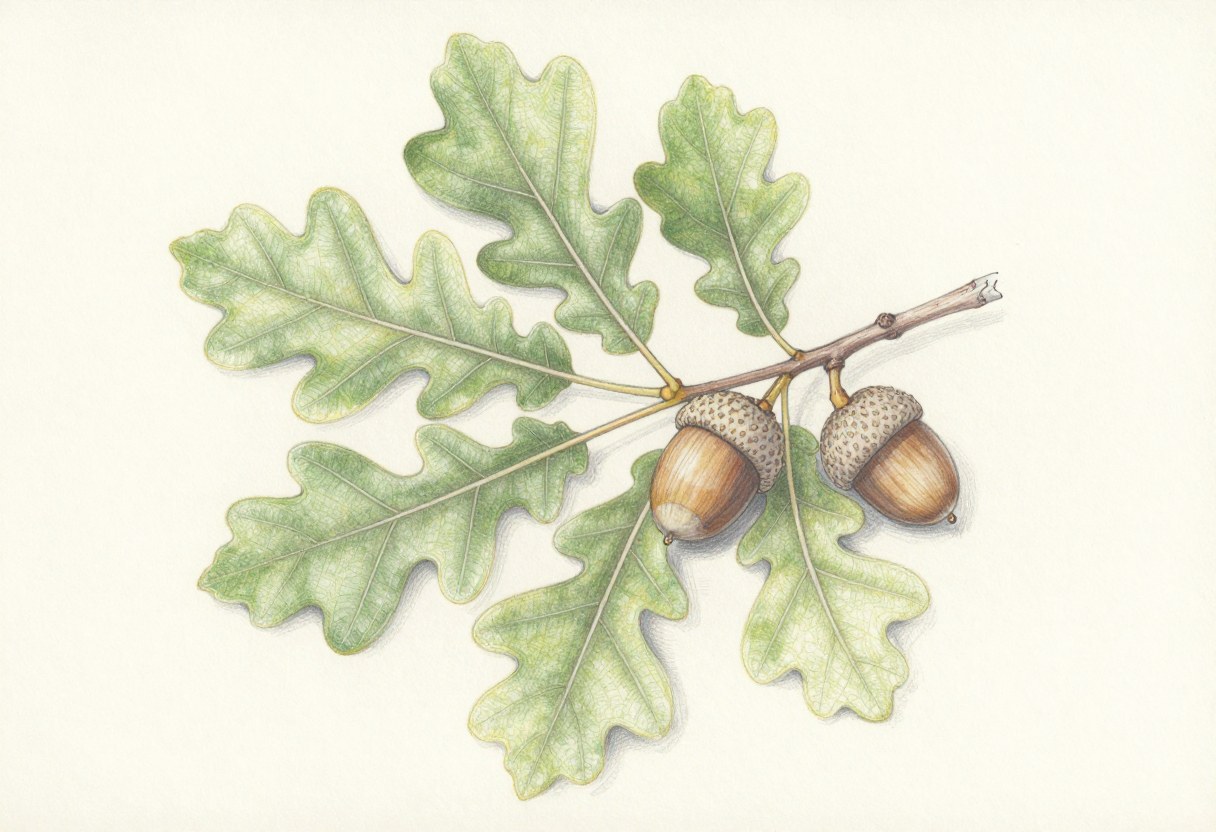
- Leaves have 5–9 rounded lobes with no bristle or sharp point at the tips.
- Bark is pale gray and scaly, often in loose flakes.
- Acorns are oblong, about an inch long, with a warty, shallow cap.
- Wide, spreading crown on open-grown trees.
Often confused with
- Northern red oak: leaf lobes end in sharp bristle tips, and the acorns are bitter and flat-capped.
Why it matters outdoors
- Acorns are among the favorite foods of deer, turkeys, and squirrels, because they are less bitter than red oak acorns.
- Excellent firewood: dense, slow-burning, and long-lasting once seasoned.
- Scouting under white oaks in fall is a classic way to find where game is feeding.
Field notes
White oaks are the anchor of many eastern woodlots. A single big tree can drop hundreds of pounds of acorns in a good year, and game will concentrate around it.
The rounded lobes are the quickest way to tell white oaks from red oaks, even at a distance in summer.
Related guides
This guide helps you recognize trees and avoid harmful plants. It does not teach foraging, and nothing here is advice to eat or use a wild plant. Identification from a drawing can be wrong, so check with a regional field guide or a local expert, such as your state forestry or extension service.