
Turkey Hunting for Beginners
Calls, decoys, and patience — the basics of spring and fall turkey hunting for a first season.
Published August 19, 2026
Why Turkey Hunting Rewards a Different Skillset
Turkey hunting is less about tracking or ambushing along a travel corridor (like much deer hunting) and more about calling a bird to you — using sound to convince a wild turkey, with excellent eyesight and a naturally wary disposition, that a hen or rival is nearby and worth investigating. That single dynamic shapes almost everything in this guide: gear, calling technique, setup, and the patience required to sit still while a suspicious bird works its way toward you, sometimes for over an hour, sometimes not at all. It's a genuinely different mental game than most other hunting, and beginners who understand that going in tend to enjoy the learning curve rather than fighting it.
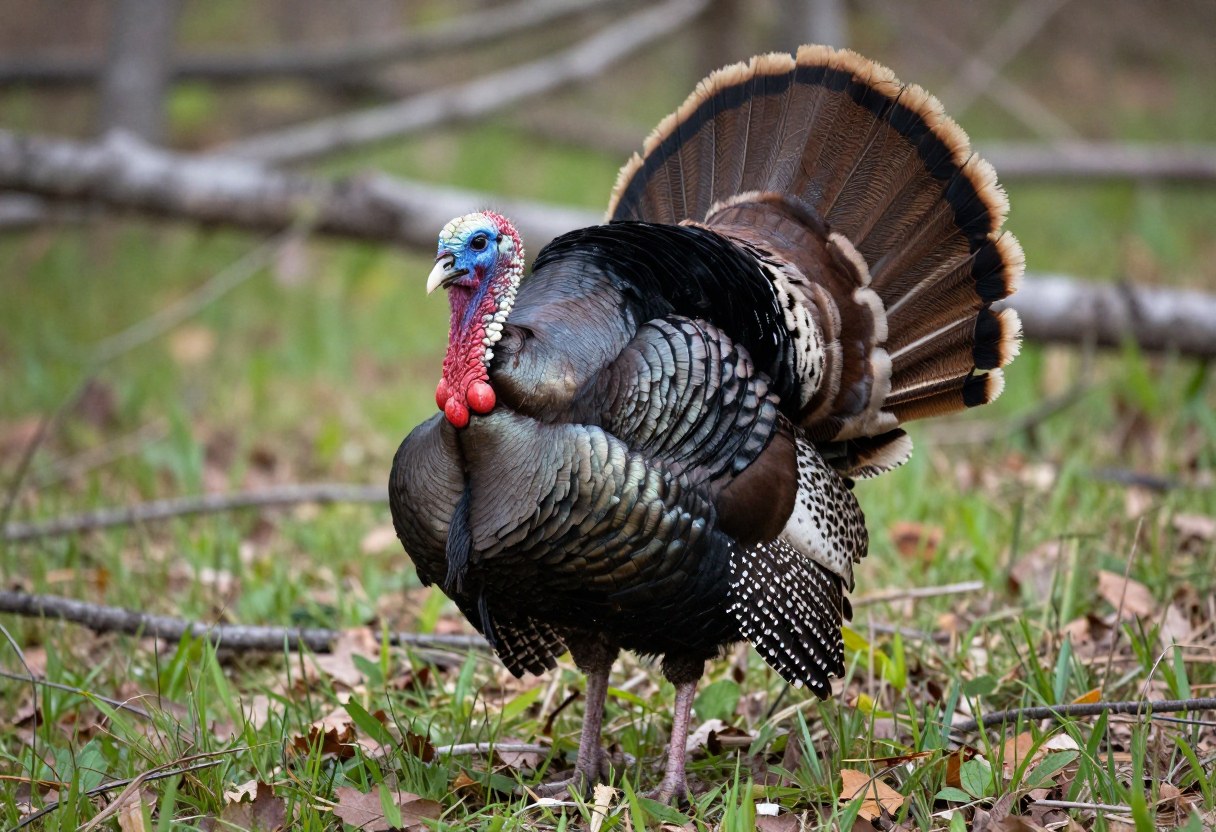
1. Spring vs. Fall Turkey Season: Two Different Hunts
Most states offer both a spring and fall turkey season, and they're different enough in strategy that it's worth understanding both before choosing where to start.
| Factor | Spring Season | Fall Season |
|---|---|---|
| Legal target (most states) | Male turkeys (toms/gobblers) only, sometimes bearded hens | Often either sex, depending on state/zone |
| Primary strategy | Calling a tom in during breeding season using hen-imitating calls | Breaking up a flock and calling individual birds back, or ambushing flock movement |
| Turkey behavior | Toms actively seeking hens, highly responsive to calling | Flocks are more cohesive family/social groups; strategy differs by whether targeting a specific bird |
| Difficulty for beginners | Widely considered the more approachable and popular starting point | Requires different tactics (flock-breaking) that are less intuitive for a first-timer |
| Vocalization focus | Hen yelps/clucks to draw in toms | Kee-kee calls (young turkey) and assembly calls to regroup a broken flock |
For a true first season, spring turkey hunting is generally the more approachable starting point — the core strategy (call like a hen, wait for a tom to respond and approach) is more straightforward to learn than fall's flock-breaking approach, and it's the season most beginner resources and mentorship opportunities are built around.
2. Legal Groundwork
- Turkey-specific hunting license and tag(s), generally separate from other big game licenses — check your state's specific requirements.
- Hunter education certification, required in most states before a first license, same as for other hunting.
- Bag limits and legal target restrictions vary significantly — many spring seasons restrict harvest to bearded birds (a beard is a tuft of modified feathers on the chest, typically but not exclusively found on males) with a limit of one or two per season; fall seasons and rules differ by state and sometimes by zone.
- Season dates and zones — many states split spring turkey season into date ranges by zone, and some stagger opening dates to distribute hunting pressure.
- Shooting hours are often restricted to a specific window relative to sunrise/sunset (many states set a legal start time before actual sunrise, aligned with when toms typically begin gobbling from the roost) — check your state's specific legal shooting hours, as these differ from general daylight hunting hours in some areas.
Don't Skip This: Turkey regulations, especially around legal target (bearded-only, either-sex, one-bird-per-day, season-limit totals) vary more by state than many other game species. Check your specific state and zone's current rules before season — don't assume general "turkey hunting" knowledge from a friend in another state applies directly to yours.
3. Core Gear for a First Season
Weapon
- Shotgun (most common choice): A 12-gauge or 20-gauge shotgun, patterned with turkey-specific loads (often smaller shot sizes like 4, 5, or 6, sometimes specialized tungsten-based turkey loads) delivering a dense pattern at moderate range. Patterning your specific gun/choke/load combination before season — shooting at a paper target to see where the pattern actually lands and how dense it is at your intended range — is a critical step many beginners skip.
- Bow or crossbow: A smaller but genuine subset of turkey hunters use archery equipment, generally requiring closer range and often a ground blind for concealment during the draw, since a turkey's eyesight makes drawing a bow in the open extremely difficult without being detected.
- Turkey choke: A specialized shotgun choke designed to tighten shot pattern specifically for turkey hunting's typical range and shot size — a worthwhile upgrade from a general-purpose choke for anyone taking turkey hunting seriously.
Calls
Covered in depth in Section 5, but at minimum, a beginner should have:
- One friction call (box call or pot/slate call) — generally the easiest type for beginners to learn
- One mouth/diaphragm call, once comfortable, for hands-free calling in tight, close-range situations
Decoys
- Hen decoy(s): The most common and versatile choice, imitating a receptive hen to draw a tom in.
- Jake or tom decoy: Sometimes added to simulate competition, which can trigger an aggressive response from a dominant tom — a more situational, intermediate-level tactic rather than a first-season essential.
Concealment
- Full camouflage, including a face mask/paint and gloves, since a turkey's eyesight is exceptionally sharp and any exposed skin or movement is a common reason birds "hang up" (stop approaching) before coming into range.
- A ground blind, useful especially for bow hunters or anyone wanting more freedom to move/adjust without being seen, though many shotgun hunters hunt effectively using natural cover (a tree to break up their outline) instead.
- A turkey vest or seat cushion, since much of turkey hunting involves sitting still against a tree trunk for extended periods, and comfort meaningfully affects how long you can stay still and quiet.
Safety
- Blaze orange is generally NOT worn while actively set up and calling (unlike deer season), since it would defeat the camouflage strategy — but many states require some orange during movement between spots; check your state's specific requirement, as this differs meaningfully from general firearm season norms and matters both legally and for hunter safety, given how often hunters move through cover while turkey hunting.
- Never stalk toward a sound or movement believing it's a turkey. Turkey hunting has a higher rate of hunter-on-hunter incidents than many other hunting types specifically because hunters sometimes move toward what they believe is a bird — always positively identify your target beyond doubt before raising a weapon, and never wear red, white, or blue (colors associated with a tom's head) while set up, since another hunter could mistake movement or color for a real bird.
4. Understanding Turkey Vocalizations (What You're Trying to Imitate)
Before learning to make calls yourself, it helps to understand what real turkeys actually sound like and why.
| Call/Sound | What It Means | When You'll Hear/Use It |
|---|---|---|
| Gobble | A tom's territorial/breeding call, announcing his presence to hens and rival toms | Early morning from the roost, and periodically through the day; the sound most hunters are listening for to locate a bird |
| Yelp | A common hen vocalization, used in various rhythms for different purposes | The most versatile and commonly used call by hunters — a basic hen yelp is often the first call a beginner learns |
| Cluck | A short, simple contact call | Often used alongside yelps to sound like a relaxed, content hen |
| Purr | A soft, rolling sound turkeys make while feeding contentedly | Used to add realism to a calling sequence, signaling calm, non-alarmed behavior |
| Cutt | A sharp, excited, rapid series of clucks | Used to grab a distant tom's attention aggressively, sometimes to provoke a response (a "shock gobble") |
| Kee-kee | A young turkey's whistle-like call | Primarily used in fall hunting to help regroup a broken flock |
| Putt | A sharp alarm call | Signals danger — hearing this from a real turkey generally means you've been detected, and hunters generally avoid making this sound intentionally except in specific fall flock-breaking tactics |
5. Types of Calls and How to Use Them
Box Calls
A wooden box with a hinged paddle lid; dragging the paddle across the box's edge produces yelps and other sounds.
- Pros: Loud, carries well over distance, relatively easy for beginners to produce a realistic sound with minimal practice.
- Cons: Requires two hands and some visible movement, making it harder to use once a tom is close and watching carefully.
- Best for: Locating and calling birds from a distance, earlier in a setup before a tom is close enough to notice movement.
Pot/Slate Calls (Friction Calls)
A round pot with a textured surface (slate, glass, or aluminum, each producing a slightly different tone), played by dragging a wooden or synthetic striker across the surface.
- Pros: Produces very realistic, naturally varied yelps and clucks with practice; widely considered one of the easiest call types for beginners to sound convincing on relatively quickly.
- Cons: Requires two hands, similar visibility/movement limitation as a box call.
- Best for: A strong all-around choice for a first call, effective at both distance and moderate range.
Diaphragm (Mouth) Calls
A small horseshoe-shaped call placed on the roof of the mouth, played by pushing air across it with the tongue.
- Pros: Completely hands-free, making it the best option once a tom is close and any hand movement risks detection.
- Cons: Genuinely the hardest call type to learn — it takes real practice to produce anything realistic, and beginners often sound unconvincing at first.
- Best for: Close-range finishing calls once a bird is already committed and hand movement needs to stop.
Don't Skip This: Learn a friction call (box or pot/slate) first, since it's far more forgiving for a beginner to sound realistic quickly, and add a diaphragm call once you're comfortable — trying to learn only the hardest call type first is a common source of early frustration that turns beginners off calling practice altogether.
Basic Calling Sequence for Beginners
- Locate a bird — listen for a gobble at first light, or use a "locator call" (an owl hoot or crow call, which doesn't imitate a turkey but often triggers a shock gobble response from a roosted tom, revealing his location).
- Set up out of sight, ideally 100+ yards from a roosted bird to avoid spooking him off the roost, positioned with a clear shooting lane and your back against something wider than your shoulders (a large tree trunk) to break up your outline and prevent a bird from approaching from directly behind you undetected.
- Start with soft calls (clucks and soft yelps) rather than loud, aggressive calling right away — overcalling early is a common beginner mistake that can make a bird cautious rather than curious.
- Respond to the bird's behavior. If a tom gobbles back enthusiastically, continue calling periodically to keep his interest. If he goes quiet or seems to be moving away, a more aggressive cutt sequence can sometimes reignite his interest, though there's real judgment involved here that comes with experience.
- Go quiet as he closes the distance. Excessive calling once a tom is visibly approaching can sometimes cause him to look for a hen that isn't there, deciding something is off — many experienced callers call less, not more, once a bird is genuinely committed and closing in.
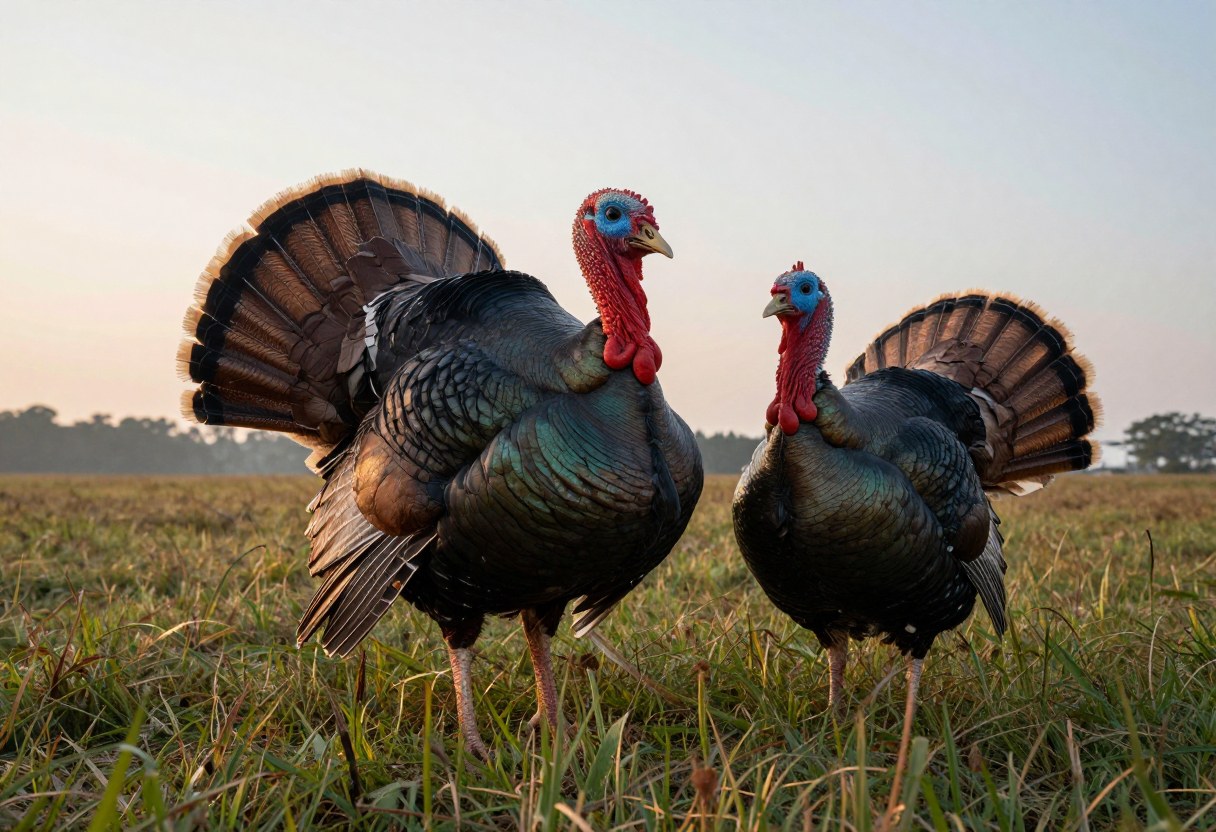
6. Decoy Strategy
Decoys add a visual element to complement your calling, giving an approaching tom something to visually confirm and focus on.
- A single hen decoy is a simple, effective, low-complexity starting setup — positioned roughly 15–20 yards from your setup, within comfortable shotgun range, so an approaching tom naturally stops near it, in range.
- Decoy placement relative to your shooting lane matters — position it where a tom's natural approach and likely stopping point puts him in a clean, unobstructed shot window.
- Multiple decoys (adding a jake or tom decoy) can provoke a more aggressive, faster approach from a dominant tom looking to challenge a perceived rival, but can also occasionally spook a more cautious or subordinate bird — a genuinely situational, intermediate tactic rather than a first-season necessity.
- Movement/feeding decoys (battery-powered, subtly moving) add realism but represent an added cost and complexity beginners can reasonably skip for a first season.
7. Setup and Concealment Fundamentals
- Sit against something wider than your body (a large tree trunk, rock, or similar) to break up your silhouette and prevent a bird from circling in from an unprotected angle.
- Face your likely approach direction with a clear shooting lane, but be prepared for a tom to "hang up" just out of comfortable range or approach from an unexpected angle — turkeys are notoriously unpredictable in their final approach even when clearly interested.
- Minimize movement entirely once set up. A turkey's eyesight is exceptional, and movement — even small adjustments — is a far more common cause of spooking a close bird than sound.
- Full camouflage, including hands and face, is genuinely important, more so than in many other hunting types, given how much turkey hunting happens at close range in relatively open woods.
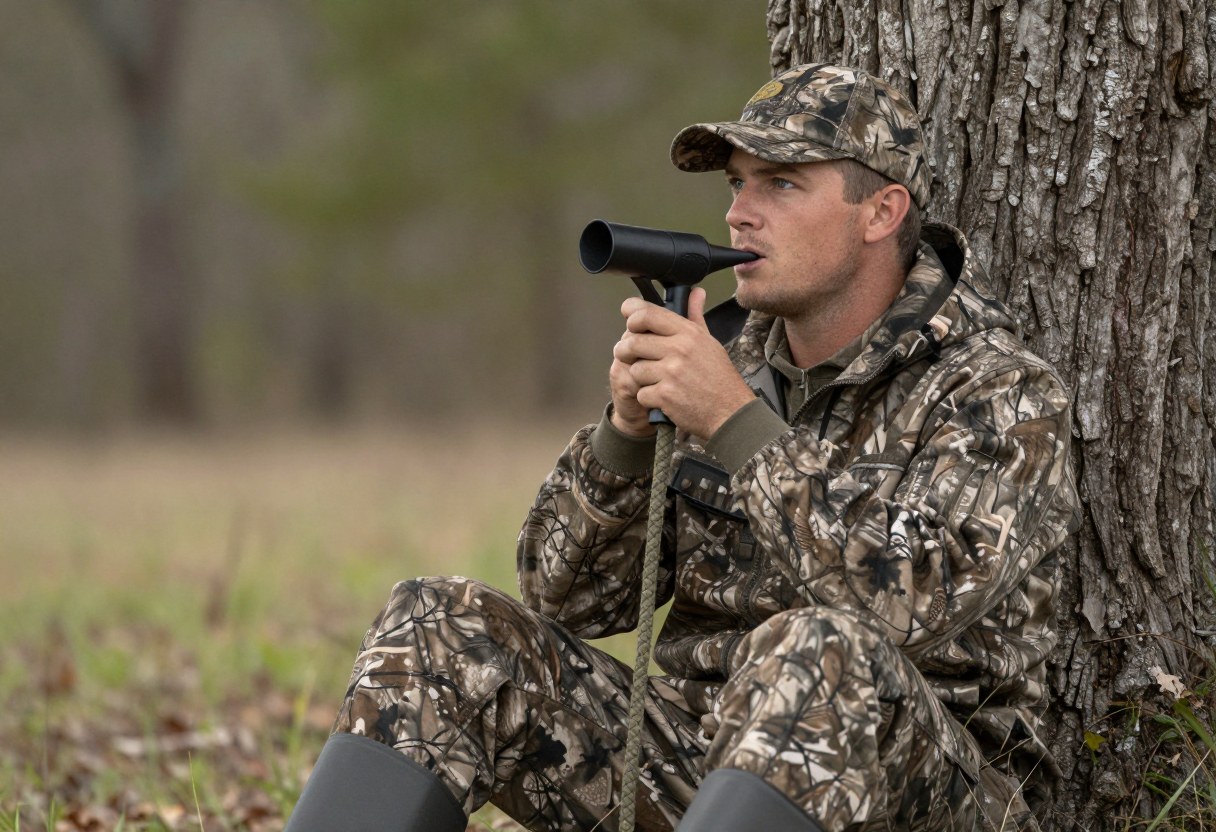
8. The Patience Factor
Turkey hunting rewards stillness and patience in a way that's genuinely different from most other hunting.
- A tom may gobble enthusiastically from a distance and then go completely silent for a long stretch, sometimes because he's approaching quietly (a real possibility worth staying alert for) and sometimes because he's lost interest or gone the other direction with hens already nearby.
- "Henned up" toms (already with real hens, uninterested in investigating a call) are one of the most common reasons a promising morning doesn't produce a bird, especially in spring when natural breeding activity is already high — this is a normal, common outcome, not a sign of doing something wrong.
- Sitting still for an hour or more without a bird in sight is a completely normal part of turkey hunting, and beginners who expect fast, constant action often get discouraged unnecessarily — success rates per outing are genuinely lower than many other hunting types, and that's part of the sport's nature, not a beginner-specific failure.
- Knowing when to move versus when to stay put is a skill that develops with experience — moving too often risks spooking birds you don't know are nearby; staying too long in an unproductive spot wastes time that could be spent relocating.
9. Common Beginner Mistakes
- Overcalling, especially once a tom is already close and committed — less is often more as a bird nears your position.
- Moving at the wrong moment. Small movements to adjust a call, shift position, or check surroundings are a leading cause of spooking a bird that's already close and watching carefully.
- Setting up too close to a roosted bird and spooking him off the roost before the hunt even really begins — 100+ yards of separation from a known roost site is a reasonable starting guideline.
- Skipping shotgun patterning. Assuming a turkey load performs generically the same across different guns/chokes is a real risk — pattern your specific setup before season to know your true effective range.
- Wearing red, white, or blue, or moving toward an unconfirmed sound/movement believing it's a turkey. Positive target identification, every time, is a serious safety requirement in turkey hunting specifically.
- Getting discouraged by early unsuccessful outings. Turkey hunting has a real learning curve, and low early success rates are typical, not a sign of doing something fundamentally wrong.
- Choosing only a diaphragm call to learn from as a total beginner. It's genuinely the hardest call type to learn first — a friction call builds confidence and realistic sound production faster.
10. A Realistic First-Season Approach
- Weeks before season: Complete hunter education if needed, secure license/tags, pattern your shotgun with turkey loads, and begin practicing calls (start with a box or pot/slate call).
- Scouting: Locate roost areas (listening at dawn/dusk for gobbling, watching for turkey sign like tracks, droppings, and dusting areas) in the weeks leading up to season.
- Opening days: Get to your setup well before first light, positioned with distance from a suspected roost, and listen for the first gobbles of the morning to help locate birds.
- During the hunt: Start with soft, sparing calls, respond to how a bird reacts, minimize movement as a tom approaches, and go quiet as he closes the final distance.
- Ongoing: Consider a mentor or a guided first hunt if available — turkey hunting's real-time calling/reading-bird-behavior skill benefits enormously from in-person coaching that's hard to fully replicate from written guides alone.
Quick Decision Checklist
- I've completed hunter education and secured a valid turkey license and tag(s)
- I understand my state and zone's specific season dates, legal target restrictions, and bag limits
- I've patterned my shotgun (or set up my bow) with turkey-specific loads/equipment before season
- I have at least one friction call (box or pot/slate) and have practiced with it
- I have a hen decoy and a plan for placement relative to my shooting lane
- I have full camouflage, including face and hands
- I know my state's blaze orange requirements for movement between setups, if applicable
- I understand positive target identification requirements and avoid stalking toward sounds/movement
- I've scouted for roost locations and turkey sign ahead of my first hunt
- I've set realistic expectations about patience and success rate for a first season
Glossary
- Tom/Gobbler: An adult male turkey.
- Jake: A young (typically under one year old) male turkey.
- Hen: A female turkey.
- Gobble: A tom's loud territorial/breeding vocalization.
- Yelp: A common hen vocalization used in various rhythms, one of the most frequently imitated calls by hunters.
- Beard: A tuft of modified, hair-like feathers on a turkey's chest, typically found on males and sometimes on hens, often used as a legal-target identifier in spring seasons.
- Hung Up: Describes a tom that stops approaching before coming into range, often circling or gobbling from a fixed distance without closing further.
- Henned Up: Describes a tom already accompanied by real hens, making him less likely to respond to or investigate a hunter's calling.
- Locator Call: A non-turkey sound (owl hoot, crow call) used to elicit a shock gobble from a roosted tom to reveal his location, without imitating a turkey itself.
- Fly-Down: The moment a roosted turkey leaves the roost tree in the morning, often a key moment in a hunt's early strategy.
This guide covers general principles for common North American wild turkey hunting. Always confirm current state and local regulations, as legal target restrictions, season dates, shooting hours, and safety requirements (including blaze orange rules) vary by location and change from year to year.