
Northern Red Oak
Quercus rubra
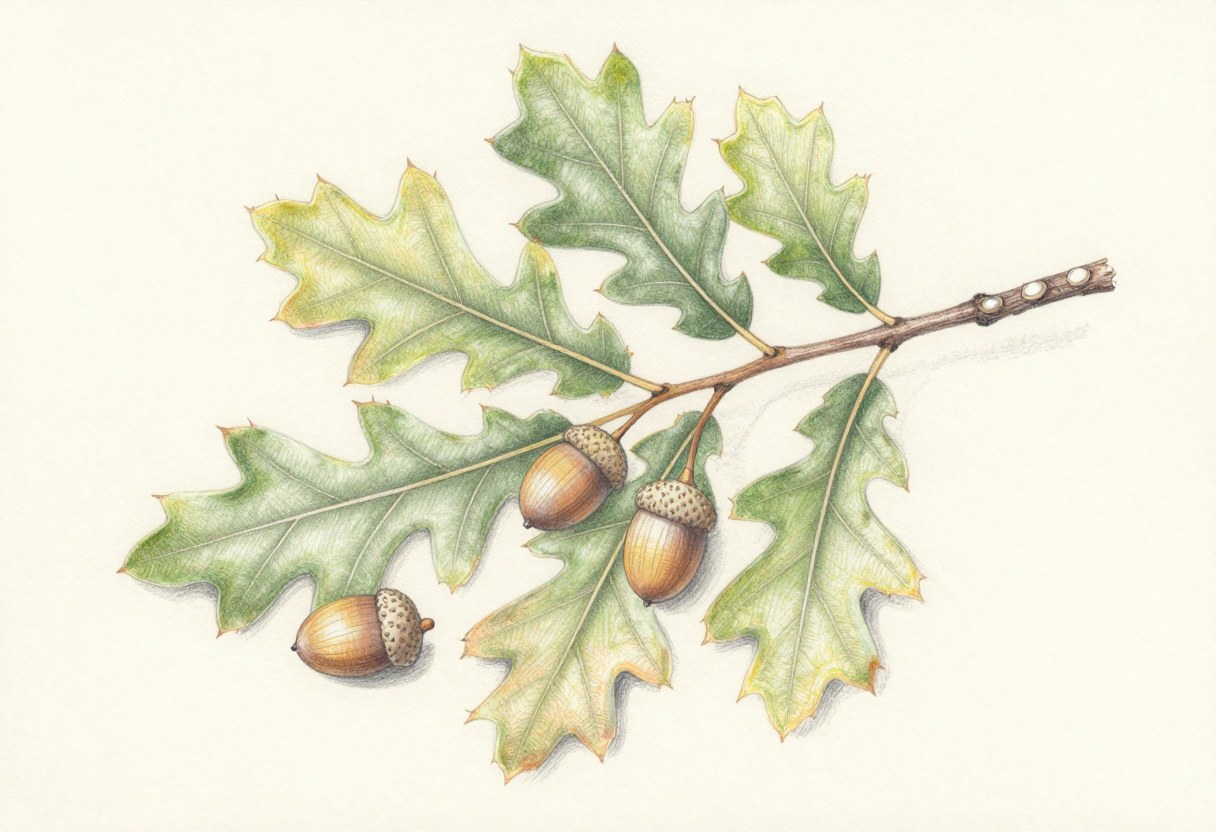
A fast-growing oak with pointed, bristle-tipped leaf lobes and bark with shiny flat ridges, and a common source of acorns for wildlife.
- Type
- Hardwoods
- Leaves
- Lobed leaves
- Region
- Northeast, Midwest & Plains, Southeast
- Typical size
- 60–90 ft tall, with a trunk 2–3 ft across
- Range
- The northeastern and north-central United States, south through the Appalachians
- Look for it
- Fall, when the leaves turn deep red
How to identify it
- Leaves have 7–11 lobes, and each lobe ends in a bristle tip.
- Bark is dark gray-brown with long, smooth, flat-topped ridges that look like ski tracks, especially up the trunk.
- Acorns are large with a flat, saucer-like cap.
- Acorns take two years to mature.
Often confused with
- White oak: rounded leaf lobes with no bristles, and pale scaly bark.
- Black oak: a similar red-group oak with darker, blocky bark and yellow-orange inner bark.
Why it matters outdoors
- Acorns feed deer, turkeys, squirrels, and many other animals, though they are more bitter than white oak acorns.
- Good firewood once seasoned, burning hot and steady.
- A reliable fall food source to scout when white oaks have a poor crop.
Field notes
Red oaks drop acorns on a two-year cycle, so a big crop one fall can follow a miss. Deer and turkeys often switch to red oak acorns once the sweeter white oak acorns are gone.
The pointed, bristle-tipped lobes separate red oaks from white oaks at a glance.
Related guides
This guide helps you recognize trees and avoid harmful plants. It does not teach foraging, and nothing here is advice to eat or use a wild plant. Identification from a drawing can be wrong, so check with a regional field guide or a local expert, such as your state forestry or extension service.